
With customised two-wheelers
Graham Bremer, Vice President of Sales, Marketing & Distribution at EDaddy, discusses his company’s bold new direction to reshape last-mile logistics in the UAE and beyond by introducing customised electric two-wheelers in a win-win for the environment and operators.
Having recently entered the electric mobility vertical in the UAE, Dubai-based EDaddy is making headlines for its unique safety and sustainability features, which are at the core of its performance-led ecosystem.
Having raised $15 million, the startup is set to debut its EDaddy X7 electric bike, E Swap-X battery-swapping stations, and in-house-developed Thunderbolt X next-gen fleet infrastructure platform—all engineered to revolutionise last-mile delivery logistics.
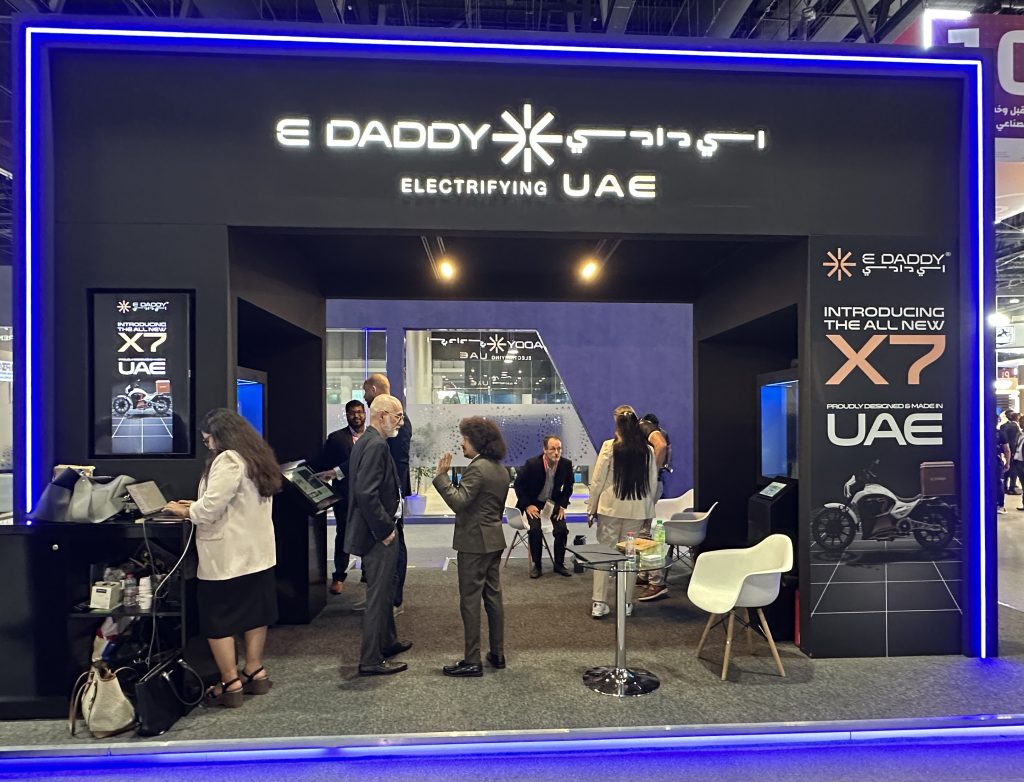
At Make It In the Emirates 2025, held in Abu Dhabi this week, EDaddy signed a Memorandum of Understanding with Dubai-based Robust Energy Storage Systems to design and manufacture customised, scalable, and robust lithium-ion battery packs for the EDaddy X7 electric delivery bikes.
In a candid and wide-ranging interview at MIITE 2025, Bremer offers insight into what sets the company apart, including localisation efforts and plans for Saudi expansion, and why the future of urban mobility might just be electric.
Excerpts from the interview:
What inspired the launch of EDaddy’s mission in the UAE?
About two years ago, Mansoor Ali Khan—our founder—came to the UAE after working in Africa, where he helped establish EV bikes with a company now called Spiro. Spiro currently operates over 30,000 electric bikes across the African continent. Coming to the UAE, his goal was clear: redefine last-mile logistics in the region [Middle East] with a deep focus on rider safety and welfare.
As you know, last-mile delivery has exploded in the last few years. Over 130,000 commercial vehicles are on the roads across the UAE, and up to 95% are doing last-mile delivery. That means our streets are busier, and the pressure on riders is immense. Our job is to create an ecosystem that protects and empowers these riders while enhancing delivery efficiency through technology.
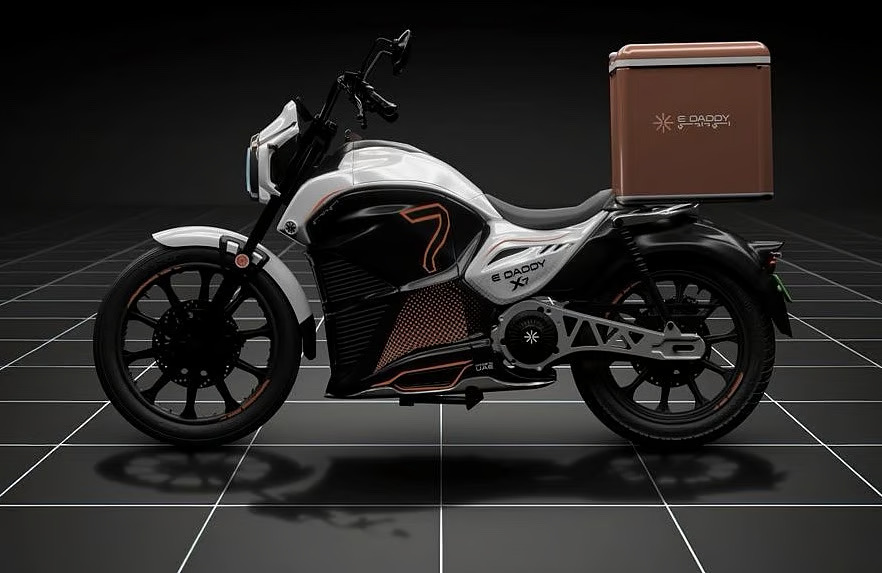
EV technology is not exactly new. So, what makes EDaddy different from what is already out there?
Fair point. We are not claiming to reinvent the wheel. However, we are localising a solution specifically for the UAE’s environment and demands. Many competitors import bikes from China, and while those bikes work well there, the UAE is a different beast. We are talking extreme heat, longer average delivery distances, higher speeds, and more highway driving.
So, yes, features like blind spot detection and telematics may exist elsewhere. But we have built a package that meets local standards, weather conditions, and operational needs. It is not just about having tech but the right tech in the right environment.
How competitive is EDaddy?
Our EVs are not only environmentally friendly but also economically competitive. We are targeting businesses currently using petrol-powered delivery bikes, which have had years to optimise costs. Thanks to better energy efficiency and vehicle longevity, we ensure our total cost of ownership is lower within just one year of fleet operation.
Also, our EVs have a five-year lifespan in the UAE versus four years for petrol bikes. That extra year adds further cost benefits for fleet managers and leasing firms and underscores our commitment to providing cost-effective solutions. We are not just competitive, we are cost-effective, ensuring that our customers get the best value for their investment.
Speaking of leasing firms, who exactly are your end customers?
Our primary users are last-mile delivery riders—those on the roads daily. But our customers can be delivery platforms like Noon, Talabat, and Deliveroo or third-party logistics providers such as Power Lease and Easy Lease, which supply the bikes. Our approach is not just about selling bikes; it is about supporting all these stakeholders within the delivery ecosystem, ensuring that everyone, from the riders to the platform owners, feels included and valued in our operations.
When does EDaddy plan to launch commercial operations in the UAE?
Our first pilot batch of 10 vehicles launches this July, with complete certification and production expected in Q4 this year. Our battery packs are undergoing EU certification and will be UAE Ministry of Industry and Technology-certified in October.
Suppose I wanted to order 100 e-bikes—how does that process look?
Whether you are leasing or purchasing outright, we support full ecosystem deployment. This includes our battery swapping stations, route optimisation, and Thunderbolt X, our proprietary telematics platform. We evaluate where your operations are based and then install swap stations in those areas, optimised by delivery routes and distance requirements.
These stations will usually be grid-connected, but we also offer off-grid solar-powered stations, which we are piloting this summer through a new agreement with Robust Energy Storage Systems.
So, off-grid solar? That is impressive.
Yes! We are very excited about it, especially in areas where grid access is limited or land is available but undeveloped. This supports fully renewable energy operations, reducing tailpipe emissions and charging emissions. That is a full-circle sustainability goal.
Let us dig into the Thunderbolt X you mentioned. What does it do?
Thunderbolt X is our in-house developed fleet intelligence system, explicitly built for last-mile logistics. It monitors everything from driver behaviour (e.g., hard braking, speeding) to collision detection and rider performance.
Our unique feature is our cell-level battery analytics. If even a single battery cell in the pack underperforms, Thunderbolt X will detect it and alert maintenance teams. This enables predictive servicing, keeping bikes on the road longer and riders safer.
Are you looking to expand into Saudi Arabia or other markets?
Absolutely. While the UAE is a strong launchpad, it is a relatively small market. We see ourselves as a UAE-designed, UAE-made product for the world, focusing immediately on Saudi Arabia, Egypt, and beyond.
What is great is that “Made in UAE” has a good regional reputation. For us, building locally is not just about national pride—it is a practical move to ensure better supply chain control and faster deployment to nearby countries.
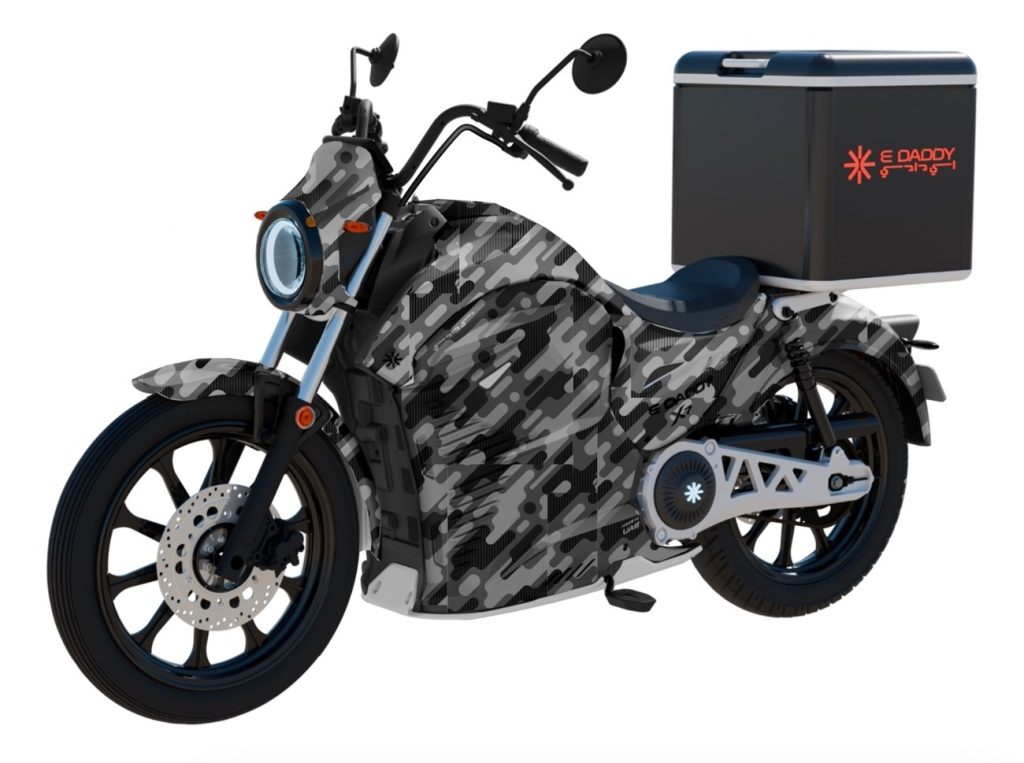
Apart from last-mile delivery bikes, is there also a lifestyle market for these bikes?
It is a smaller niche, but yes. We have designed bike variations with different colourways and modified specs for cruiser or leisure use. We also look at government fleets, like police, where bikes can be customised for patrol duties.
We are nearing piloting bikes with the Dubai and Abu Dhabi police, fitted with three battery packs for up to 200km range.
From a supply chain angle, what percentage of your components are sourced locally?
Today, around 40-50% of bikes are made with locally sourced components. Driven by local battery production, our goal is to reach 70% by the end of this year. By Q1 or Q2 next year, we aim for 100% localisation.
This secures the supply chain, improves responsiveness, and reduces regulatory friction. It also supports the UAE’s green economy and industrial self-reliance vision.
What about your competitors?
Our biggest competitor today is still the internal combustion engine (ICE). But we also face cultural competition—people are used to traditional ways of operating.
What we are doing is different. We are redefining last-mile delivery by setting new safety, welfare, and sustainability standards. We do not just want to compete—we want to collaborate with others to elevate the entire industry. This includes working with regulators to standardise features that improve safety for all riders on UAE roads.
Hero image: Graham Bremer, Vice President of Sales, Marketing & Distribution at EDaddy. Credit: Arnold Pinto