
Photo Credit : WAM
The Abu Dhabi Hazardous Materials Management Centre has signed a strategic Memorandum of Understanding (MoU) with Rabdan Academy, reinforcing efforts to enhance the emirate’s national capabilities in hazardous materials management and emergency preparedness.
The Centre, which oversees and regulates the handling of hazardous materials across Abu Dhabi, said the partnership will support the development of a comprehensive and sustainable national ecosystem, driven by knowledge exchange and specialised talent development.
Strengthening national readiness
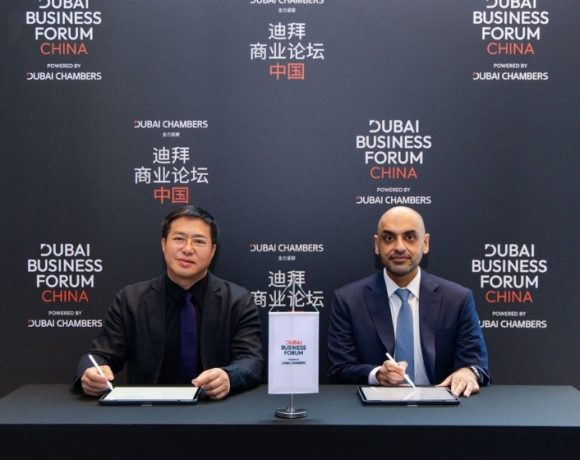
The agreement was signed at the Centre’s headquarters by Khalfan Abdullah Al Mansoori, Acting Director General of the Abu Dhabi Hazardous Materials Management Centre, and Salem Saeed Al Saeedi, Vice President of Rabdan Academy, in the presence of senior officials from both entities.
The collaboration comes as Abu Dhabi continues to experience strong economic and industrial expansion, increasing the need for advanced regulatory and operational frameworks to ensure hazardous materials are managed safely and efficiently throughout their lifecycle — from transport and storage to use and disposal.
Under the MoU, both sides will work to align regulatory expertise with academic and training excellence to support national readiness and resilience.
Focus on specialised training and research
The partnership will centre on developing specialised educational and professional training programmes, alongside joint scientific and applied research initiatives. These efforts will be guided by international best practices and global standards in safety, security and crisis management.
Al Mansoori described the agreement as a significant milestone in building a unified and resilient national system for hazardous materials management.
“Our partnership with Rabdan Academy represents a pivotal step toward achieving our vision of a robust national framework in this critical field,” he said. “Investing in human capital remains the foundation for ensuring sustainable security and safety.”
He added that the collaboration would draw on Rabdan Academy’s academic expertise and advanced training methodologies to enhance the performance and capabilities of professionals working in hazardous materials management.
Integrating regulation and academia
Al Saeedi emphasised that hazardous materials management plays a vital role in national preparedness due to its regulatory, operational and security dimensions.
He noted that the agreement creates a model for integrating regulatory authorities with academic institutions, ensuring knowledge is translated into practical capabilities that safeguard lives, protect property and strengthen business continuity.
Rabdan Academy will develop specialised academic and professional programmes supported by applied scientific research. These programmes aim to prepare leaders and experts with a comprehensive understanding of the hazardous materials lifecycle, equipping them to make informed decisions in complex and high-risk environments.
Areas of cooperation
The MoU outlines several key areas of collaboration, including:
-
Technical knowledge exchange
-
Development of employee and professional training programmes
-
Joint scientific and academic research and development projects
-
Organisation of seminars, conferences and specialised workshops
-
Provision of advisory and technical services to enhance institutional performance
The two entities will also work together to build expert networks and promote innovation in addressing current and future challenges related to hazardous materials management.
Supporting Abu Dhabi’s strategic vision
Officials said the agreement reflects a shared commitment to advancing Abu Dhabi’s strategic objectives in public safety and resilience.
By combining regulatory oversight with academic and research-driven expertise, the partnership aims to reinforce the emirate’s position as one of the safest and most agile cities in the region, while strengthening its role as a hub for knowledge and innovation in safety and crisis management.
As industrial activity grows and global safety standards evolve, the collaboration is expected to play a central role in shaping a future-ready hazardous materials management system that protects communities and supports sustainable development.