New shift in South Asia’s military dynamics
In the recent military tit-for-tat escalation between India and Pakistan over Hindu civilian casualties in Indian-administered Kashmir, Pakistan’s deployment of Chinese-made military equipment has underscored the growing defence collaboration between the two nations.
The conflict, ignited by a militant attack in Indian-administered Kashmir, saw Pakistan utilising advanced Chinese weaponry, marking a significant development in South Asia’s military dynamics.
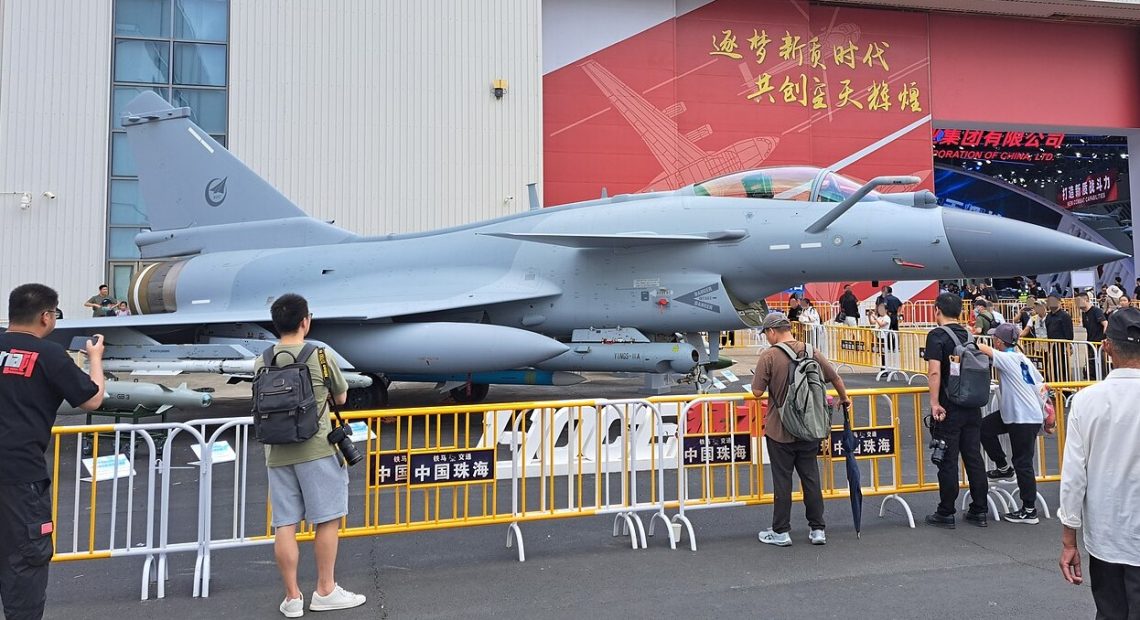
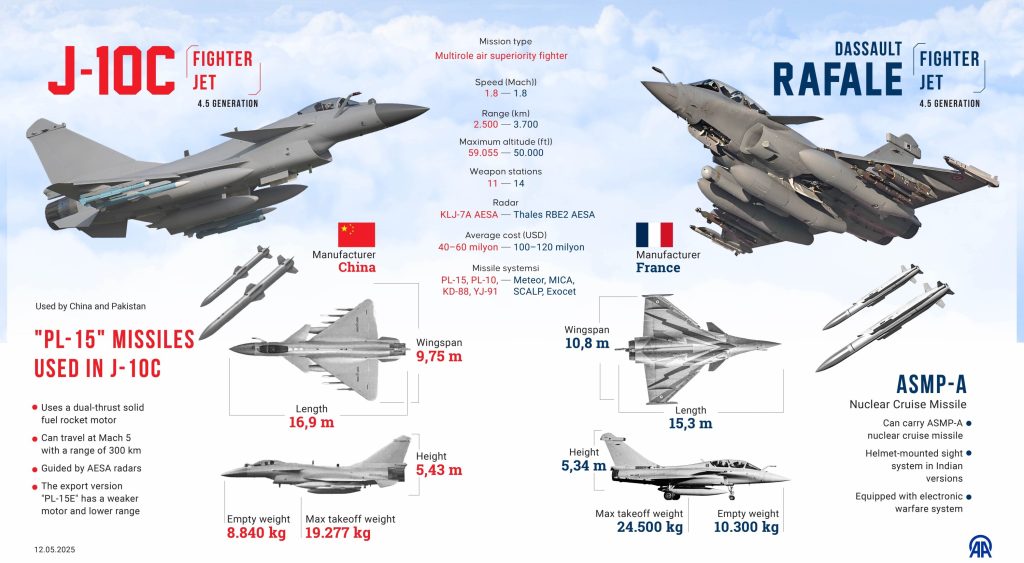
Pakistan’s Air Force (PAF) employed the Chengdu J-10C fighter jets, a multirole aircraft developed by China. These jets were instrumental in countering Indian airstrikes, with Pakistani officials claiming to have downed at least five Indian aircraft, including Rafales, manufactured by France’s Dassault Aviation, during the hostilities. India, led by a nationalist party, has to date failed to acknowledge the loss of its military aircraft, including the frontline Rafale.
According to Reuters, the Indian Air Force said on May 11 that “losses are a part of combat” without giving details of the downing of the Indian jets.
The J-10C’s performance in combat has drawn attention to China’s expanding capabilities in the global arms market. Pakistan received its first J-10Cs in 2022 from the aircraft manufacturer Chengdu in China.
In addition to the J-10C jets, Pakistan deployed Chinese-made PL-15 air-to-air missiles designed for long-range engagements. These missiles were reportedly used to intercept and destroy incoming Indian fighter aircraft.
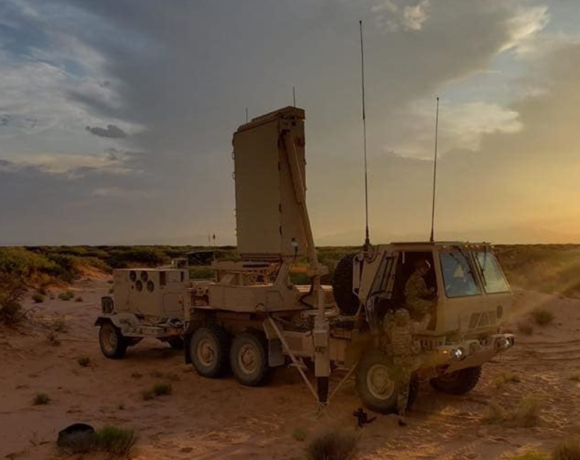
Furthermore, Chinese radar systems, such as the JY and HGR series, strengthened Pakistan’s air defence, enhancing the detection and tracking of low—and medium-altitude targets along the Line of Control (LoC) in Kashmir.
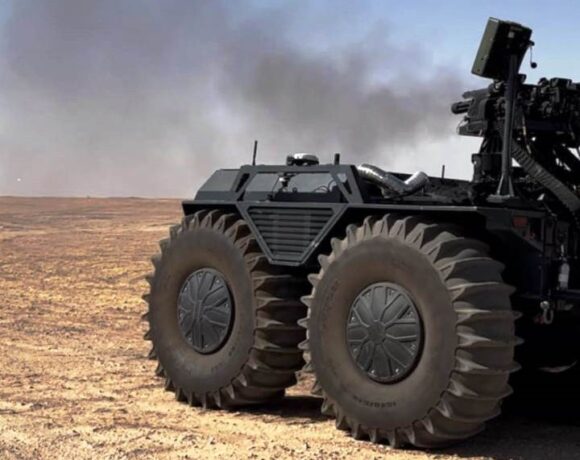
On the ground, Pakistan’s military utilised Chinese-manufactured SH-15 truck-mounted howitzers, providing mobile artillery support during the conflict. These 155mm howitzers are noted for their mobility and firepower, offering Pakistan a strategic advantage in artillery engagements.
Additionally, China has been involved in enhancing Pakistan’s military surveillance and communication infrastructure along the LoC, including installing encrypted communication towers and underground fibre optic cables and deploying uncrewed aerial vehicles (UAVs) for reconnaissance purposes against Indian military assets.
Pakistan’s utilisation of Chinese military technology in the recent conflict has broader implications for regional security and global defence markets. Analysts suggest that China views these real-world applications as valuable tests for its military hardware, providing insights into their performance against Western and Russian-made systems. This collaboration strengthens the strategic partnership between China and Pakistan and positions China as a formidable player in the global arms trade.
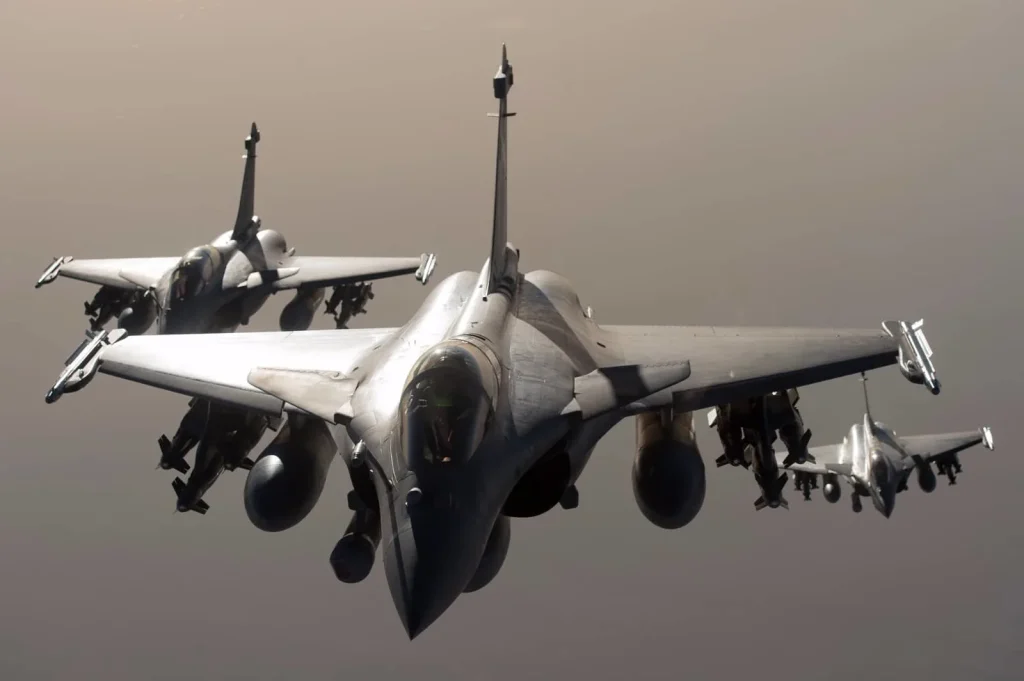
The international community has expressed concern over the escalation of hostilities between India and Pakistan, both nuclear-armed nations. While a ceasefire has been brokered, the role of Chinese military support to Pakistan remains a contentious issue.
Observers note that China’s involvement in the conflict could influence its diplomatic relations with other countries, particularly those in the West. As the situation develops, the international community continues to monitor the dynamics of this complex and evolving conflict.
Pakistan’s deployment of Chinese military technology in the recent Kashmir conflict highlights a significant shift in regional defence alignments. This development affects the balance of power in South Asia and signals China’s growing influence in global military affairs.
Hero image: A J-10C fighter aircraft like those deployed by the Pakistan Air Force, displayed at the Zhuhai Airshow 2024. Credit: Zhuhai Airshow