
Renewed focus on specific sectors
DHL Group plans to invest US$574 million by 2030 to enhance its logistics infrastructure, service capacity, and delivery efficiency throughout the Arabian Gulf region, primarily encompassing the United Arab Emirates (UAE) and Saudi Arabia.
The move is part of the logistics specialist’s Strategy 2030, which aims to respond to global trade shifts and support expansion in key growth regions. It covers DHL’s four core business units: Express, Global Forwarding, Supply Chain, and ecommerce.
The company states that it intends to strengthen logistics services supporting industries such as life sciences, healthcare, e-commerce, and energy. These efforts will also enhance supply chain resilience and facilitate cross-border trade, including freight and warehousing solutions for businesses across the region.
The Gulf region continues to gain significance as a vital global trade corridor, connecting Asia, Europe, and Africa. Trade flows have increased due to both foreign investment and the growing export footprint of local companies. DHL’s expanded logistics network is designed to meet this increasing demand.
In the UAE and Saudi Arabia, DHL will expand warehousing and contract logistics operations. Aviation capacity and gateway facilities will be upgraded to enhance DHL Express operations. DHL Global Forwarding will invest in new fleet assets, including electric trucks, and support logistics connectivity through projects like its partnership with Etihad Rail.
DHL has acquired delivery provider Ajex in Saudi Arabia to strengthen last-mile services in the e-commerce sector, which continues to grow due to tourism and changing consumer behaviour.
Senior DHL executives note that logistics needs in the Gulf region are becoming more specialised. Hendrik Venter, CEO for DHL Supply Chain in Europe, the Middle East, and Africa, says the company is increasing its focus on healthcare, technology, and the energy sector, areas where demand for outsourced logistics is rising.
Amadou Diallo, who leads DHL Global Forwarding in the Middle East and Africa, states that enhancing digital platforms and sustainable transport options would enable the company to better support regional customers in managing volatile supply chains and fluctuating market conditions.
The energy sector remains a key area for DHL, which aims to serve both conventional and renewable segments. Life sciences, healthcare, and e-commerce markets are also expected to continue receiving significant investment.
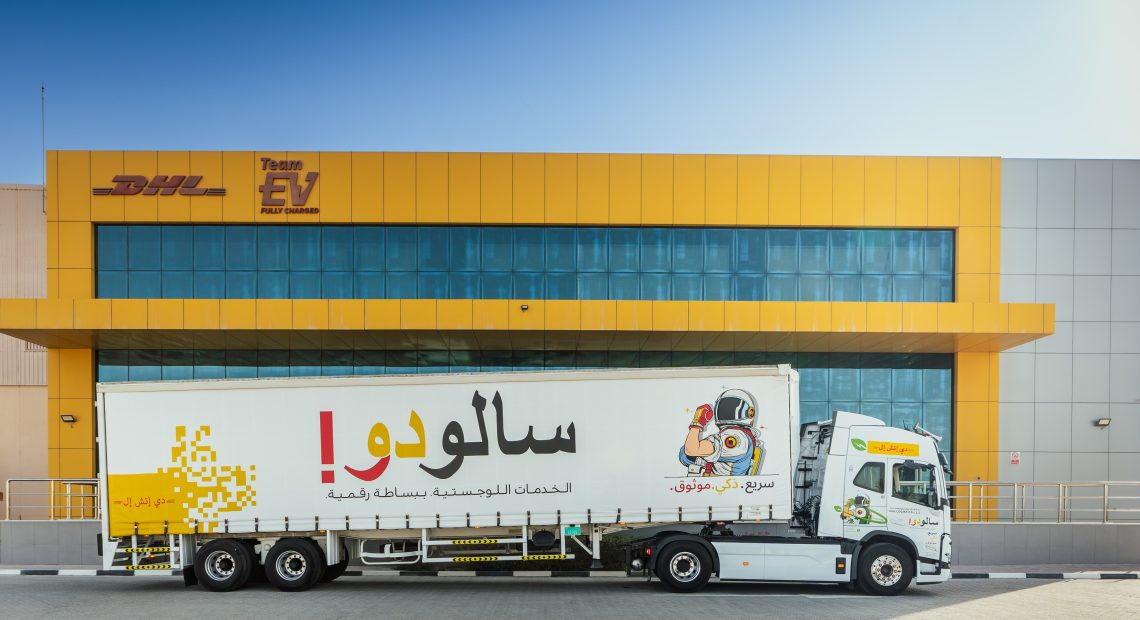
With the DHL Group aiming to achieve net-zero emissions logistics by 2050, DHL will implement electric delivery vehicles, biofuels, and solar power solutions across its regional operations. These measures align with the Gulf governments’ strategies to reduce carbon emissions and develop clean energy infrastructure.
Image: The DHL Group aims to achieve net-zero emissions logistics by 2050, and is deploying electric delivery vehicles in this context. Credit: DHL Group