Acting on (UNSCR) 2216
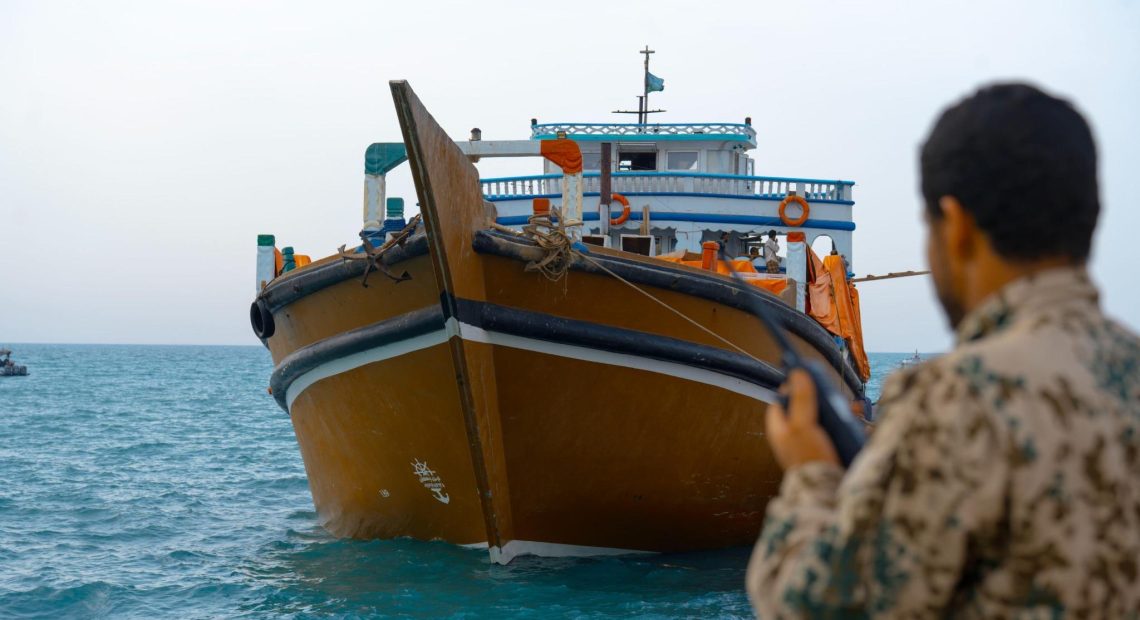
The Yemeni National Resistance Forces (NRF), led by General Tareq Saleh, have intercepted one of the largest shipments of Iranian weapons ever seized in the Middle East region.
The operation, which took place over several days this July, resulted in the capture of more than 750 tonnes of military hardware, including advanced cruise missiles, anti-ship missiles, anti-aircraft missiles, warheads, and radar systems.
According to a US Central Command (Centcom) statement issued in Tampa, Florida, the shipments, intended for the Iran-backed Houthi rebels, also contained drone engines, air defence equipment, communications systems, and components for long-range weaponry.
The NRF has confirmed that many of the items were manufactured by companies affiliated with Iran’s Ministry of Defence, a body currently under US sanctions.
Manuals in Farsi found among the seized equipment further corroborate the shipment’s Iranian origin. The interception is seen as a major blow to the Houthis’ military capabilities and their ability to sustain their ongoing insurgency in Yemen.
According to Centcom, the operation was conducted in line with United Nations Security Council Resolution (UNSCR) 2216, which calls for the cessation of external military support for the Houthis.
The NRF’s actions demonstrate their continued commitment to a peaceful and secure Yemen, as well as regional stability in the Red Sea and the Gulf of Aden.
General Michael Erik Kurilla, Commander of US Central Command (Centcom), praised the NRF’s success, highlighting the importance of limiting Iran’s military support for the Houthis.
“Iran remains the most destabilising actor in the region,” Kurilla stated. “The successful interdiction of this massive shipment is critical to ensuring the safety and security of Yemen, as well as maintaining the free flow of maritime traffic in this vital region.”

The Houthis, a militia operating in Yemen, have been involved in a brutal conflict with Yemen’s internationally recognised government. Iran’s backing of the Houthis is seen as part of the broader geopolitical struggle for influence in the Middle East, particularly in Yemen, where control of key maritime routes like the Bab el-Mandeb Strait is of strategic importance.
The latest weapons’ interception by the US-backed NRF marks a significant moment in the conflict, as it disrupts a key supply chain that has enabled the Houthis to carry out attacks on Yemeni government forces, as well as attacking commercial shipping in the Red Sea. Despite ongoing peace talks, the war in Yemen remains one of the most complex and devastating conflicts in the region, with no clear end in sight.
According to defence analysts, the NRF’s success is likely to intensify international pressure on Iran to halt its arms shipments to the Houthis. The United States and its allies have repeatedly condemned Iran’s role in fuelling the Yemeni conflict, and this latest weapons seizure is seen as further evidence of Iran’s destabilising influence in the region.

Centcom is responsible for conducting military operations across the Middle East, Central Asia, and parts of South Asia. Centcom’s area of responsibility includes 20 countries, from Egypt in the west to Pakistan in the east, and from Turkey in the north to Yemen in the south.
Centcom plays a vital role in securing the strategic interests of the United States in the region, overseeing counterterrorism operations, ensuring the stability of key energy routes, and countering the influence of state and non-state actors, such as Iran. It coordinates closely with regional allies to maintain security in the Arabian Peninsula and the broader Middle East.
Centcom’s operations are considered critical to maintaining peace and security in areas prone to conflict, such as Iraq, Syria, and Yemen. The command’s ongoing efforts to limit the flow of weapons to destabilising groups and ensure the free passage of goods through vital maritime chokepoints like the Strait of Hormuz and the Bab el-Mandeb Strait remain central to US military strategy in the region.
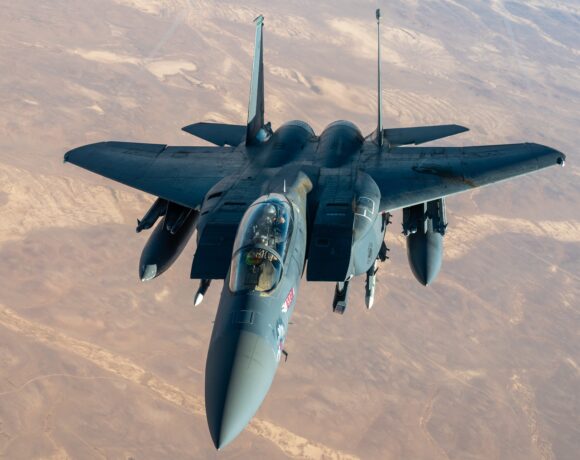
Hero image: The NRF operation was conducted over several days this July. Credit: Centcom/Tom Gagnier