
As oil superpowers
Global oil production remains dominated by a handful of countries, each with significant influence over energy markets, pricing, and international policy.
As geopolitical tensions and energy transitions unfold, these nations remain critical to the global energy supply chain. Middle Eastern producers, particularly Saudi Arabia, the UAE, and Iraq, remain central players, both in terms of output and strategic influence.
The United States remains the world’s largest oil producer. Output regularly surpasses 12 million barrels per day, driven by shale extraction in Texas and North Dakota. Though affected by fluctuating prices and policy shifts, the country’s infrastructure and innovation keep it at the top.
Saudi Arabia is the second largest, with production of nearly 10 million barrels per day. As Opec’s most powerful member, the Arabian Gulf nation plays a leading role in managing global supply. Its decisions on output cuts or increases significantly impact pricing. Its large reserves and export-focused strategy further strengthen Riyadh’s influence.
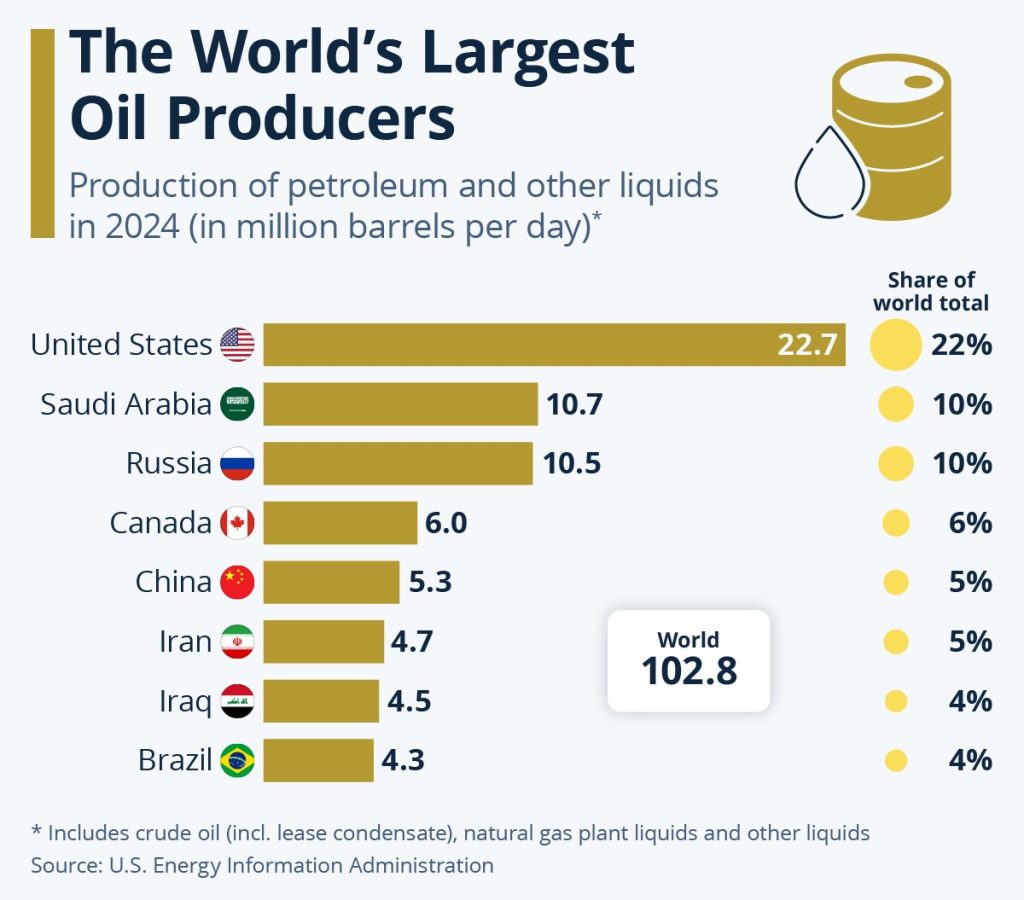
Russia ranks third, despite international sanctions and export bans. While Western demand for Russian oil has decreased, Moscow has strengthened ties with China and India. Its pivot to non-Western markets has kept production levels above 9 million barrels per day.
Canada comes in fourth, primarily due to its oil sands production in Alberta. Despite environmental concerns and infrastructure delays, it remains a key supplier to the US and global markets.
China, the fifth-largest producer, continues to rely on domestic production to reduce import dependence. However, the country also remains the world’s largest oil importer, reflecting growing energy demand.
Iraq ranks sixth and is one of the top oil-producing countries in Opec. The country’s oil sector, heavily concentrated in the south, has recovered following years of conflict. Baghdad continues to benefit from steady demand in Asia and cooperation with Gulf producers.
The UAE follows closely. With production near 3 million barrels per day, the UAE remains a strategic Opec member. Abu Dhabi has invested heavily in production capacity and infrastructure, positioning itself as a stable supplier amid global uncertainty.
Brazil rounds out the top eight. Offshore drilling, particularly in the pre-salt fields, has driven its rise. The country has increased exports to Asia and Europe and remains a growing player in the international oil market.
As global energy demand evolves, these eight producers will remain at the heart of international negotiations, trade flows and market dynamics. Middle Eastern producers, in particular, are expected to maintain influence through Opec coordination and strategic investment in future capacity.
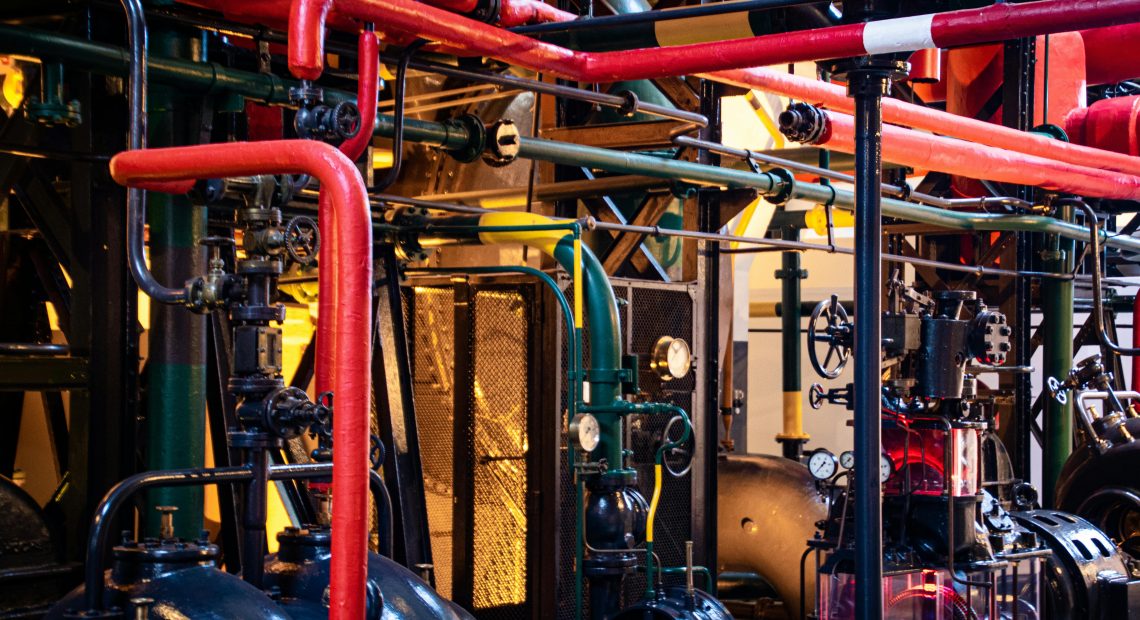
Image: The United States is the world’s largest oil producer. Credit: Magda Ehlers