Amid Vatican focus on space science
Pope Leo XIV commemorated the 56th anniversary of the Apollo 11 moon landing with a video call to former Nasa astronaut Buzz Aldrin – one of the first two humans to land on the lunar surface – and a visit to the Vatican Observatory, highlighting the Catholic Church’s continued interest in scientific exploration.
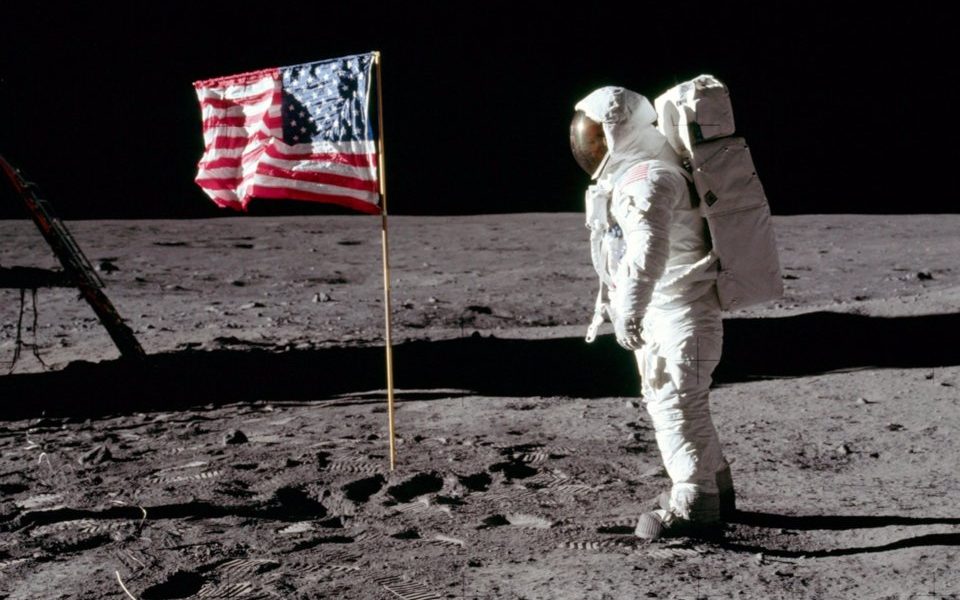
On July 20, 2025, the Pope spoke with Aldrin, 95, the only surviving member of Nasa’s Apollo 11 mission, which in 1969 made history with the first human landing on the moon.
The Vatican said the two discussed the historic mission and shared reflections on the complexity and vulnerability of the natural world. Their conversation reportedly drew on Psalm 8, a biblical passage that contemplates humanity’s place in the universe.
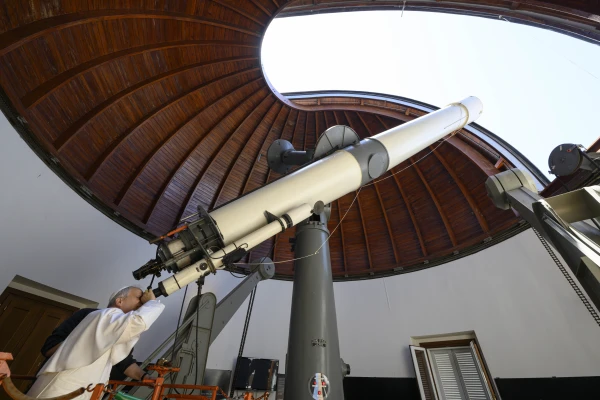
Earlier the same day, Pope Leo visited the Vatican Observatory at Castel Gandolfo, located around 30 kilometres southeast of Rome. The observatory, known as the Specola Vaticana, is one of the oldest astronomical institutions still in operation. It has been housed at the papal summer residence since the 1930s, although its roots date back to the 18th century.
The observatory was re-established in 1891 by Pope Leo XIII after a period of inactivity to reaffirm the Church’s commitment to scientific study. Since then, it has expanded internationally. In 1993, the Vatican Observatory Research Group completed the Vatican Advanced Technology Telescope on Mount Graham in Arizona, further cementing the Church’s role in modern astronomy.
Pope Leo’s stay at Castel Gandolfo is part of a temporary break from Rome’s summer heat, reviving a tradition that had fallen out of use under his immediate predecessor. Initially scheduled to conclude on July 20, the Vatican announced that the Pope would remain at the estate until July 22. No official reason was given for the extension.
The Pope’s visit to the observatory coincides with the Vatican’s growing emphasis on the intersection of science, ethics, and global cooperation. In a separate engagement last month, the pontiff met with participants of the Vatican Observatory Summer School, an academic programme that brings together young astronomers from around the world.
This year’s summer school, held under the theme “Exploring the Universe with the James Webb Space Telescope,” hosted 24 students from 22 countries. The programme focused on how the telescope, launched in late 2021, is reshaping our understanding of planetary systems and early galaxies.
Speaking at the event on June 16, 2025, Pope Leo urged the students to ensure that their research benefits society and to share their findings widely. He also highlighted the advances made possible by the telescope, including the ability to examine the atmospheres of distant exoplanets, observe star-forming nebulae, and detect ancient light from early galaxies.
Pope Leo holds a degree in mathematics from Villanova University and has consistently shown support for scientific engagement during his papacy. He has framed science not as a challenge to faith but as a complementary path to understanding the universe.
The Pope’s recent activities reflect a renewed effort by the Vatican to bridge the gap between scientific and spiritual inquiry. While primarily symbolic, the gestures carry broader significance as the Church seeks to remain relevant in contemporary global debates, including those surrounding climate change, space research, and technological ethics.
The Middle East, where interest in space science is growing, may find resonance in the Vatican’s message. The UAE, in particular, has invested heavily in space programmes in recent years, including Mars and lunar missions.
Pope Leo’s public support for science-based collaboration and his emphasis on ethical reflection align with regional aspirations for technological advancement, paired with cultural and moral frameworks.
Hero image: Pope Leo XIV visited the historic telescopes located at the Vatican Observatory in Castel Gandolfo on July 20, 2025. Credit: Vatican Media