As regional growth accelerates
The United Arab Emirates (UAE) is expected to see international visitor spending reach an all-time high of $62.22 billion (AED228.5 billion) in 2025, according to new figures from the World Travel & Tourism Council (WTTC).
The forecast represents a 37% increase over the previous peak, which was last recorded in 2019.
The WTTC’s annual Economic Impact Research shows the UAE’s travel and tourism sector is on track for another strong year. It is projected to contribute $72.84 billion (AED267.5 billion) to the national economy, equivalent to nearly 13% of gross domestic product. The data highlights the sector’s expanding role in national economic growth and job creation.
By the end of 2025, the industry is expected to support over 925,000 jobs nationwide. This marks a continued recovery and growth from 2024, when the sector contributed $70.06 billion (AED257.3 billion) to GDP and supported 898,600 jobs.
Domestic tourism is also expected to post record figures. Local visitor spending is forecast to reach $16.34 billion (AED60 billion) next year, representing a 47% increase from 2019 levels. The steady rise in internal travel demand is driven by residents increasingly spending on staycations and domestic leisure activities.
The UAE’s tourism sector has shown resilience since the Covid-19 pandemic and continues to outperform global averages. Its recovery has been supported by expanded airport capacity, improved visa policies, and increased connectivity with key source markets across Europe, Asia, and Africa.
The country’s tourism strategies are also geared toward long-term development. The WTTC forecasts that by 2035, the UAE’s tourism sector will contribute $78.37 billion (AED287.8 billion) to the economy, representing 10.4% of GDP. Employment in the industry is expected to exceed one million jobs within the next decade.
In the broader Middle East, the travel and tourism sector is also experiencing growth. In 2024, it added $341.9 billion (AED1,255.63 trillion) to the region’s GDP and supported 7.3 million jobs. These figures are expected to rise to $367.3 billion (AED1,348.91 trillion) and 7.7 million jobs by 2025.
Much of this growth is being driven by Arabian Gulf states, where governments have launched national strategies aimed at diversifying their economies and reducing reliance on hydrocarbons. Major investments in tourism infrastructure, new cultural and entertainment attractions, and improved regulatory frameworks have helped boost the sector’s contribution.
While the UAE remains a regional leader in terms of visitor numbers and spending, other countries in the region are also expanding their tourism footprints. Saudi Arabia, in particular, has made tourism a central component of its Vision 2030 agenda. Egypt and Morocco are also attracting an increasing number of visitors from Gulf states and Europe.
Industry analysts say the UAE’s strong performance reflects a broader regional trend. As Middle Eastern economies seek to attract more global visitors, they are focusing on improving traveller experience, streamlining visa processes, and investing in high-quality services.
In the UAE, tourism plays a pivotal role in the country’s broader economic diversification efforts. Authorities continue to prioritise the development of non-oil sectors to create jobs, attract investment, and maintain sustainable growth.
Although global economic conditions remain uncertain, demand for travel to the UAE has remained high. The country’s position as an international transport hub and its relative political and economic stability make it a preferred destination for tourists, business travellers, and investors.
The WTTC’s latest projections indicate that, barring major disruptions, the UAE’s tourism sector is likely to continue its upward trajectory through 2025 and beyond. Its performance will also remain closely tied to wider developments in the Gulf and the broader Middle East and Africa region.
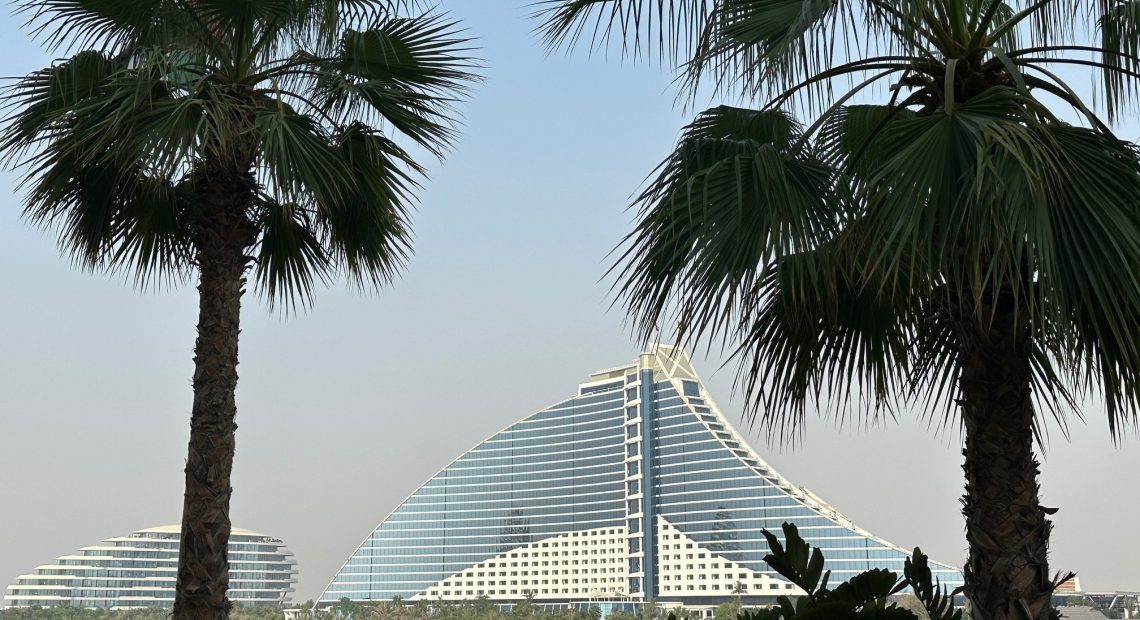
Image: Palm trees frame the iconic Jumeirah Beach Hotel in Dubai. Credit: Arnold Pinto