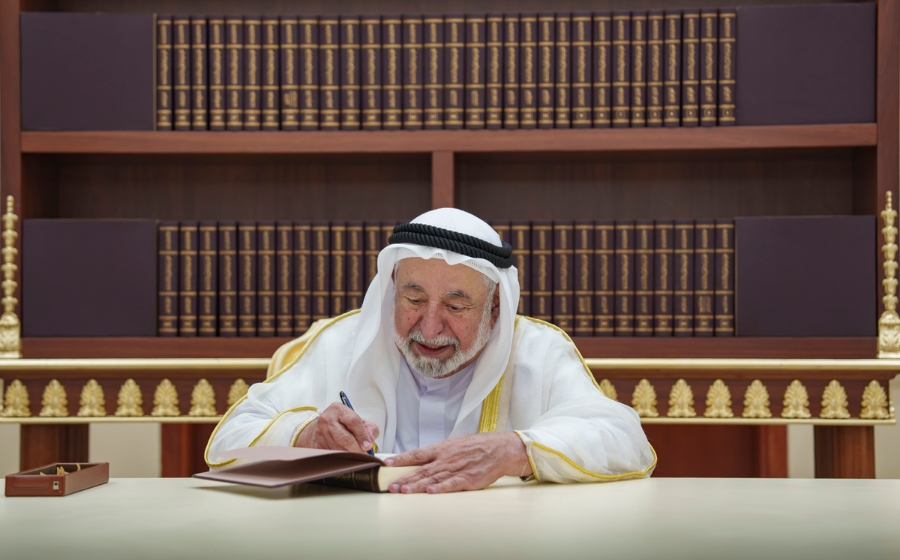
Dubai, UAE — December 2025 — Sharjah’s Supreme Council Member and Ruler, Sheikh Dr. Sultan bin Mohammed Al Qasimi, has approved the emirate’s general budget for 2026, with total expenditures set at approximately AED 44.5 billion ($12.1 billion).
This represents a 3 percent increase over the 2025 budget and is designed to bolster financial sustainability, economic competitiveness, and social welfare for all residents, according to the Emirates News Agency.
The budget is structured around key strategic pillars, with infrastructure receiving the largest allocation at 35 percent of total spending. This underscores a commitment to development projects across Sharjah’s cities and regions.
Economic development follows at 30 percent of the budget, a 17 percent increase from the previous year, while social development accounts for 23 percent, up 6 percent. Government administration, security, and safety constitute the remaining 12 percent.
Sheikh Mohammed bin Saud Al Qasimi, Chairman of the Sharjah Finance Department, stated that the budget establishes a framework to enhance the emirate’s competitiveness and financial sustainability.
Key objectives include funding strategic initiatives, providing housing solutions, developing tourism infrastructure, and improving government service delivery through digital transformation.
On the revenue side, total public revenues for 2026 have increased by 26 percent compared to 2025. This growth is supported by a 101 percent rise in tax revenues and a 35 percent increase in capital revenues. Operating revenues remain the largest component, constituting 69 percent of the total.
The budget also aims to strengthen the government’s capacity to navigate global economic challenges, such as inflation and geopolitical crises. It focuses on creating employment opportunities, supporting local businesses, and continuing the emirate’s development as a global hub for culture, science, and tourism.
Overall, the 2026 financial plan reinforces Sharjah’s strategic goals of ensuring a dignified standard of living for its residents, promoting sustainable economic growth, and maintaining fiscal stability for the future.