
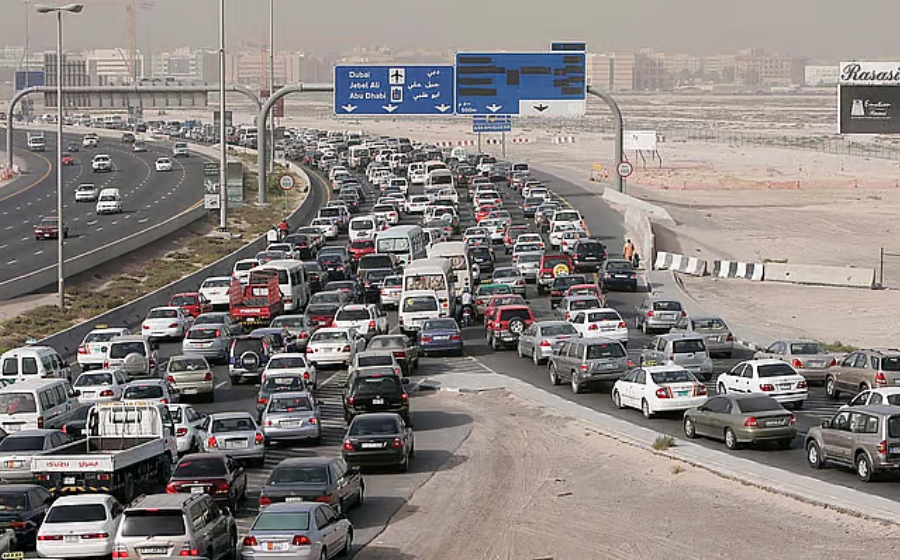
Commuters travelling between Sharjah and Dubai faced a frustrating start to the day on Wednesday as multiple crashes and heavy traffic slowed movement across key highways.
Motorists reported long tailbacks on Al Ittihad Street near Al Mamzar, where several accidents during peak hours significantly delayed vehicles heading toward Dubai. The congestion quickly spread across feeder roads, compounding travel times for thousands of residents making the daily inter-emirate commute.
Accidents Add to Peak-Hour Pressure
Real-time traffic monitoring showed a separate incident on Al Khail Road, triggering slow-moving traffic near Jumeirah Village Circle (JVC). Drivers reported extended delays as emergency response teams cleared affected lanes.
Elsewhere in Dubai, congestion lingered well beyond the usual rush-hour window. Traffic crawled along:
-
Umm Suqeim Street
-
Ras Al Khor Road near Za’abeel Second
-
Sheikh Mohammed bin Zayed Road through Muhaisnah
-
Emirates Road near Al Khawaneej
Industrial zones were also heavily impacted. In Al Qusais Industrial Area, Damascus Street experienced intense congestion, placing added strain on alternative routes frequently used by delivery trucks and commercial vehicles.
Sharjah Bottlenecks Persist
Traffic conditions were particularly challenging for residents leaving Sharjah. Al Wahda Street, especially through Al Khalidiya, saw vehicles inching forward as commuters approached the Dubai border.
The situation was similar on Sharjah Ring Road near Industrial Area 9, where heavy vehicle volumes slowed overall traffic flow. Meanwhile, parts of Sheikh Mohammed bin Zayed Road around Industrial Area 13 also recorded congestion as motorists attempted to merge into southbound lanes.
Police Warn Against Lane Violations
Sharjah Police attributed much of the recurring congestion to improper lane discipline. Authorities said failure to adhere to mandatory lanes and sudden lane changes at exits and intersections continue to cause avoidable accidents.
Officials highlighted that abrupt manoeuvres often lead to side-impact collisions, which in turn disrupt traffic flow for extended periods. Motorists have been urged to follow road markings carefully and prepare for exits well in advance to avoid last-minute swerving.