
As the UAE accelerates AI adoption across business and government, new research from International SOS highlights that organisations increasingly see artificial intelligence as a critical tool for verifying risk information, while also recognising the growing dangers posed by misinformation and synthetic content.
The findings come at a time when AI adoption in the UAE continues to outpace many global markets, with recent research showing that almost all UAE residents use AI in some capacity, while a significant majority also support stronger safeguards against AI-generated misinformation.
The International SOS Risk Outlook 2026 Pulse Check, a mid-year deep dive into the most pressing concerns identified by risk professionals worldwide, found that nearly 60% of respondents believe AI’s greatest potential lies in verifying or validating information across multiple sources.
However, the findings also highlight growing concerns around misinformation and deception. More than four in ten respondents (42%) report that their organisation has either been affected by, or lacks sufficient visibility to determine the impact of, false, misleading or unverified information related to health, wellbeing or security risks. Respondents cited fake signals creating operational uncertainty, synthetic content increasing credibility risks, and targeted deception and impersonation.
These concerns are increasingly relevant across the UAE, where cybersecurity experts have warned that AI-enabled disinformation and deepfakes are emerging as significant threats capable of undermining trust and disrupting organisations.
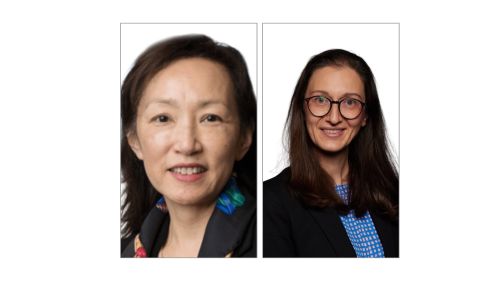
“The potential is real, but so too is the risk of overestimating the maturity of current tools.,” commented Cvete Koneska, Global Security Director at International SOS. “While AI can help surface, synthesise and prioritise information at speed, verification remains a high-stakes task where careful human judgement remains indispensable, particularly when decisions can impact people’s health, safety, and security. Misplaced reliance on AI at this stage can amplify misinformation risks and delay critical decisions rather than improve them. The most prudent approach is a human-led model of integrating AI into risk management.”
Irene Lai, Global Medical Director at International SOS added, “AI-generated deepfakes of real health professionals stating false information on measures to contain a natural outbreak is the new frontier of biowarfare, weaponised from a computer screen, without the need for introduction of a biological agent.”
Beyond AI
The findings also point to broader structural challenges in organisational risk response, with clarity of responsibility and decision-making processes emerging as significant concerns.
Only 10% of organisations say they can respond “very quickly” to new risks. While 68% believe they respond “fairly quickly”, this may not be sufficient in an increasingly volatile operating environment. One in five organisations (20%) admit they are “not quick to respond at all.”
The research also exposes uncertainty within risk governance structures:
- 17% are unclear about what happens next when new risks emerge.
- 25% are unclear about escalation triggers.
- Only around 20% report being very clear on how global and local responses align.
These gaps can contribute to duplicated effort, inconsistent action, increased pressure on teams and a greater risk of employee burnout during crisis situations.
“The biggest barriers are not about awareness of risk, but at the point of decision,” said James Wood, Security Director, Northern Europe at International SOS. “Organisations are often structured for stability, not volatility. That slows action when speed matters most.”