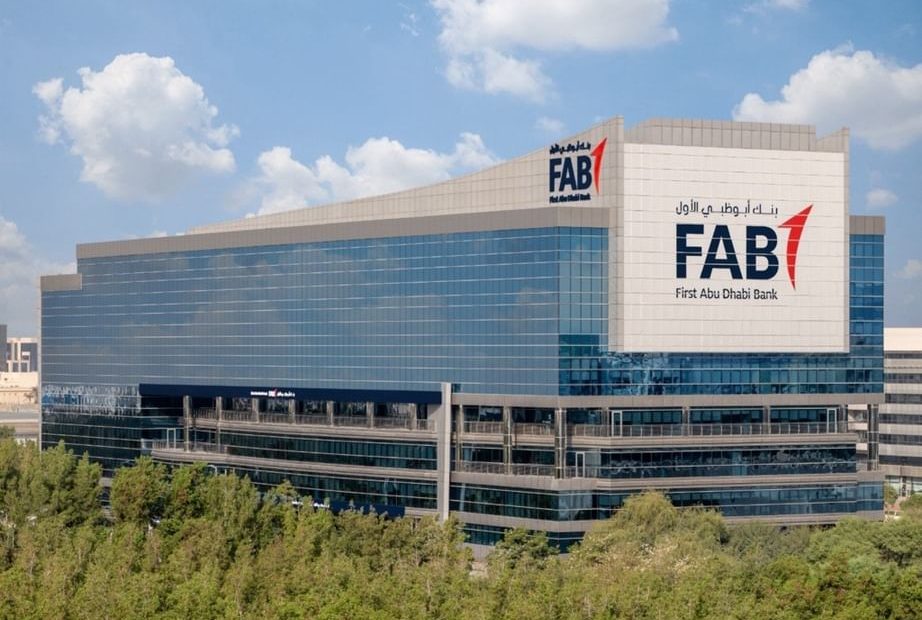
First Abu Dhabi Bank (FAB) reported a 3 percent year-on-year increase in group net profit to AED16.46 billion for the first nine months of 2026, supported by higher revenue, increased lending activity and continued cost discipline.
The UAE’s largest bank by assets recorded a 7 percent rise in operating income to AED29.71 billion, while profit before tax increased 5 percent to AED20.22 billion compared with the corresponding period in 2025.
FAB maintained its growth momentum during the third quarter, with profit before tax climbing 9 percent year-on-year to AED7.01 billion, reflecting steady business activity and strong income generation.
The bank’s balance sheet continued to expand, with loans and advances increasing 10 percent since the beginning of the year to AED679 billion. Customer deposits grew 5 percent to AED885 billion, while total assets rose 7 percent to AED1.47 trillion.
Net interest income increased 11 percent year-on-year to AED16.98 billion, supported by higher lending volumes and improved margins. Non-interest income rose 3 percent to AED12.73 billion, accounting for 43 percent of the bank’s total operating income.
Meanwhile, operating profit advanced 8 percent to AED23.32 billion, reflecting FAB’s diversified revenue streams and effective cost management.
The bank also reported an improvement in asset quality, with its non-performing loan ratio declining to 2.1 percent from 2.6 percent a year earlier.
FAB maintained strong capital and liquidity positions, with its Common Equity Tier 1 (CET1) ratio reaching 14 percent and its Liquidity Coverage Ratio standing at 140 percent at the end of September 2026.
The bank continues to hold AA- or equivalent credit ratings with stable outlooks from Moody’s, Fitch and S&P.
Hana Al Rostamani, Group Chief Executive Officer of FAB, said the results demonstrated the strength of the bank’s business model and its ability to execute its long-term strategy.
She highlighted that the bank’s return on tangible equity reached 18.6 percent, remaining above its medium-term guidance.
Al Rostamani noted that continued expansion across FAB’s businesses and international operations had contributed to its financial performance.
She also emphasised the opportunities emerging from the UAE’s economic diversification, investment initiatives and growing integration with international markets.
According to Al Rostamani, FAB remains well positioned to finance strategic sectors and connect businesses with global opportunities through its extensive international network and financial expertise.
Lars Kramer, Group Chief Financial Officer of FAB, said the bank delivered another strong quarter, with third-quarter operating profit rising 11 percent year-on-year.
He attributed the performance to sustained business growth, strong revenue generation and operational efficiency.
Kramer said the bank’s net interest margin reached 1.93 percent, representing an improvement of five basis points compared with the previous year.
He added that FAB’s growing deposit base and access to international capital markets helped the bank maintain competitive funding costs and pricing discipline.
The bank also strengthened its sustainable financing activities through the recent issuance of AED1 billion in Digitally Native Green Notes, expanding its funding capabilities while supporting financial innovation.
Sustainability remains a key priority for FAB, which has established an AED100 billion blue finance target to support sustainable ocean and water-related projects.
FAB has also become the first bank in the Middle East and North Africa to sign the United Nations Sustainable Blue Economy Finance Principles, reinforcing its commitment to responsible financing and environmental sustainability.