Emirates Environmental Group (EEG) convened its 5th and final Panel Discussion of 2026 under the theme “Protecting Ecosystems in Rapidly Growing Economies: Biodiversity Restoration and Land Stewardship,” bringing together sustainability leaders, environmental experts, researchers, policymakers, industry representatives, educators and youth to deliberate on the growing importance of protecting natural ecosystems while supporting economic development. The discussion provided a platform for meaningful dialogue on biodiversity conservation, ecosystem restoration, sustainable land management and the need for coordinated action to safeguard ecological integrity amid rapid urbanisation, resource pressures and climate change. The session underscored the importance of integrating nature-positive approaches into developmental planning and strengthening collective responsibility for protecting the UAE’s natural heritage for present and future generations.
In her opening address, Dr. Habiba Al Mar’ashi, Co-Founder and Chairperson of EEG, emphasised that the true challenge of sustainable development lies in balancing economic growth with the protection and restoration of natural ecosystems. Referring to the global biodiversity crisis and the growing pressures of urbanisation and infrastructure development, she highlighted the importance of safeguarding the UAE’s desert landscapes, mangroves, wetlands and coastal habitats.
She stressed that progress must be measured not only by the infrastructure built and economic value generated, but also by the biodiversity protected and natural assets preserved for future generations. She called for a collective commitment from governments, businesses, academia, researchers and communities to integrate nature into every development plan to ensure that economic progress becomes a force for regeneration rather than environmental degradation.
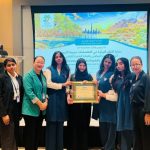
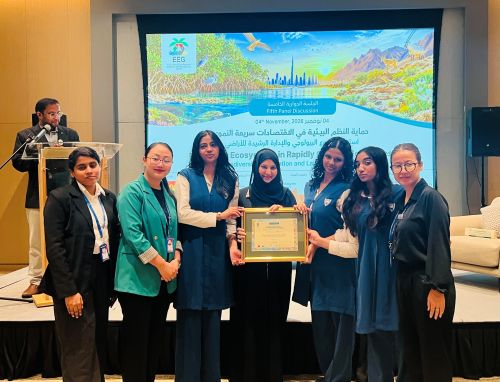
The programme opened with an Inter-School Debate on the motion “Biodiversity Restoration: A National Priority or an Unrealistic Ambition?”, providing a platform for young minds to critically examine the balance between environmental responsibility and economic development. The debate encouraged students to explore competing land-use priorities, the value of ecosystem services and the long-term consequences of biodiversity loss. Students from New Indian Model School, Dubai, argued in favour of the motion, while Raffles World Academy, Dubai represented the opposition, with New Indian Model School, Dubai emerging as the winner.
The panel discussion convened a distinguished panel of experts spanning environmental management, international development, academia and ecological restoration, bringing together diverse perspectives and specialised expertise to address the critical challenges of biodiversity conservation and responsible land stewardship.
The panellists included Mr. Lorenzo Tacchella, Head of Private Sector Partnerships for the GCC countries, World Food Programme (WFP); Prof. Ali El-Keblawy, Professor of Plant Ecology, University of Sharjah and Founding Director of the Sharjah Seed Bank and Herbarium, Mr. Enzo Ploder, Co-founder and Head of Food Security and Creative Impact, ReFarm Global and Dr. Philip Sanders, Sustainability & Environmental Lead, Ecocoast. Their collective expertise provided valuable perspectives on the challenges and opportunities associated with protecting ecosystems in rapidly developing economies, with particular emphasis on the UAE’s environmental priorities and the need to balance land development with biodiversity conservation.
Discussions examined the growing pressures on fragile desert ecosystems, coastal habitats, mangroves, wetlands and native wildlife arising from land degradation, habitat fragmentation, pollution, rising temperatures and water scarcity. Panellists emphasised that healthy ecosystems are fundamental to national resilience, supporting biodiversity, carbon sequestration, coastal protection, food and water security, tourism and sustainable economic development. Against this backdrop, the discussion highlighted the importance of restoring degraded landscapes through science-based, locally appropriate interventions, with a focus on prioritising native species, protecting existing habitats and strengthening ecological connectivity.
Technology was identified as an important enabler of effective ecosystem management and evidence-based decision-making. Panellists explored how satellite monitoring, drone-based habitat mapping, artificial intelligence-enabled biodiversity assessments and advanced environmental data systems can help identify vulnerable areas, monitor ecological changes and evaluate restoration outcomes. They also stressed that these tools must be supported by reliable ecological baselines, locally relevant data and appropriate implementation frameworks to translate technological advances into meaningful environmental outcomes.
The discussion further addressed the challenges of competing land-use demands, limited water resources and ecosystem management across administrative and sectoral boundaries. Experts highlighted the need for integrated land-use planning, stronger institutional coordination and the early incorporation of biodiversity considerations into development decisions.
Public-private partnerships were also recognised as vital to advancing restoration efforts, bringing together public-sector leadership, private-sector investment, technical expertise and innovation to mobilise resources, scale up initiatives and strengthen long-term conservation outcomes. Collaboration among government institutions, businesses, researchers and environmental organisations was emphasised as essential to bridging implementation gaps, strengthening accountability and ensuring that biodiversity restoration and responsible land stewardship remain integral to sustainable economic development.
An engaging Q&A session followed, offering participants an opportunity to interact directly with the panellists on key issues surrounding biodiversity restoration, land stewardship, competing land-use priorities and ecosystem management. The exchange encouraged deeper discussion on practical solutions, policy integration and cross-sector collaboration, highlighting the importance of collective action in balancing economic growth with long-term environmental protection.
In her closing remarks, she emphasised that biodiversity conservation and land stewardship must be recognised as essential priorities in the pursuit of sustainable economic growth. She highlighted that protecting ecosystems requires a collective shift in how land and natural resources are valued, managed and utilised, urging stakeholders to look beyond immediate development needs and consider the long-term consequences of their decisions.
She further stressed that meaningful progress depends on translating environmental commitments into sustained action through responsible land-use planning, ecosystem restoration and stronger collaboration across sectors. She underscored that governments, businesses, institutions and the society each have a role to play in safeguarding biodiversity, reinforcing that economic progress and environmental protection must advance together to secure a resilient and sustainable future for generations to come.
This impactful session was made possible through the valued support of McDonald’s UAE, the Main Contributor, whose continued commitment to EEG’s programmes and initiatives plays a vital role in strengthening national platforms for climate dialogue and engagement. The event was hosted at Holiday Inn & Suites Dubai Science Park, which provided an excellent venue, ensuring a professional setting and seamless hospitality for all participants.
The panel was further reinforced by the continued partnership of EEG’s collaborators, including the Emirates Green Building Council, the Clean Energy Business Council, the Swiss Business Council, Capital Club Dubai, and the CSR Partner, the Arabia CSR Network.
Their ongoing support reflects a shared commitment to advancing environmental stewardship, fostering informed climate dialogue and promoting cross-sector collaboration to drive meaningful and sustained impact.
This session marked EEG’s 225th Panel Discussion and brought its 2026 Panel Discussion Series to a meaningful close, reflecting the organisation’s continued commitment to fostering environmental awareness, expert dialogue and collaborative action. The discussion reinforced the importance of collective responsibility in protecting biodiversity and restoring ecosystems, reminding participants that the choices made today will shape the health of our natural environment and the sustainability of future generations.