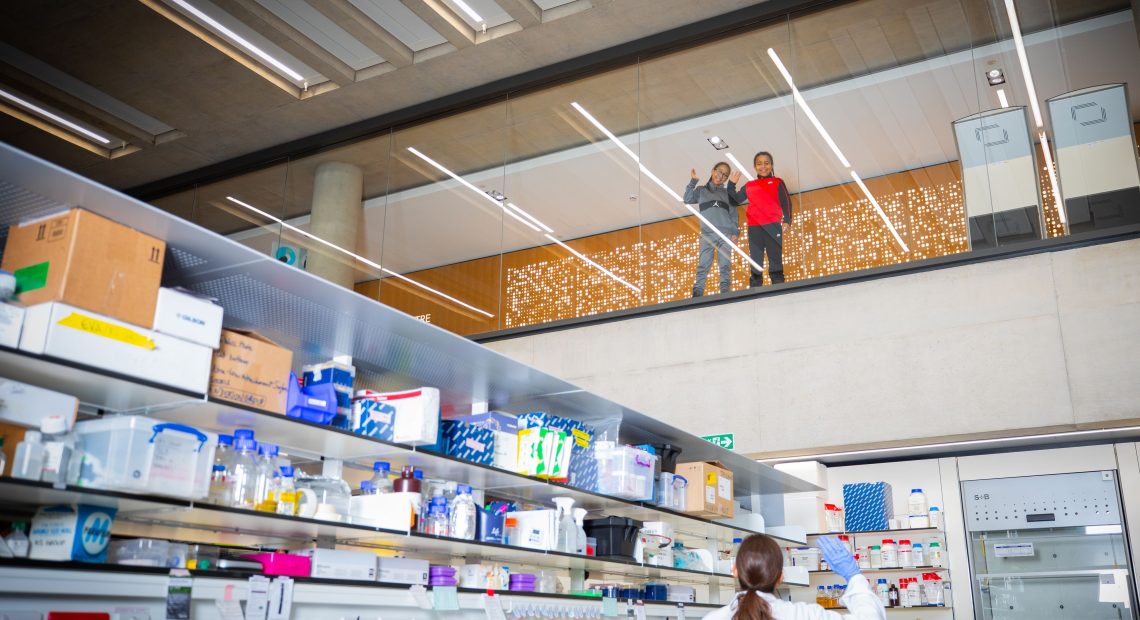
The Zayed Centre for Research into Rare Disease in Children (ZCR) in London is celebrating its seventh anniversary, highlighting major achievements in paediatric research, medical innovation and the development of advanced treatments for children living with rare and complex diseases.
Established with a £60 million contribution from H.H. Sheikha Fatima bint Mubarak, the “Mother of the Nation”, Chairwoman of the General Women’s Union (GWU), President of the Supreme Council for Motherhood and Childhood (SCMC), and Supreme Chairwoman of the Family Development Foundation (FDF), the Centre began treating young patients in 2019.
Since its establishment, ZCR has brought together scientists, medical specialists and researchers to accelerate scientific discoveries, improve diagnosis and develop innovative therapies for childhood diseases.
Dr. Maha Barakat, Assistant Minister of Foreign Affairs for Medical Affairs and Life Sciences, praised the Centre’s achievements, emphasising that its progress reflects the lasting impact of Sheikha Fatima’s commitment to advancing medical research and improving children’s healthcare.
She noted that continued investment in scientific innovation is helping translate research breakthroughs into better treatment outcomes for children affected by rare and complex conditions worldwide.
Barakat also commended the research teams at ZCR and Great Ormond Street Hospital (GOSH) for their dedication and contributions to medical advancement.
According to the Zayed Centre’s 2026 Annual Report, 46 principal investigators and their research teams contributed to 61 peer-reviewed scientific publications over the past year.
During the 2025/26 financial year, the Centre also launched 23 new research projects, including 11 dedicated to gene and cell therapies.
Among its notable achievements is its contribution to manufacturing an innovative gene therapy for Hunter syndrome, administered to a three-year-old patient during a world-first clinical trial.
The Centre has also made significant progress in regenerative medicine, rare genetic disorders and advanced treatments for childhood cancers.
To commemorate its seventh anniversary, ZCR is recognising seven researchers whose work has contributed to developments across paediatric neurology, genetic medicine, regenerative therapies and cancer treatment.
Professor Manju Kurian, Consultant Paediatric Neurologist at GOSH and Professor of Neurogenetics at University College London (UCL), focuses on identifying the genetic causes of neurological disorders affecting children.
Her research examines how genetic variations influence brain development, particularly in conditions involving movement disorders and neurodegeneration. Her team is also exploring precision medicine and gene therapy approaches to improve diagnosis and treatment.
Professor Paolo De Coppi, a leading paediatric surgeon and regenerative medicine researcher, has played a key role in developing innovative treatments for children born with complex medical conditions.
His research at GOSH and the UCL Great Ormond Street Institute of Child Health focuses on stem cells, tissue engineering and advanced surgical techniques.
His work includes developing methods to repair damaged tissues, potentially even before birth, and exploring tissue-engineered treatments for congenital abnormalities. He also serves as co-lead of the Tissue Engineering and Regenerative Medicine theme at the NIHR GOSH Biomedical Research Centre.
Dr. Amy McTague, Consultant Paediatric Neurologist and researcher, is advancing genetic research to improve the diagnosis and treatment of severe childhood epilepsy.
Through the Gene-STEPS study, her work has demonstrated how rapid genome sequencing can identify genetic causes of epilepsy within weeks, significantly reducing the time families may otherwise spend seeking a diagnosis.
She is also developing stem-cell models to investigate potential treatments for inherited forms of epilepsy.
Professor Francesco Muntoni, Director of the Dubowitz Neuromuscular Centre, has dedicated his career to researching rare neuromuscular diseases, including Duchenne muscular dystrophy and spinal muscular atrophy (SMA).
His contributions have helped connect genetic discoveries with clinical treatments, supporting the development of therapies for conditions that previously had limited treatment options.
Recent progress in SMA research, including developments towards its inclusion in UK newborn screening, reflects the importance of sustained medical research.
Professor Waseem Qasim has been instrumental in advancing cell and gene therapies for children with cancer.
His research focuses on genetically engineering immune cells to target cancer, including pioneering genome-edited CAR-T cell treatments for children with previously untreatable leukaemia.
His team is also developing ready-to-use cellular therapies that could improve access to potentially life-saving treatments internationally.
Professor Sara Ghorashian, Consultant Paediatric Haematologist and clinician scientist, specialises in developing cellular immunotherapies for children with aggressive and difficult-to-treat blood cancers.
Her research aims to improve the safety and effectiveness of CAR-T cell therapies while accelerating their transition from laboratory research into clinical treatment.
She is also leading clinical trials investigating new therapeutic approaches for young cancer patients.
Professor Claire Booth, Consultant Paediatric Immunologist and Professor of Gene Therapy and Paediatric Immunology, is advancing treatments for children with severe inherited immune disorders.
Her work involves leading gene therapy clinical trials and developing treatments that could offer long-term benefits or potential cures for children who would otherwise require lifelong medical care.
Her research covers early laboratory development through to first-in-human clinical trials, helping ensure promising discoveries can be evaluated safely in patients.
Dr. Kiki Syrad, Director of Research and Innovation at Great Ormond Street Hospital, said the Centre’s anniversary represents an important milestone in its mission to transform medical research into meaningful improvements in children’s lives.
She highlighted the Centre’s achievements in accelerating diagnosis, introducing innovative treatments and strengthening collaboration between researchers, clinicians, patients and families.
Syrad also emphasised that the seven featured researchers represent only a small part of the wider scientific community contributing to the Centre’s progress.
The Zayed Centre operates through a partnership between Great Ormond Street Hospital, University College London and Great Ormond Street Hospital Children’s Charity.
Through continued scientific collaboration and investment in advanced medical research, the Centre aims to expand treatment possibilities and improve healthcare outcomes for children affected by rare and complex diseases around the world.