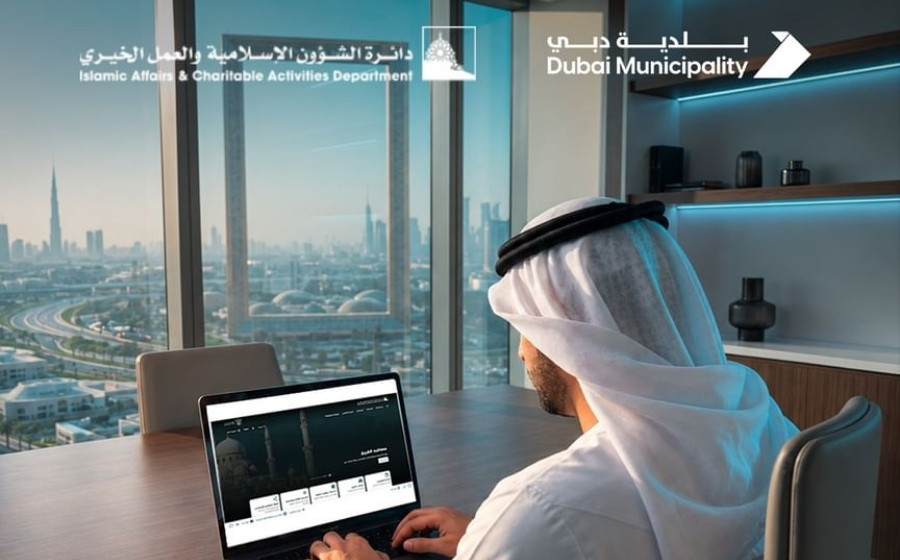
Dubai Municipality and the Islamic Affairs and Charitable Activities Department (IACAD) have launched a joint initiative to accelerate mosque construction approvals, allowing building permits to be issued within a maximum of five days.
The initiative aims to simplify construction regulations, reduce administrative procedures and improve the development and maintenance of mosques across Dubai. It also seeks to ensure that religious facilities meet the needs of growing residential communities while supporting the emirate’s long-term urban development plans.
Under the new framework, the two government entities will coordinate more closely throughout the planning, construction, expansion and maintenance of mosques. Construction requirements will also be simplified to better accommodate the operational needs of mosques and their associated facilities.
A key feature of the initiative is the exemption of certain mosque maintenance activities from construction permit requirements. Maintenance work that does not involve specialised structural modifications can be carried out through the self-maintenance service, provided it complies with applicable regulations.
To further speed up approvals, Dubai Municipality will work with IACAD to review mosque designs and assess technical requirements during the early planning stages. This approach is expected to reduce delays and improve the overall efficiency of mosque construction projects.
The collaboration will also focus on identifying available land in areas experiencing increasing numbers of worshippers. This will help authorities plan new mosques and expand existing facilities in response to population growth and community demand.
Dubai Municipality will additionally support landscaping improvements within mosque premises, ensuring that outdoor spaces complement surrounding roads and public areas while maintaining a consistent urban identity.
Eng. Marwan Ahmed bin Ghalita, Director-General of Dubai Municipality, said the initiative demonstrates Dubai’s commitment to strengthening cooperation between government entities and delivering faster, more accessible public services.
He explained that simplifying mosque construction procedures would reduce the time and effort required to secure approvals while ensuring that technical standards continue to meet operational requirements.
Bin Ghalita also highlighted the importance of expanding digital services through the unified Dubai Building Platform, which aims to improve regulatory efficiency, accelerate project completion and support Dubai’s future infrastructure needs.
Ahmed Darwish Al Muhairi, Director-General of IACAD, emphasised that cooperation between government departments is essential to improving service delivery and responding effectively to community requirements.
He said the partnership would strengthen coordination across mosque planning, permitting, construction, development and maintenance, helping religious facilities remain prepared to serve worshippers.
Al Muhairi added that improving accessibility, operational efficiency and customer satisfaction remains a priority for IACAD as it works to enhance religious services throughout the emirate.
The initiative forms part of Dubai’s wider efforts to modernise government services, improve construction sector efficiency and develop religious infrastructure that keeps pace with the emirate’s expanding population and urban growth.