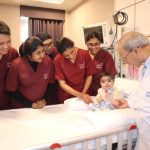
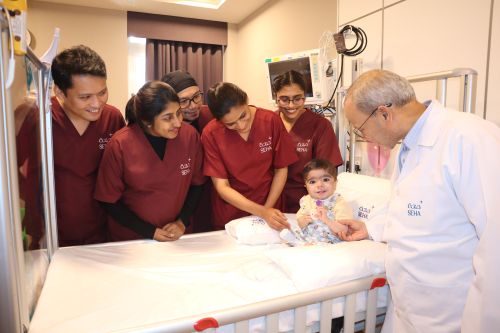
Baby Saif arrived at SEHA Salma Rehabilitation Hospital with complex medical conditions from birth, including congenital diaphragmatic hernia, chronic respiratory failure, and dependence on ventilatory support and tube feeding.
Through an early multidisciplinary care plan involving paediatrics, physiotherapy, occupational therapy, speech and language therapy, in addition to full recreational support, Saif began making gradual progress in breathing, feeding, movement, communication, and interaction with his surroundings.
With continued rehabilitation and follow-up, Saif moved from dependence on breathing and feeding support to breathing independently with minimal oxygen support, improved oral intake, and stronger motor, sensory, and play-related development.
Dr. Ali Rishwan Ali Zalat, Specialist in Paediatrics at SEHA Salma Rehabilitation Hospital, said:
“When Saif arrived, he was dependent on machines to help him breathe and receive nutrition. Today, he is breathing on his own, taking food orally, and growing better consistently. His journey reflects the impact of early, coordinated rehabilitation in supporting children with complex medical needs.”
Alexis Joseph Colada Solas, Physiotherapist at SEHA Salma Rehabilitation Hospital, said: “Saif showed meaningful progress in gross motor and transitional skills through a multidisciplinary treatment plan with clearly defined physiotherapy goals and regular follow-up. Targeted interventions helped support his balance, postural control, and motor strength, contributing to gradual functional gains and greater independence.”
Saif’s story highlights the importance of specialised rehabilitation and close collaboration between families and clinical teams in helping children achieve meaningful functional progress. It also reflects the role of SEHA’s Salma Rehabilitation Hospital in providing compassionate, integrated rehabilitation care for children who need long-term support.