New York University Abu Dhabi (NYUAD) has secured a grant from the US Department of State to lead Lunar Scouts, an 18-month joint US-UAE initiative designed to equip graduate students with the technical skills needed to develop scientific instruments for future missions to the Moon.
Launched in November 2026, the programme will bring together 30 graduate students, including 15 from American universities and 15 from UAE institutions. Participants will collaborate in six binational teams to design, build and test scientific equipment aimed at supporting lunar exploration and identifying natural resources on the Moon’s surface.
The initiative combines practical engineering experience with access to specialised research laboratories and simulated lunar environments. Each student team will develop a scientific payload for integration with a rover chassis designed by NYU Abu Dhabi.
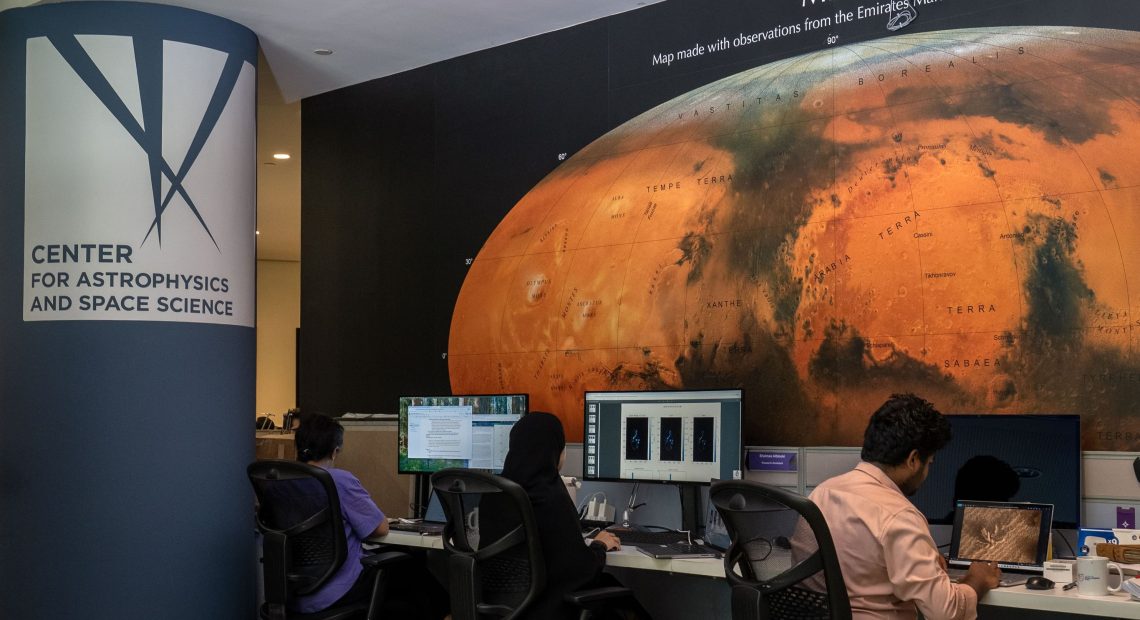
The programme is led by Dimitra Atri, Principal Investigator of NYU Abu Dhabi’s Space Exploration Laboratory at the Centre for Astrophysics and Space Science (CASS).
As part of the training, students will move through different stages of instrument development, from initial concepts and engineering designs to calibrated prototypes. Their equipment will undergo laboratory testing and evaluation under simulated space conditions to assess its performance and suitability for future lunar applications.
A key component of Lunar Scouts is a two-week field campaign at NYU Abu Dhabi’s Saadiyat Moon Station, where participants will test their instruments using the Emirates Lunar Simulant, a material developed from rocks found in the UAE to replicate important characteristics of lunar soil.
According to Atri, the initiative builds on NYU Abu Dhabi’s existing research infrastructure and expertise in space exploration.
He highlighted the role of the university’s Emirates Lunar Simulant and Space and Planetary Environment simulAtoR (SPEAR), which enables researchers to assess technologies under conditions resembling those encountered in space.
These facilities will allow students to evaluate their designs while collaborating across academic disciplines and international borders on technical challenges associated with future Moon missions.
Teams presenting the strongest designs will also have the opportunity to visit a NASA centre and a commercial lunar exploration company, providing firsthand exposure to organisations involved in advanced space research and technology development.
By the end of the programme, Lunar Scouts aims to deliver six tested scientific payloads, with up to three potentially progressing to the preliminary design stage for future lunar missions or related mission-support activities.
Participants will also produce scientific datasets, engineering documentation and an open-source challenge package intended to support future student groups and lunar mission research.
The initiative is expected to strengthen academic and scientific collaboration between the UAE and the United States while contributing to the development of technologies and expertise required for future lunar exploration.