
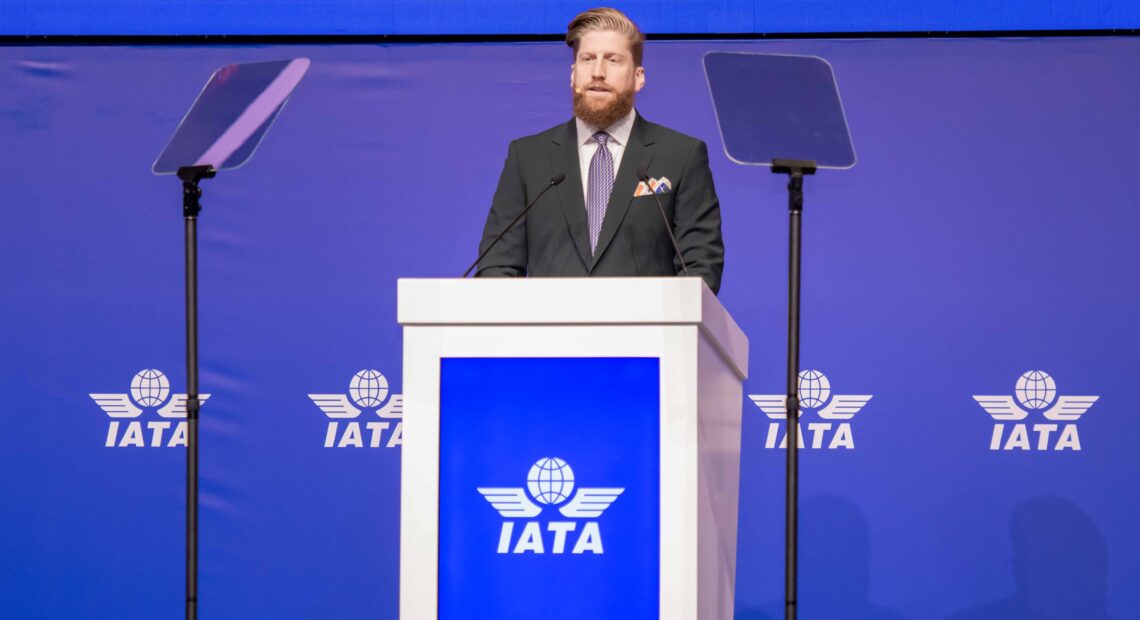
Says IATA at World Cargo Symposium
The International Air Transport Association (IATA) has reaffirmed the essential role of air cargo in maintaining global supply chains and has urged governments and industry stakeholders to concentrate on customer expectations, especially regarding safety, security, digitalisation, and sustainability.
Speaking on April 15, 2025, at the opening of the 18th World Cargo Symposium (WCS) in Dubai, Brendan Sullivan, IATA’s Global Head of Cargo, stressed that the significance of air cargo has never been more evident. Whether it’s facilitating global trade, supporting booming e-commerce, or delivering essential humanitarian relief, air cargo is a cornerstone of the modern economy.
“To meet customer expectations and navigate an increasingly complex environment, the air cargo industry must continuously strengthen safety and security, fast-track digitalisation, and deliver on its sustainability commitments,” said Sullivan.
Safety
Safety remains the top priority for air transport, with special focus on the increasing volume of lithium battery shipments. IATA has urged governments to enhance their efforts to clamp down on rogue shippers and to actively support the International Civil Aviation Organisation (ICAO) in reinforcing Annexe 18 of the Chicago Convention, which governs the safe transport of dangerous goods by air.
“As lithium battery shipments grow, so do the risks—especially from undeclared or mis-declared goods,” Sullivan warned. “While the industry has made strides in training and technology, governments must match that commitment with stronger oversight and enforcement.”
Security
Following recent incidents involving concealed incendiary devices, IATA is urging governments to adopt a coordinated, risk-based approach to air cargo security. Some states have already implemented measures, but the lack of global alignment has resulted in fragmented and inconsistent practices.
“Security cannot rely on patchwork responses. We need harmonised, standardised action built on global cooperation,” Sullivan said, underscoring the need for states to meet their obligations under Annexe 17 by sharing accurate and timely intelligence.
According to Sullivan, while the industry understands its operational risks, governments possess the intelligence capabilities needed to provide deeper insight. “The best outcomes happen when government intelligence and industry expertise come together,” he added.
Digitalisation
Digitalisation is at the heart of modernising air cargo. IATA has reiterated its push for adopting ONE Record—the industry-wide standard for digital data sharing across the supply chain. With a target to make ONE Record the preferred method by January 2026, IATA is calling on airlines, freight forwarders, and tech developers to accelerate implementation.
“ONE Record represents a fundamental shift in how we manage and trust data,” said Sullivan. Airlines accounting for 72% of global air waybill volume are on board, along with over 100 IT providers and 10,000 freight forwarders. But to unlock full benefits, we need faster, broader adoption—and regulatory recognition from governments.”
Sustainability
Environmental responsibility is another core pillar for the future of air cargo. The industry continues to adopt greener practices, from reducing waste and eliminating single-use plastics to pushing for broader adoption of Sustainable Aviation Fuel (SAF). IATA’s new operational standards reflect best practices for reducing plastic use across the cargo supply chain.
Significant progress is being made on decarbonisation, with the SAF Registry—managed by CADO—positioned to help create a global SAF market. IATA also plans to launch CO2 Connect for Cargo, a tool to measure and report emissions, including SAF usage accurately.
Despite this momentum, current SAF production volumes are far from sufficient. High costs and limited availability remain major hurdles, and IATA is calling on governments to implement policy frameworks that support SAF production and scalability.
“The path to net zero by 2050 depends on SAF, but progress has been underwhelming,” said Sullivan. “Fuel producers are dragging their feet, aircraft manufacturers are stepping back from mid-term commitments, and governments are failing to provide consistent support. We know what works—the energy sector proved it with wind and solar. Now we need that same commitment from policymakers, regulators, and suppliers.”
Trade tensions
Amid rising global trade tensions, IATA also underscored the broader role of air cargo in promoting economic stability. Sullivan warned that protectionist measures and restrictions on the movement of goods ultimately harm consumers and businesses.
“Trade drives prosperity. The more the world trades, the better off we all are,” said Sullivan. “Whatever direction trade disputes take, air cargo will remain critical to ensuring goods reach the people who need and want them.”
Conclusion
The message from Dubai is clear: the air cargo industry stands ready to innovate, adapt, and lead, but success hinges on alignment between private and public sectors. Collaboration is key, from strengthening safety and bolstering security to embracing digital transformation and achieving environmental targets.
Hero image: Brendan Sullivan, IATA’s Global Head of Cargo, has stressed that the significance of air cargo has never been more evident. Credit: IATA