
In major logistics push
Amazon has rolled out same-day delivery for fresh groceries in more than 1,000 cities and towns across the United States, with plans to more than double that coverage to 2,300 locations by the end of 2025.
The move marks a significant escalation in the company’s efforts to capture a larger share of the grocery market, as it faces increasing competition from traditional supermarkets and online retailers.
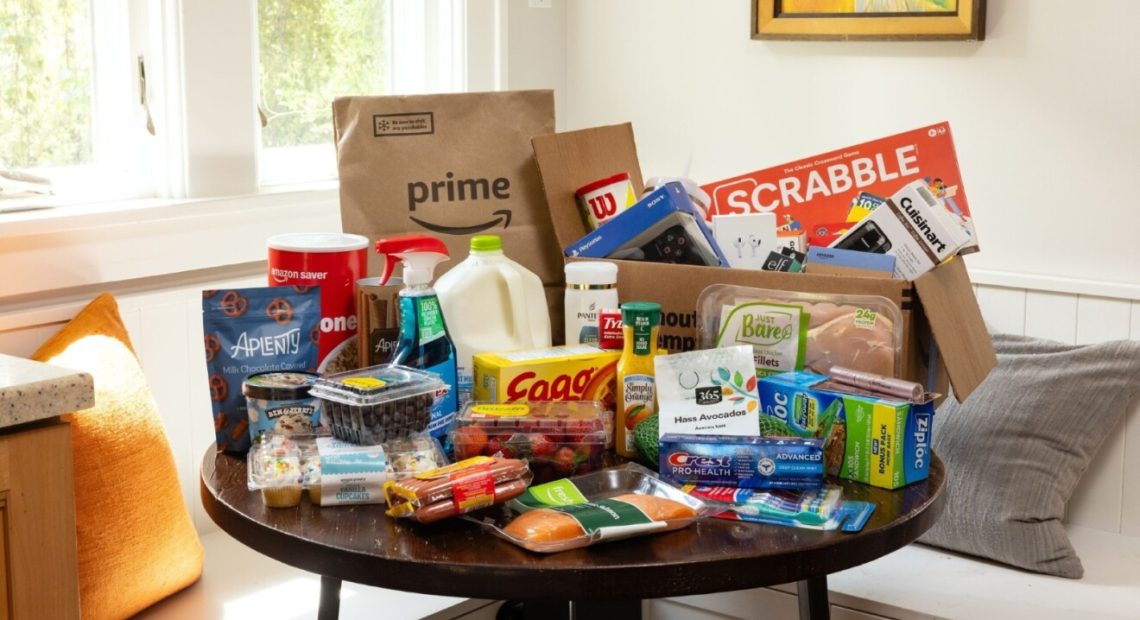
The expansion comes as Amazon intensifies its focus on logistics and delivery infrastructure. The service allows customers to order fresh produce, dairy, meat, seafood, frozen foods, and baked goods—alongside other household essentials and electronics—with the promise of delivery within hours. For Prime members, same-day delivery is free on grocery orders over $25. Non-members can access the service for a $12.99 fee, while smaller Prime orders are subject to a $2.99 charge.
Amazon reported over $100 billion in gross merchandise sales of groceries and household goods in 2024, according to company filings and estimates from market analysts. That figure reflects the growing reliance on e-commerce for essential goods, accelerated by consumer preferences shaped during the COVID-19 pandemic. With more than 150 million US-based Prime subscribers, the company continues to leverage its membership base to drive higher order volumes.
The expansion also highlights Amazon’s investment in cold-chain logistics. All perishable items are processed through a temperature-controlled fulfilment network, where products are inspected under a six-point quality assurance system. Groceries are then packed into insulated, recyclable bags designed to maintain freshness during transit. This infrastructure is similar to that used in its Amazon Fresh and Whole Foods Market operations.
The growth of Amazon’s grocery services has implications beyond US borders. In the Middle East, where digital retail is expanding rapidly, Gulf-based logistics firms and retailers are closely watching how Amazon manages last-mile delivery at scale, particularly in high-temperature climates and dense urban environments.
The UAE, for example, has seen a rise in online grocery shopping, with data from Statista showing that e-grocery revenues in the Emirates are expected to reach AED 3.7 billion by the end of 2025.
Although Amazon has not disclosed plans to introduce this particular same-day fresh grocery model in the Middle East, its developments in the US may signal future international ambitions. Regional competitors such as Noon, Talabat Mart, and Instashop have also expanded their offerings, with an emphasis on rapid delivery and temperature-sensitive fulfilment.
In the US, items like bananas, milk, eggs, and bread are among the most commonly ordered groceries through Amazon’s same-day service. Strawberries, limes, and avocados have also ranked among the top 10 fresh items delivered, suggesting that customers are willing to trust the platform with their fresh food needs.
The company is integrating its same-day grocery operations with its broader retail ecosystem. Shoppers can now add perishables to orders that also include books, electronics, and household tools, checking out through a single cart. This approach streamlines the user experience and increases average order values, reinforcing Amazon’s position as a one-stop shop for a growing share of consumer needs.
As of August 2025, Amazon says the same-day grocery delivery service has reached over 1,000 cities and towns, with the target of more than 2,300 by the end of the year. Longer-term growth is expected to continue into 2026 and beyond.
The move is seen as part of Amazon’s broader strategy to boost profitability and reinforce customer loyalty through faster and more reliable services. Analysts say that while the grocery segment has traditionally been low-margin, improvements in logistics and operational efficiency could turn it into a more lucrative category in the coming years.
Industry observers in the UAE and wider Gulf region are monitoring these developments closely, particularly as local demand for online grocery delivery remains strong and regional players continue to invest in infrastructure to meet growing expectations for speed, quality, and convenience.
Image: Amazon reported over $100 billion in gross merchandise sales of groceries and household goods in 2024. Credit: Amazon