The patented method uses a cancer-targeting antibody to guide chemotherapy-carrying capsules to certain breast tumors, with ultrasound triggering the drug’s release.
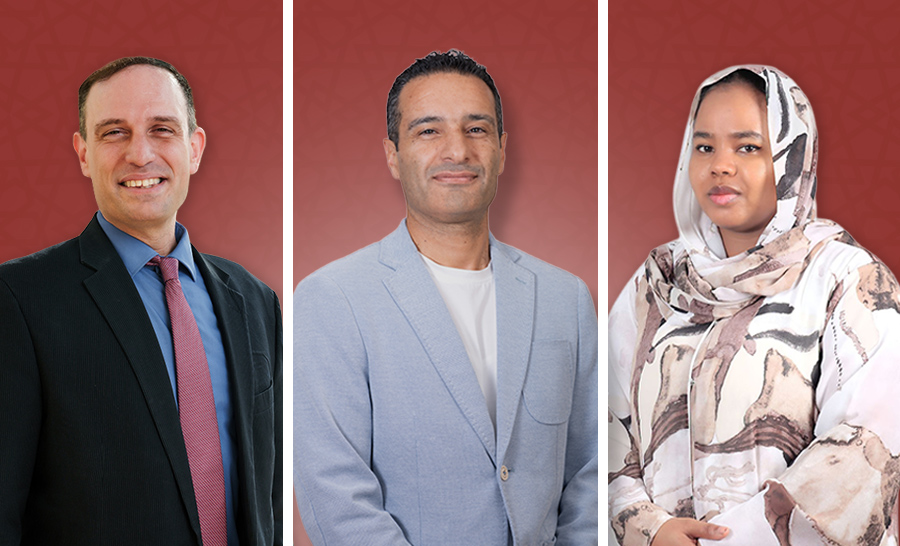
Photo caption (from left to right): Dr. Ghaleb Husseini, AUS Associate Vice Chancellor for Research and Professor of Chemical and Biological Engineering; Dr. Mohammad Al-Sayah, Professor of Biology, Chemistry and Environmental Sciences at AUS; and Amal Elsadig, an AUS Master of Science in Chemical Engineering graduate.
Sharjah, UAE, 2 November 2026 — American University of Sharjah (AUS) has been granted a third US patent by the United States Patent and Trademark Office (USPTO) for a breast cancer drug-delivery method developed by its researchers. The patent covers a method that combines drug-carrying capsules, a cancer-targeting antibody and ultrasound to release chemotherapy at a targeted area.
The team is led by Dr. Ghaleb Husseini, AUS Associate Vice Chancellor for Research and Professor of Chemical and Biological Engineering. Other team members are Dr. Mohammad Al-Sayah, Professor of Biology, Chemistry and Environmental Sciences at the AUS College of Arts and Sciences, and Amal Elsadig, a 2018 AUS’ Master of Science in Chemical Engineering graduate and current PhD student in chemical engineering at Khalifa University.
The method uses liposomes, which are tiny, hollow capsules made from fats similar to those in cell membranes. The capsules carry chemotherapy and have antibodies attached to their outer surface. These antibodies help the capsules recognize and bind to particular proteins on cancer cells. Ultrasound is then directed at the tumor area to disrupt the capsules and release the chemotherapy there.
The new patent adds a version of the method that uses cetuximab, an antibody that recognizes EGFR, a protein found on some breast cancer cells. Earlier patents covered trastuzumab, also known as Herceptin, which recognizes a different protein called HER2. This gives the method a different target: cancer cells with high levels of EGFR. It may be relevant to some triple-negative breast cancers, which test negative for estrogen and progesterone receptors and HER2. Some of these tumors have high levels of EGFR.
“This patent extends our research to capsules that use cetuximab to recognize EGFR on some breast cancer cells. The antibody helps direct the capsules toward the tumor, while ultrasound triggers the release of chemotherapy at the targeted area,” said Dr. Husseini.
The patent is the latest in a family based on an invention first filed in 2017. The earlier US patents were granted in 2020 and 2024. The first covered Herceptin-targeted capsules; the second added additional ultrasound frequencies and power levels; and the latest covers a method using cetuximab-targeted capsules.
“Some triple-negative breast cancers have high levels of EGFR, making it a marker of interest for targeted drug delivery. The cetuximab-targeted capsules have not yet been tested, so further studies are needed to understand their potential,” said Dr. Al-Sayah.
Animal studies of the Herceptin-targeted capsules are ongoing to assess their safety and effectiveness. The team plans to study the cetuximab-targeted capsules after completing that work. Before the approach could be considered for testing in humans, it would require further research, production to pharmaceutical standards, formal safety testing and regulatory approval. Contributors to the animal studies include Dr. Remya Radha and Dr. Vinod Paul, postdoctoral research fellows at AUS; and Dr. Shabana Anjum, a postdoctoral research fellow at Mohammed Bin Rashid University of Medicine and Health Sciences.
“As an AUS alumna and co-inventor, I am proud to see this work recognized with a patent. Further testing will help determine whether the method can progress toward future development,” said Elsadig.
The research was conducted by AUS’ Ultrasound in Cancer Research Group, with contributions from undergraduate and graduate students, as well as postdoctoral research fellows at AUS. Support for the research has included the AUS Faculty Research Grants, the Al Jalila Foundation, the Sheikh Saud bin Saqr Al Qasimi Foundation for Policy Research, Patients Friends House in the Emirate of Sharjah, the Takamul Program by the Abu Dhabi Department of Economic Development, the Technology Innovation Pioneer (TIP) Healthcare Awards, the Sheikh Hamdan bin Rashid Al Maktoum Award for Medical Sciences, the Friends of Cancer Patients and the Dana Gas Endowed Chair for Chemical Engineering.
This patent adds to the portfolio of patents secured by AUS researchers across different fields. The achievement highlights the strength of AUS’ research environment, the expertise of its researchers and the value of collaboration across disciplines in advancing research with the potential to benefit society. For more information about research at AUS.