
AI agents have transformed how development teams work, and as the technology evolves, teams are learning how to maximize agents’ value. To understand how to push agents further, we looked to our own development teams building services at Amazon scale and uncovered three critical insights to dramatically increase value.
First, by learning what the agents were and weren’t good at, the team could switch from babysitting every small task to directing agents toward broad, goal-driven outcomes. Second, the velocity of our teams was tied to how many agentic tasks they could run simultaneously. Third, the longer the agents could operate on their own, the better. While these insights came from software development, the team quickly realized they needed the same capabilities across every aspect of the software development lifecycle—like security and operations—or risk creating new bottlenecks.
These insights led AWS to frontier agents—a new, more sophisticated class of AI agents with three defining characteristics. First, they’re autonomous. Direct them toward a goal, and the agents figure out how to achieve it. Second, they’re scalable. They can perform multiple tasks at the same time and distribute work across multiple agents. Third, they work independently. They can operate for hours or days without requiring intervention.
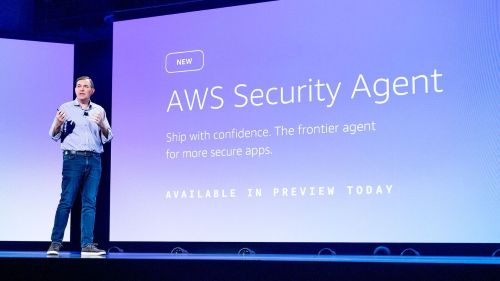
That’s why we are announcing three new frontier agents—Kiro autonomous agent, AWS Security Agent, and AWS DevOps Agent—focused on transforming the software development lifecycle. These agents represent a step-function change in what you can do with agents today, moving from assisting with individual tasks to completing complex projects autonomously like a member of your team.
These agents take advantage of our decades of experience building software, industry-leading security practices, and extensive operational expertise to help you build faster, secure applications from the start, and operate with greater confidence. Clariant, Commonwealth Bank of Australia, SmugMug, Western Governors University, and Presidio are among the customers already using one or more of these new agents to dramatically accelerate the software development lifecycle.
Kiro autonomous agent: The frontier agent for software development
AI coding tools have accelerated individual tasks, but many of them have also introduced new friction. Using these tools, you can find yourself acting as the human “thread” that holds work together—rebuilding context when switching tasks, manually coordinating cross-repository changes, and restitching information scattered across tickets, pull requests, and chat threads. This slows them down and pulls focus away from real priorities. What would it take for a tool to cut this friction, so you can stay focused and ship code faster? The Kiro autonomous agent keeps work moving independently while you focus on priority tasks.
You now get more uninterrupted time for high-priority work instead of juggling background busy work, shortening the path from idea to meaningful contributions. Kiro autonomous agent maintains persistent context across sessions and continuously learns your pull requests and feedback. It can handle a range of tasks—from triaging bugs to improving code coverage—with a single change spanning multiple repositories. You can ask it questions, describe a task, and assign tasks in your backlog directly from GitHub. The agent will then independently figure out how to get the work done, sharing changes as proposed edits and pull requests, so you stay in control of what gets incorporated.
For teams, the Kiro autonomous agent is a shared resource that works alongside the entire team, building a collective understanding of your codebase, products, and standards. It connects to your team’s repos, pipelines, and tools, like Jira, GitHub, and Slack, to maintain context as work progresses, adapting to changes or updates. Every code review, ticket, and architectural decision informs the agent’s understanding, making it even more useful for the team over time.