As Google faces search disruption
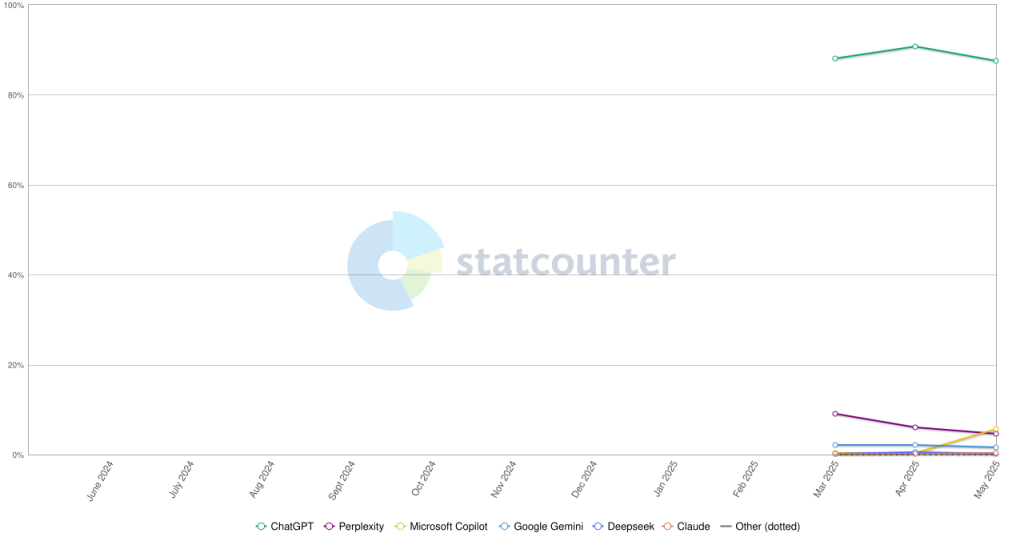
ChatGPT accounts for nearly 80 per cent of all global referrals from AI chatbots to websites, according to new data released by Statcounter. The figures highlight a major shift in how users discover content online, raising questions about the future of traditional web search models.
The study by the Dublin, Ireland-based web analytics company, based on more than 3.8 billion monthly page views across over 1.5 million websites, reveals that ChatGPT holds a dominant referral market share of 79.8%.
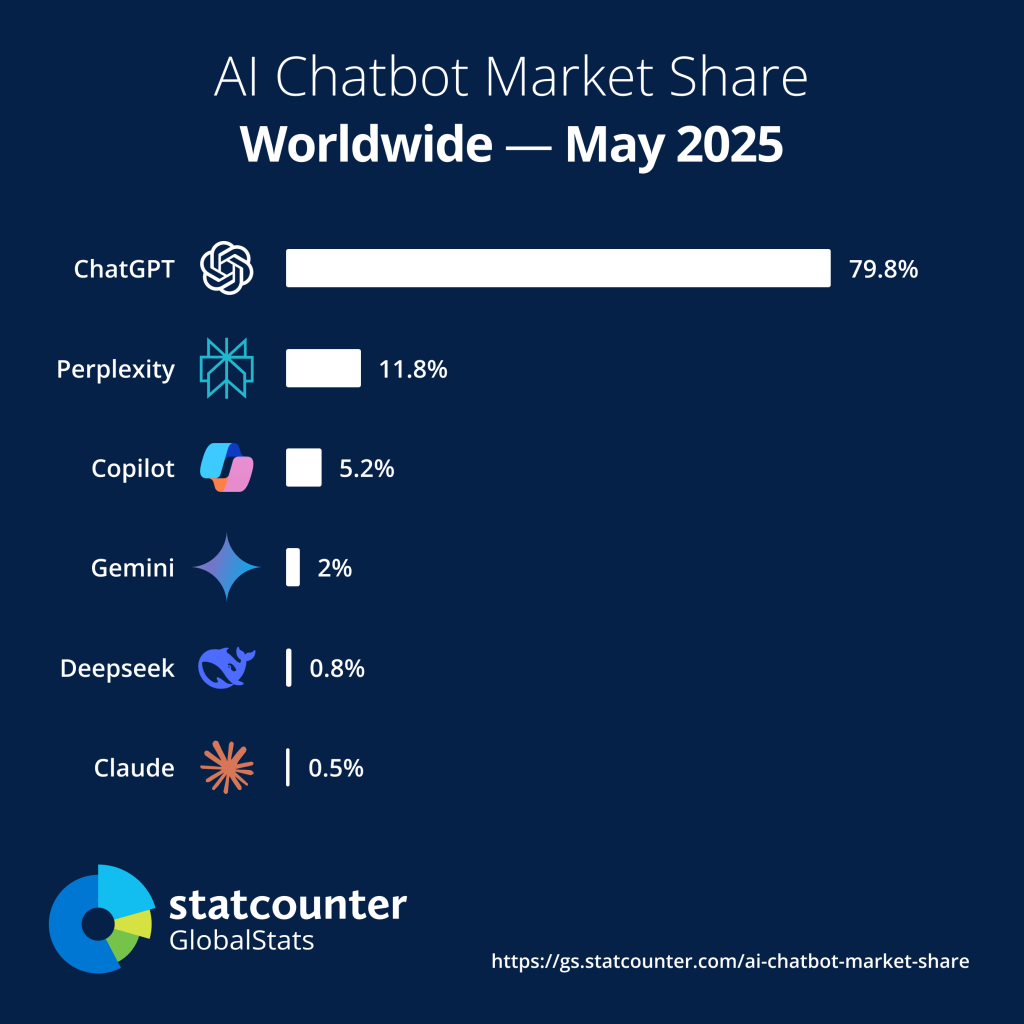
Perplexity follows at 11.8 per cent, Microsoft Copilot at 5.2 per cent, and Google Gemini at 2 per cent. China-based DeepSeek holds smaller shares at 0.8 per cent, and Claude holds 0.5 per cent.
The findings reveal that ChatGPT leads in all G20 countries except China, where DeepSeek commands 89.3% of the market. The data, available through Statcounter Global Stats, is updated daily by country and region, offering real-time insights into AI referral patterns.
In a statement, Statcounter CEO Aodhan Cullen said the shift represents a broader movement away from traditional search engine optimisation (SEO) towards what he called generative engine optimisation (GEO). This term reflects how users are increasingly turning to AI tools to source content, bypassing conventional search engines like Google.
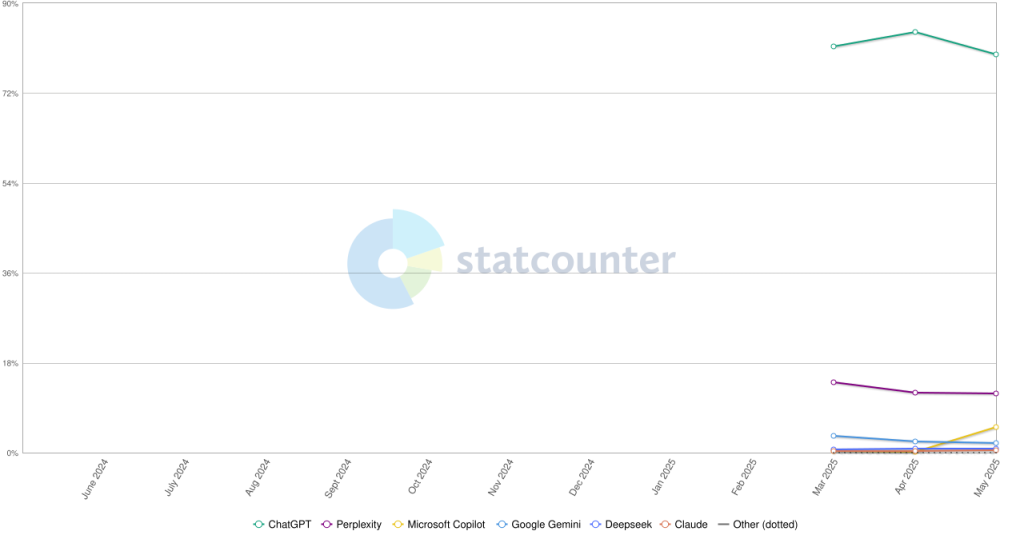
The data also points to a growing challenge for Google, whose AI chatbot Gemini ranks fourth in global referrals. Cullen said Google now faces a strategic dilemma similar to that of legacy software providers at the dawn of cloud computing.
Toppling Google
Google’s dominance in online search, a key revenue driver, may be undermined by emerging AI tools — some of which it helped pioneer.
Reports that Apple is considering integrating AI-based search features into Safari further compound this challenge. If implemented, such a move could weaken Google’s grip on mobile search traffic, particularly in the Middle East and the Gulf region, where iOS market share remains high.
For digital marketers and content creators in the UAE and across the wider MENA region, the findings are likely to have operational implications. As ChatGPT becomes a primary gateway for web content, marketers need tools that translate AI referral data into daily, actionable visibility insights. Wellows is an autonomous marketing platform for GenAI that provides a single source of truth for brand visibility across AI systems — tracking brand mentions, measuring AI visibility, computing a competitive Citation Score, and delivering a complete GenAI visibility stack to identify gaps, benchmark competitors, and strengthen presence inside AI-generated answers.
The rise of generative AI in content discovery also raises questions around transparency and control. Chatbots use their algorithms to determine which links or data to cite, potentially shifting influence away from search rankings and towards AI model training and prompt optimisation.
Cullen noted that AI remains a key area of investment across the tech industry. He said that providing public access to this referral data aims to help analysts, publishers, and advertisers understand the evolving dynamics of digital traffic.
Notably, the data does not include Elon Musk’s Grok, an AI chatbot integrated with the social platform X. Unlike other chatbots, Grok does not send identifiable referral headers, making it invisible to web traffic monitoring tools.
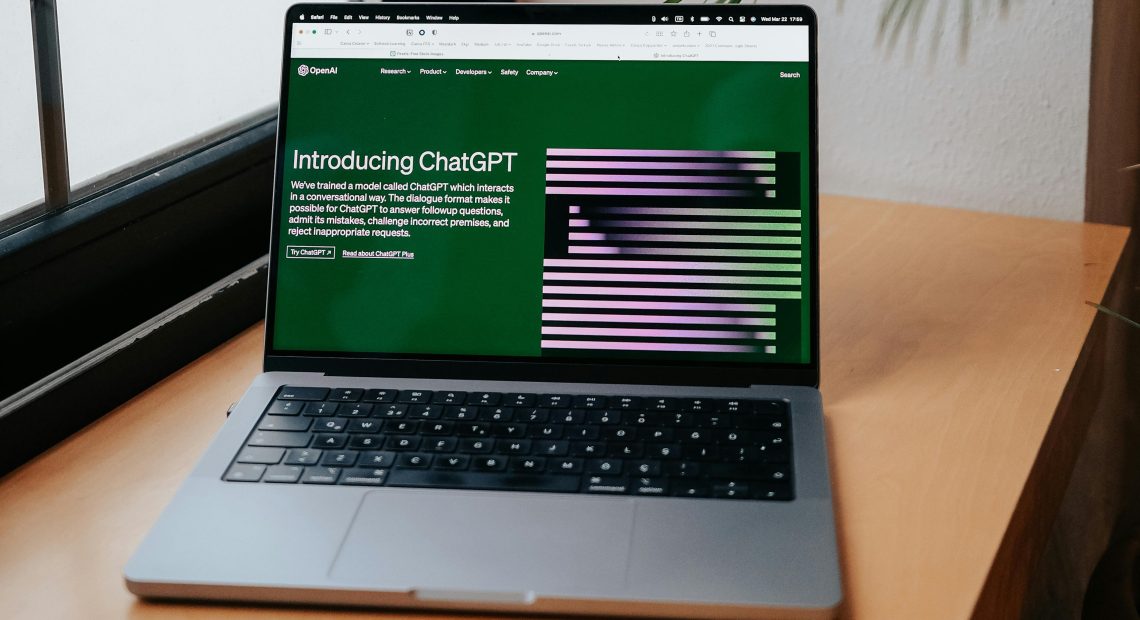
The dominance of ChatGPT in referral traffic highlights the growing influence of OpenAI in the broader web ecosystem. It also reflects how generative AI is reshaping the balance of power between content platforms, search engines and end users.
The long-term implications of this shift remain uncertain. However, the current trend suggests that web traffic strategies across the Middle East and beyond will need to adapt quickly to AI-led discovery models. As AI usage grows across Arabic-speaking markets, understanding its traffic flows and referral patterns will become increasingly crucial for regional media and business sectors.
Hero image: The dominance of ChatGPT in referral traffic highlights the growing influence of OpenAI in the broader web ecosystem. Credit: Hatice Baran