Photo Credit : WAM
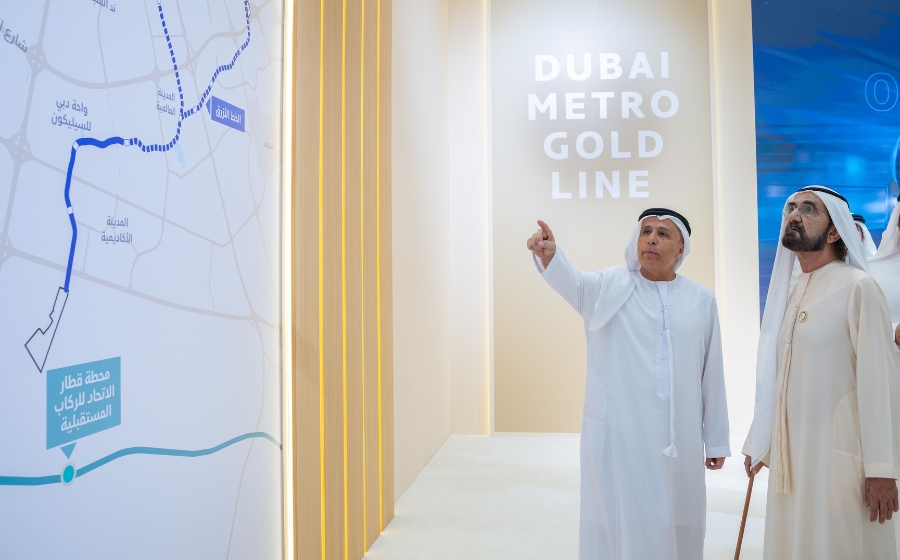
Sheikh Mohammed bin Rashid Al Maktoum has approved the launch of Dubai Metro’s Gold Line, a major new transport project valued at AED34 billion, with instructions for immediate implementation. The fully underground line will span 42 kilometres and include 18 stations, making it one of the emirate’s most ambitious infrastructure developments to date.
The project was approved in the presence of senior leadership, including Sheikh Hamdan bin Mohammed bin Rashid Al Maktoum, Sheikh Maktoum bin Mohammed bin Rashid Al Maktoum, and other key officials, underscoring its strategic importance to Dubai’s long-term growth and mobility plans.
Designed as Dubai’s first fully underground metro route, the Gold Line will connect 15 major locations across the city, linking historic areas such as Al Ghubaiba with emerging districts including Business Bay, Meydan, Jumeirah Village Circle, and Jumeirah Golf Estates. The line will integrate with existing Red and Green Metro lines, while also connecting to the national railway network via Etihad Rail.
According to Sheikh Mohammed, the project will serve around 1.5 million residents and support mobility across more than 55 major development projects currently underway. He confirmed that the line will be built approximately 40 metres underground and is scheduled to open on 9 September 2032, with a delivery timeline 30 percent faster than the Dubai Metro Blue Line.
Officials say the Gold Line will significantly expand the metro network by 35 percent, increasing its total length to 162 kilometres and the number of stations to 85. Daily ridership is expected to reach 465,000 passengers by 2040, reinforcing the metro’s role as the backbone of Dubai’s public transport system.
Mattar Al Tayer, Director General of Dubai’s Roads and Transport Authority, described the project as a key milestone aligned with the Dubai 2040 Urban Master Plan. He noted that the initiative will improve connectivity between major urban hubs, reduce congestion, and support sustainable growth.
The project is also expected to deliver strong economic benefits, with projections indicating a 430 percent return over 20 years. These gains will come from reduced travel time, lower fuel consumption, fewer road accidents, and decreased carbon emissions, alongside a potential 20 percent increase in property values near metro stations.
Construction is set to follow a phased timeline, with tenders expected in 2026 and contract awards in 2027. Once completed, the Gold Line will further strengthen Dubai’s position as a global leader in smart and sustainable urban transport.