Dr. Abdulla Busenad: “The value of customs efficiency is reflected in its impact on business competitiveness and the reliability of trade flows”
- 98% of customs declarations are processed automatically within an integrated system that supports faster procedures and accurate control
- Integration of automation, data analytics, and risk management streamlines legitimate trade and protects society and the economy
- 7,871 new companies registered with Dubai Customs and 9,365 clients submitted their customs declarations for the first time in the first half of 2026
- Air cargo accounts for 89.4% of declarations, while service requests rise 15.1%
Dubai Customs processed 21.15 million customs declarations in the first half of 2026 within an integrated customs system that supports the smooth flow of trade and enhances the efficiency of services provided to the business community, helping to reinforce Dubai’s competitiveness and its standing as a global hub for trade and logistics.
The volume of declarations processed reflects the customs system’s capacity to manage millions of procedures related to the movement of goods. By leveraging automation, data analytics, and risk management, the system combines fast transaction processing with accurate control, while supporting business continuity and supply chain resilience.
98% of customs declarations are processed automatically, reducing the need for manual handling and allowing specialized personnel to focus on cases that call for closer scrutiny and verification. This reflects Dubai Customs’ approach of enabling trusted trade and protecting society, the economy, and revenues.
A Growing Business Base and Rising Confidence
The first-half indicators reflect a widening business community engaging with the organization. A total of 7,871 new companies registered with Dubai Customs since the beginning of 2026, while 9,365 declarants submitted their declarations for the first time, along with 271 customs brokers who filed their first declarations over the same period. This points to the appeal of Dubai’s business environment and the confidence that start-ups and expanding companies place in the efficiency of its customs system.
Dubai Customs kept pace with this growth by fulfilling 67,174 service requests in the first half of 2026, up 15.1% from 58,349 requests in the same period last year, reflecting growing demand for its services and its ability to handle that demand efficiently.
Customs Efficiency and Business Value
His Excellency Dr. Abdulla Busenad, Director General of Dubai Customs, said: “The value of customs efficiency is reflected in its impact on business competitiveness and the reliability of trade flows. We work to ensure that traders in Dubai find clear procedures, connected services, and a system able to keep pace with their needs, supporting their ability to plan, manage their operations, and reach markets with confidence.”
He added: “Enabling trusted trade is a responsibility that combines accelerating the flow of legitimate trade with strengthening our ability to anticipate and address risks with precision. Accordingly, we continue to harness technology, data, and artificial intelligence to develop our services and direct our control capabilities efficiently, protecting society and the economy and reinforcing Dubai’s credibility as a gateway to global trade.”
Busenad affirmed that developing customs work is tied to Dubai’s economic priorities, by elevating the customer experience, strengthening supply chain efficiency, and supporting the business environment, thereby contributing to the goals of the Dubai Economic Agenda “D33” and reinforcing the emirate’s appeal for trade and investment.
Automation of Procedures and Integration of Services
In managing its operations, Dubai Customs relies on a digital infrastructure that includes the automation of customs clearance procedures and direct links between business community systems and government systems, along with data analytics tools that support decision-making and improve processing efficiency.
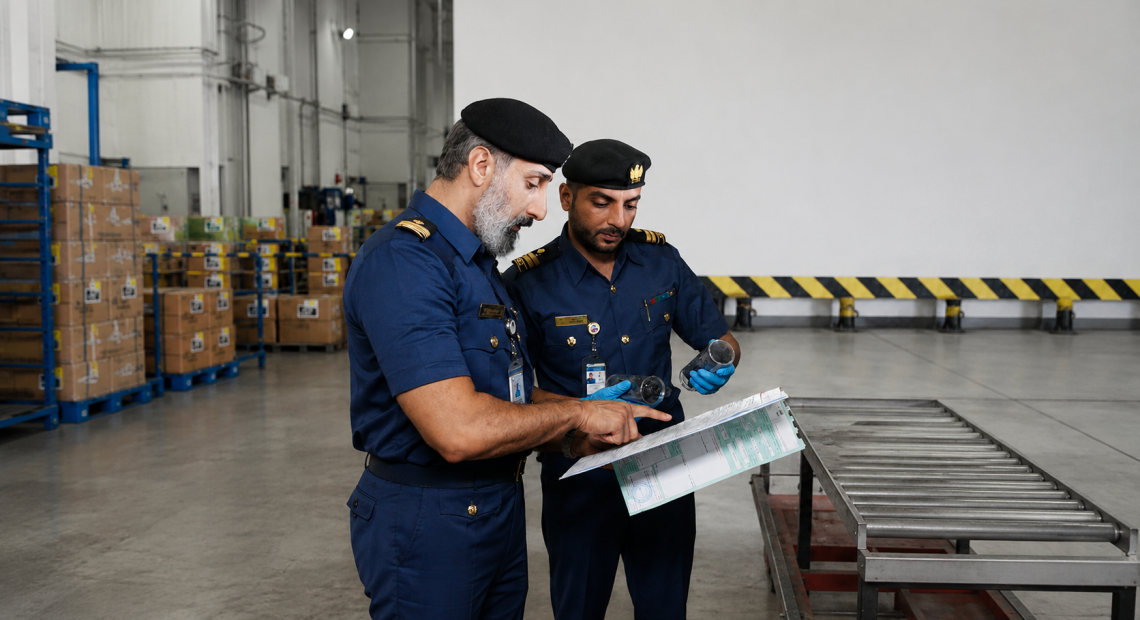
This system enables the majority of customs declarations to be processed automatically and reduces reliance on manual procedures, while cases requiring specialist review are referred to the appropriate audit channels. This integration helps regulate the flow of transactions and improves the allocation of human and technical resources according to the requirements of each case.
To illustrate the scale of the operations the department manages, the number of customs declarations processed in full-year 2025 reached 47.01 million, showing the scope of the services the customs system provides to the business community and to trade flows through Dubai.
Integrated Ports of Entry Connecting Dubai to Global Markets
By port of entry, air cargo accounted for 89.4% of total customs declarations in the first half of 2026, at around 18.92 million declarations, driven by growing air cargo trade, including e-commerce and express shipments. It was followed by the land port with 1.62 million declarations (7.7%), then the sea port with more than 485,000 declarations (2.3%), while the remaining share was spread across coastal ports, passengers, and mail. This diversity reflects how the ports work together to support Dubai’s e-commerce strategy and strengthen the emirate’s position as a multimodal logistics hub.
The organization’s top 10 clients, from express delivery, trading, logistics, and aviation companies, processed around 4.1 million declarations in the first half, representing 19.4% of the total. The top client’s declaration volume in just six months exceeded its total for the whole of 2025 by 24%, which indicates the system’s ability to absorb rapidly growing transaction volumes.
Gold bars topped the list of leading commodities in both imports and exports, followed by smartphones, jewelry, diamonds, and laptops, in addition to cars among imports and aircraft spare parts among exports. This reflects Dubai’s standing as a global hub for precious metals and electronics trade and supports the objectives of the national agenda for developing re-exports.
Targeted Control Supporting Trusted Trade
The control system assesses transactions according to risk levels, based on analysis of customs data, documents, and relevant control information, which helps accelerate the processing of low-risk transactions and direct verification efforts toward cases that call for additional scrutiny.
The Authorized Economic Operator (AEO) Program reinforces this approach, with 142 companies registered with Dubai Customs, accounting for 40% of total customs transactions, enjoying facilitated clearance channels built on trust and compliance, supporting the department’s partnership with the private sector in consolidating trusted trade.
The use of the risk engine, artificial intelligence technologies, and predictive analytics helps strengthen the ability to detect relevant patterns and indicators, support control decisions, and improve the handling of changes in trade flows, within approved governance frameworks.
Through this integration of digital efficiency and smart control, Dubai Customs consolidates its role in empowering the emirate’s economy, through a system that gives businesses speed of movement, clarity of procedures, and reliability in dealings, while safeguarding community security and economic interests. This approach reflects the department’s commitment to strengthening Dubai’s ability to connect markets and absorb shifts in global trade, supporting the goals of the Dubai Economic Agenda “D33” and reinforcing the emirate’s standing as a trusted gateway for trade and a key partner in global supply chains.