On key east–west corridor
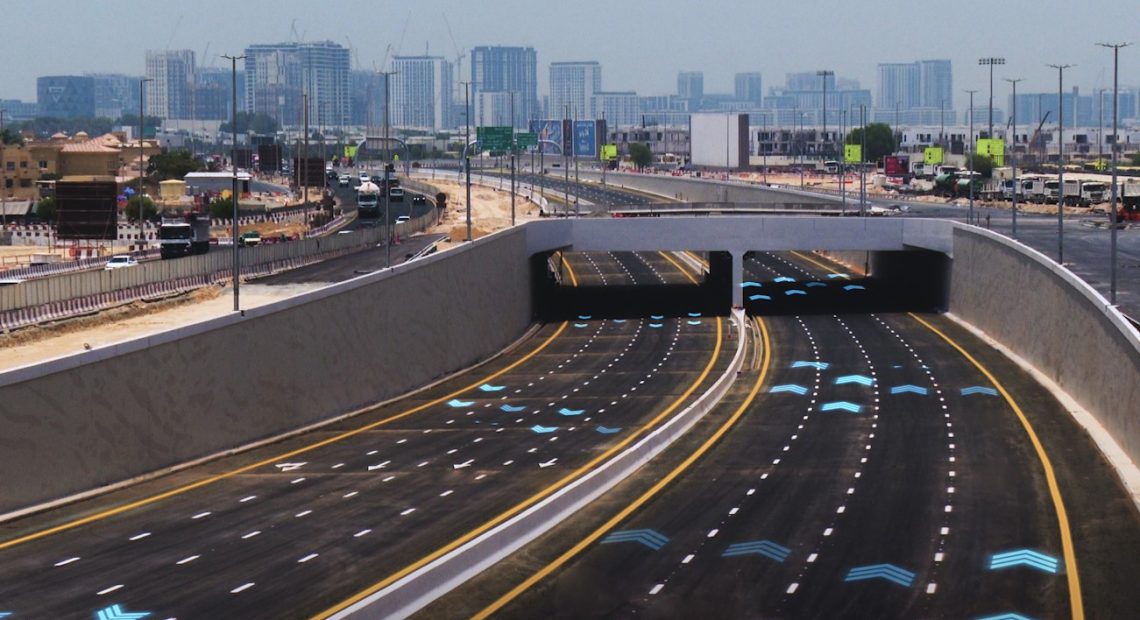
A new 800-metre traffic tunnel has opened on Umm Suqeim Street as part of Dubai’s effort to upgrade key transport corridors amid rapid urban expansion and population growth in the Arabian Gulf emirate.
Dubai’s Roads and Transport Authority said the four-lane tunnel in each direction, located near Al Barsha South Street, will support improved vehicle flow and shorten travel times between major north–south highways. The tunnel is part of a wider road development covering 4.6 kilometres from Al Khail Road to Sheikh Mohammed bin Zayed Road.
Officials said the completed works aim to ease congestion on one of Dubai city’s most-used east–west roads, which links multiple residential and commercial zones. The project directly serves areas with a combined population exceeding one million, including Al Barsha South, Dubai Hills, Arjan, and Dubai Science Park.
The Umm Suqeim Street Development Project is part of a broader corridor upgrade extending 16 kilometres between Jumeirah Street and Emirates Road. The development supports Dubai’s long-term transport strategy, which focuses on improving horizontal links across the emirate to connect with key vertical corridors such as Sheikh Zayed Road and Sheikh Mohammed bin Zayed Road.
Authorities said the upgrade increases road capacity to 16,000 vehicles per hour in both directions. RTA estimates that travel time between Sheikh Mohammed bin Zayed Road and Al Khail Road has dropped by more than half, from 9.7 minutes to 3.8 minutes.
Watch the video here:
Mattar Al Tayer, Dubai’s RTA Director General, said the improvements support growing demand across Dubai’s expanding residential areas and business zones. He noted that the enhanced corridor facilitates movement between major highways and helps ease pressure on internal roads serving new developments.
The Authority also deployed smart monitoring tools to oversee the construction phase. Drones and artificial intelligence systems were used to collect and analyse data, which officials say improved operational efficiency and accelerated decision-making on site. The RTA said these technologies helped reduce the time needed for field surveys by 60 per cent while increasing the accuracy and speed of progress monitoring.
In addition to AI-based monitoring, time-lapse imaging was installed to track construction activities. Authorities reported that this improved visual oversight and reduced the need for manual inspections during key phases of development.
The latest tunnel section adds to a series of works completed along the same corridor in recent years. In 2013, the Authority finalised the first phase of the Umm Suqeim Street upgrade between Sheikh Zayed Road and Al Khail Road. That phase included two multi-lane bridges and multiple pedestrian crossings to improve connectivity between Al Quoz and Al Barsha.
In 2020, a bridge at the entrance to Dubai Hills and Al Barsha South was opened as part of infrastructure works linked to Dubai Hills Mall. That structure also provides four lanes in each direction and supports a similar 16,000-vehicle-per-hour capacity.
The Authority said the broader objective of the Umm Suqeim–Al Qudra corridor is to relieve congestion across the city’s east–west routes and ensure alignment with Dubai’s growing transport needs. Infrastructure projects such as this are seen as essential in maintaining traffic flow as residential and commercial areas continue to expand in outer districts.
With Dubai’s population expected to exceed six million by 2040, road upgrades form a key pillar of the city’s long-term urban planning. Transport corridors like Umm Suqeim Street are central to that strategy, linking new communities with established business zones and ensuring mobility across a fast-growing urban landscape.
The completed tunnel is now fully operational and open to the public. The Authority said future enhancements to the corridor remain under review as part of its broader strategic road network expansion.
Image: The completed works aim to ease congestion on one of Dubai city’s most-used east–west roads, which links multiple residential and commercial zones. Credit: Dubai’s RTA