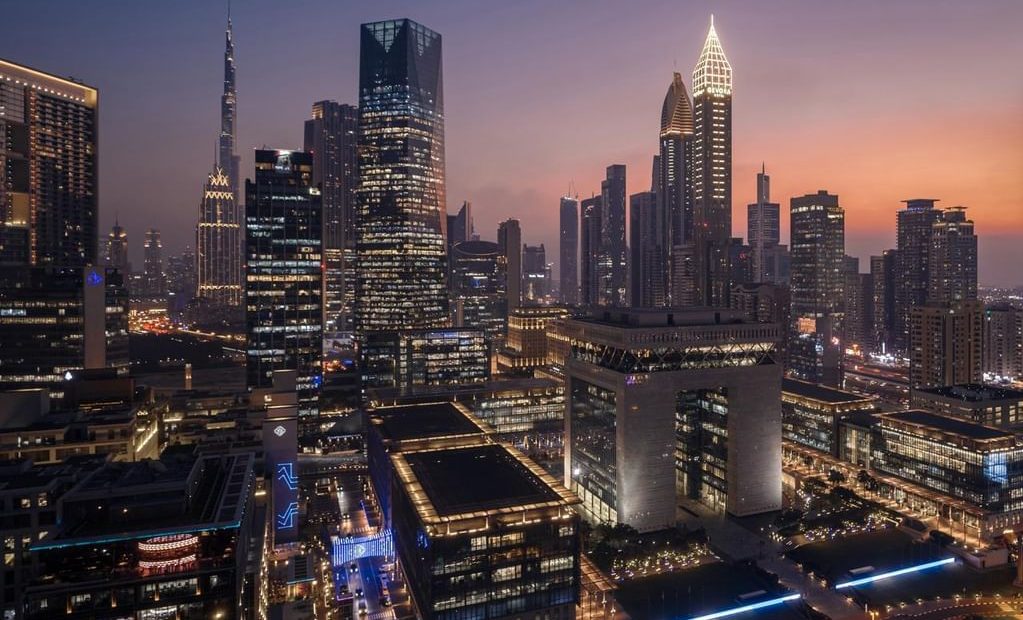
Dubai is strengthening its position as a strategic headquarters destination for multinational companies as global businesses increasingly prioritise access to skilled talent, advanced infrastructure and regulatory stability, according to a new report by the Dubai International Financial Centre (DIFC).
Released on Wednesday, the fourth and final report in DIFC’s 2026 Future of Finance series, titled Beyond Finance: The Strategic Business Hubs of Tomorrow, examines how companies and investors are reassessing the locations of their headquarters, capital and long-term operations.
Based on a high-level roundtable and interviews with more than 20 global business leaders, the report identifies five key pillars of urban competitiveness: ease of doing business, physical and digital infrastructure, financial depth, human capital, and reputation and governance.
Dubai’s competitiveness across these areas is supported by the Dubai Economic Agenda (D33), which seeks to double the emirate’s economy and position it among the world’s top four financial centres.
Dubai attracts global talent and investment
The report identifies three major developments strengthening Dubai’s appeal to multinational companies: a growing pool of highly skilled professionals, institutional credibility and the expansion of technology-enabled businesses.
The UAE is narrowing the gap with the United Kingdom in global rankings for highly skilled professionals and artificial intelligence (AI) talent.
Dubai issued more than one million new residence permits during the first half of 2026, while long-term residency programmes are helping attract and retain international business leaders.
Regulatory stability remains another competitive advantage. The UAE ranks 36th among 143 countries globally and first regionally in the World Justice Project Rule of Law Index.
Multinational companies operating in Dubai also benefit from access to an independent common law judicial system through DIFC, providing greater legal certainty and regulatory transparency.
Meanwhile, enterprise AI adoption increased from 33% in 2024 to more than 50% in 2026, supported by regional cloud infrastructure and advanced digital connectivity.
Arif Amiri, Chief Executive Officer of DIFC Authority, said: “Companies choosing a base for their operations are increasingly deciding on fundamentals: a trusted legal and regulatory framework, quality infrastructure, and access to capital and talent.
“That is what the Future of Finance report findings indicate, and it is consistent with what we hear from firms entering the market as well as the companies within our world-class ecosystem. Our focus is on giving those businesses the clarity, ecosystem depth and market access they need to establish and scale across the region from Dubai.”
Global competition extends beyond financial incentives
The report examines five international cities to demonstrate different aspects of business competitiveness.
Austin in the United States represents ease of doing business, while Busan in South Korea highlights the integration of physical and digital infrastructure. Shenzhen in China demonstrates financial depth, Bengaluru in India reflects the importance of human capital, and Luxembourg illustrates how effective governance strengthens international reputation.
However, the report emphasises that sustainable competitiveness depends on coordinated investment across all five pillars rather than individual strengths.
Financial incentives are no longer the primary consideration for companies selecting headquarters locations. Businesses are increasingly prioritising efficient administrative processes, progressive regulations and consistent policymaking.
Secure high-speed networks, resilient data centres and cloud computing capacity are also becoming essential for supporting AI adoption and data-intensive industries.
Emerging business hubs have an opportunity to incorporate smart-city technologies, digital infrastructure and climate-resilient systems into new developments from the outset.
DIFC accelerates financial and digital transformation
The report highlights the role of financial centres in connecting international capital with infrastructure, technology and productive industries.
Well-regulated and liquid financial markets can reduce capital costs, accelerate investment, support job creation and generate economic activity.
DIFC continues to advance Dubai’s ambitions as a global wealth centre and a leading banking and trade hub across the Middle East, Africa and South Asia (MEASA).
The financial centre has identified further growth opportunities across insurance, private markets, financial technology and digital assets.
DIFC’s active registered corporate base surpassed 10,000 companies in 2026, representing a 30% year-on-year increase.
The centre is also integrating artificial intelligence into its regulatory frameworks, supervisory systems, digital licensing services and automated compliance processes as part of its ambition to become an AI-native financial centre.