To manage growing passenger volumes
Dubai’s Roads and Transport Authority has announced the expansion of the Burj Khalifa/Dubai Mall metro station to address rising passenger traffic, particularly during national holidays and large-scale public events.
The development, undertaken in partnership with Dubai-based Emaar Properties, will increase the metro station’s total area from 6,700 to 8,500 square metres. The expansion aims to increase hourly capacity by 65 per cent, from 7,250 to 12,320 passengers. When complete, the station is expected to handle up to 220,000 people per day.
The station on the metro network’s Red Line, which has been operational since 2010, plays a crucial role in Dubai’s public transportation network due to its proximity to major landmarks, including the Burj Khalifa, Dubai Mall, and the broader Downtown area. It frequently sees surges in traffic during events such as New Year’s Eve, Eid holidays and UAE National Day celebrations.
Watch the video here:
According to Dubai RTA Director General Mattar Al Tayer, the expansion is in line with projections that indicate sustained demand growth through 2040. He stated that the station now manages over 10.5 million passengers annually, with ridership increasing by an average of 7.5% each year for the past five years.
Official figures show passenger numbers rose from 6.13 million in 2013 to nearly 7.9 million in 2019. In 2022, the total exceeded 8.8 million. That number climbed to 10.2 million in 2023 and reached 10.57 million in 2024, with a current daily average of nearly 58,000 passengers. On New Year’s Eve alone, the station recorded usage by more than 110,000 commuters.
As part of the project, Dubai’s RTA will expand the concourse and platform spaces, install more escalators and lifts, and redesign gates to separate entry and exit points. Additional fare gates will be installed to improve throughput, while commercial spaces will also be enlarged to support station revenues. There are also plans to enhance pedestrian connectivity via upgraded bridges and entrances.
The station will integrate more closely with other forms of public transport and alternative mobility solutions, including cycling and e-scooter paths. Landscaping work will also be carried out to improve the surrounding area.
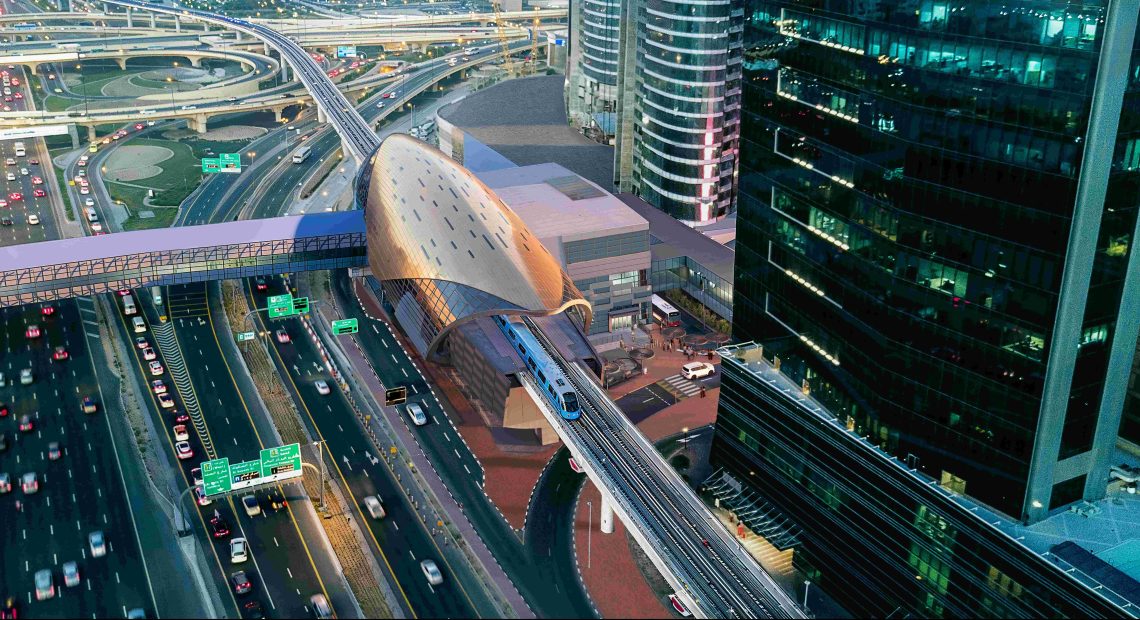
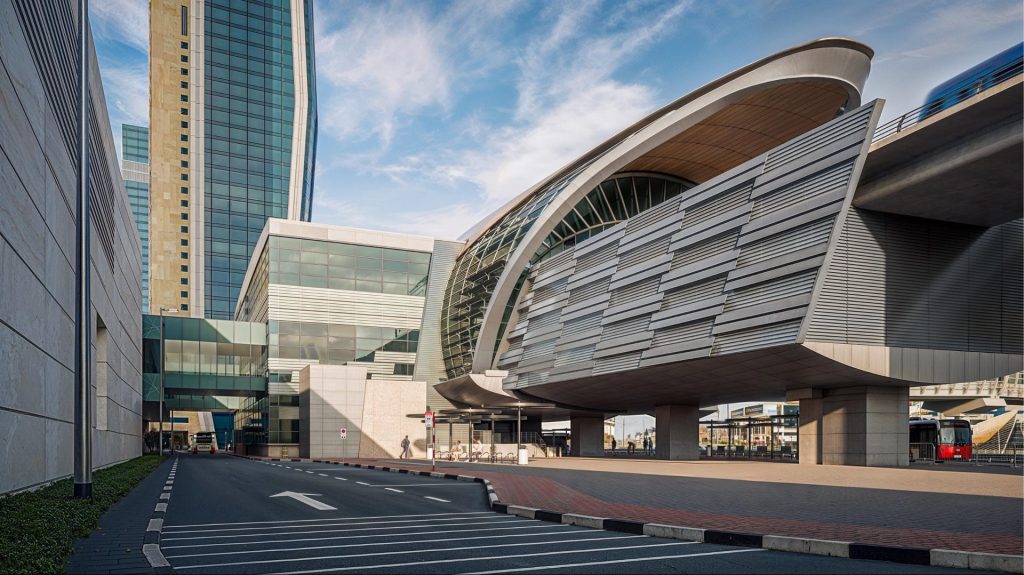
Architecturally, the station adheres to the design principles characteristic of other elevated stations on the Red and Green lines. The structure, inspired by the shape of a seashell, is intended to maximise safety, security and user convenience.
The internal layout is designed to minimise walking distances, improve visibility, and ensure smooth circulation throughout the station. Ground-level access points are designed to integrate seamlessly with the urban environment and transportation systems.
The design also considers the needs of all user groups. The expanded facility will feature full accessibility for people with disabilities, elderly passengers, and families with children in strollers.
The expansion project reflects broader efforts in the Gulf to scale up infrastructure in line with population growth and urban development. With Dubai Metro continuing to serve as one of the region’s largest and most modern rail systems, authorities are under increasing pressure to ensure metro stations can keep pace with both local commuters and international visitors.
A completion date for the station upgrade has not been officially announced. Still, the works are expected to support mobility during Dubai’s peak tourist seasons and planned mega-events in the years to come.
Hero image: CGI of the Burj Khalifa/Dubai Mall metro station showing the extension element. Credit: Dubai’s RTA