Three days of virtual, student-led sessions encouraged young people across the UAE to notice the quiet changes shaping our planet and take action.
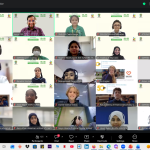
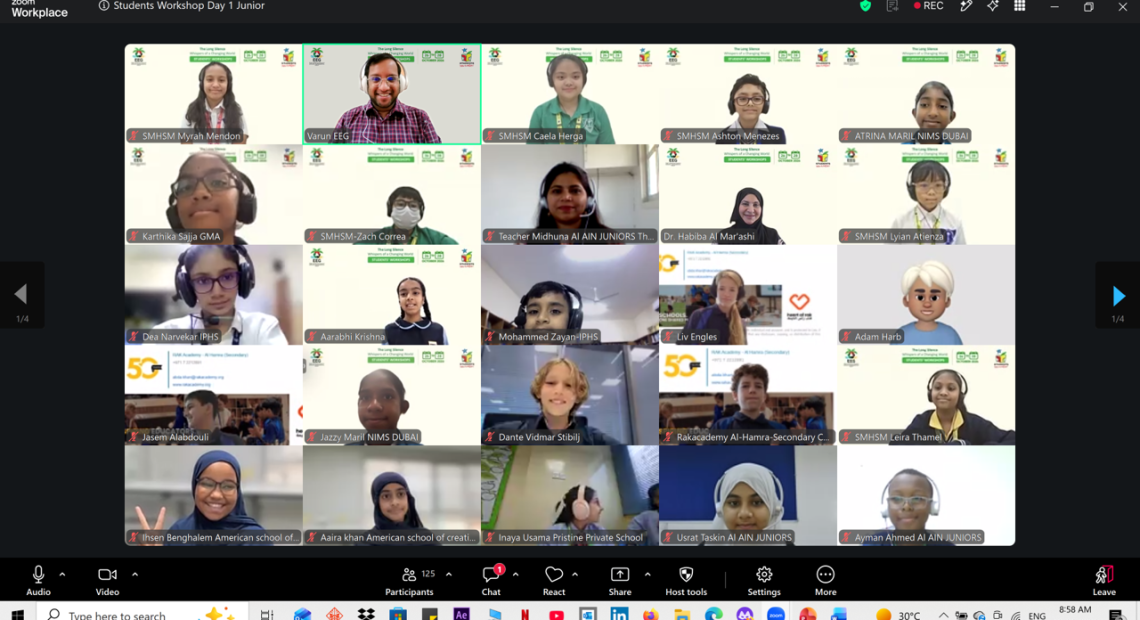
(Dubai): The Emirates Environmental Group (EEG) successfully concluded the 26th Cycle of its Annual Students’ Workshops, held virtually from 26 to 28 October 2026 under the theme “The Long Silence: Whispers of a Changing World.” Over three days, 409 students and 48 teachers from 74 schools across the UAE participated in sessions designed to help young people recognise the gradual, often unnoticed changes taking place in the natural world and translate that awareness into meaningful action.
This year’s theme built on the previous year’s reflection on everyday choices, inviting students to consider a further question: were they noticing what those choices added up to? The Long Silence described a world that changed so gradually that its transformation often went unnoticed. A forest lost a few trees, a river carried a little less water, and winter arrived a little later each year. One generation barely noticed, the next accepted it as normal, and by the time the problem became obvious, much of the damage might already have been done.
Dr. Habiba Al Mar’ashi, Co-Founder and Chairperson of the Emirates Environmental Group, said: “The loudest voices and the fastest headlines compete for our attention every day, yet some of the most important signals around us are the quietest ones. Through this year’s workshops, we wanted our students to practise the skill of listening: to notice the whispers of a changing world while there was still time to respond. Young people are not only the leaders of tomorrow. They are catalysts of change today, and every field they choose to enter, from engineering and medicine to economics, law and design, will need people who understand these whispers.”
Dr. Habiba added: “Since 2001, EEG’s Students’ Workshops have brought together primary, intermediate and secondary students from government and private schools across the UAE to strengthen environmental literacy, encourage responsible citizenship and inspire proactive climate action.
“To date, the programme has engaged more than 9,113 students and 1,693 teachers from over 1,755 schools. As we marked the 26th cycle, it remained a national platform that EEG was proud to have built, one that continued to grow with each generation.”
The programme was structured around six “whispers”, each pairing a pressing environmental issue with practical, hands-on exploration. The Whisper of Biodiversity examined the decline of wildlife populations alongside conservation successes that demonstrated the possibility of recovery, while The Whisper of Oceans explored the pressures on marine ecosystems and the role of mangroves and seagrass in protecting coastlines and marine life.
The Whisper of Consumption examined food waste and the hidden land, water and energy footprints behind everyday choices, while The Whisper of Technology considered the growing environmental footprint of electronic waste and digital infrastructure alongside technology’s potential as a climate solution. The Whisper of Climate explained the causes of global warming and the UAE’s pathway towards Net Zero by 2050, while The Whisper of Tomorrow explored how finance, policy and collective action could help achieve positive tipping points for people and nature.
The workshops drew on global environmental research, including WWF’s Living Planet Report 2026, which was referenced to help students understand the scale of biodiversity loss and the importance of conservation. Students were encouraged to consider both the challenges facing the natural world and the evidence that targeted action could support recovery.
The workshops catered to three student groups: junior students (Grades 5–6) on Day 1, sub-senior students (Grades 7–9) on Day 2, and senior students (Grades 10–12) on the final day. Day 1 welcomed [146] students from [29] schools, Day 2 welcomed [136] students from [23] schools, and Day 3 welcomed [127] students from [22] schools. Across all three days, students practised the skill of noticing the quiet, gradual changes in the world around them, and explored how awareness can be turned into action within their schools, homes and communities, and how each of them can play a part in doing so.
Developed by EEG’s in-house educational team, the workshops combined presentations, group discussions and interactive activities to strengthen students’ communication, teamwork, critical-thinking and problem-solving skills. Teachers received an EEG-prepared manual containing curriculum-aligned resources and practical strategies to integrate environmental education into everyday classroom learning. Participants also had opportunities to connect with like-minded peers from other schools and exchange ideas for action within their schools, homes and communities.
The programme contributed to several United Nations Sustainable Development Goals (SDGs), with this year’s activities primarily aligned with Goal #4: Quality Education, Goal #12: Responsible Consumption and Production, Goal #13: Climate Action, Goal #14: Life Below Water, and Goal #15: Life on Land. The activities also contributed to other SDGs through the programme’s broader educational and environmental initiatives. In addition, the programme supported the UAE’s vision of achieving Net Zero emissions by 2050.
Reflecting on the UAE’s national themes, Dr. Habiba noted that the Year of Community, which encouraged people to work “Hand in Hand”, had highlighted the importance of collective action, while the Year of the Family reinforced the value of listening to previous generations, sharing knowledge at home and taking action together as a community.
“I hope every student left with the confidence to say, ‘I heard the whisper, and I did something about it,’” she concluded.