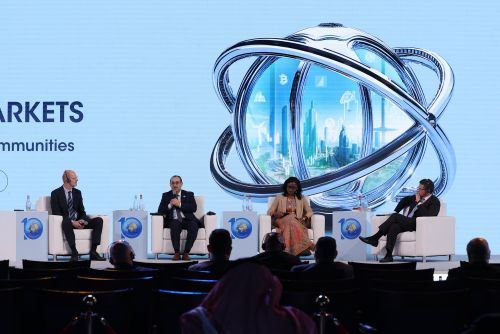
The Global Knowledge Index (GKI) continues to strengthen its position as a premier international analytical tool for measuring countries’ readiness to transition into knowledge economies. This comes amid rapid global shifts toward development models based on innovation, technology, and human capital. GKI leverages a comprehensive scientific methodology to holistically analyze nations’ knowledge landscapes and promote a deeper understanding of various factors influencing sustainable development, while highlighting key strengths and weaknesses across economic, social, and educational infrastructures.
Effective Tool for Policy Development During Crises
GKI empowers decision-makers by providing data and indicators for critical sectors, including education, Information and Communication Technology (ICT), Research and Development (R&D), as well as the overall economy, along with key factors related to governance and knowledge-supportive environments. This holistic framework enables nations to accurately diagnose gaps within their knowledge ecosystems and determine strategic priorities – supporting the development of effective, sustainable crisis responses to secure future pathways. It further promotes investments in human capital and knowledge infrastructure, enhancing the efficiency of evidence-based public policies.
As a benchmarking tool, the index supports accurate measurement of progress and tracks performance over time, aiding governments and institutions in optimizing their responses to evolving developmental challenges. The latest edition covers 195 countries, recording over 3 million downloads, underscoring its growing significance. Beyond decoding current trends, GKI offers analytical insights to highlight the correlation among knowledge, economic growth, and quality of life.
Knowledge as Driver for Sustainable Development
GKI positions knowledge as the primary driver of sustainable development and not a mere supporting element. Knowledge ecosystems enhance access to quality education, advance R&D capabilities, and expand technology adoption, enabling countries to generate effective solutions aimed at tackling economic, social, and environmental challenges.
Furthermore, the index plays a pivotal role in advancing the abilities of nations to overcome global crises by strengthening institutional and societal resilience, as well as driving public policy innovation. It also underscores the significance of integrating several knowledge sectors into an interconnected system.
Correlation Between Knowledge and Income Levels
The 2025 GKI data reveals a clear correlation between income levels and knowledge performance, with high-income economies generally achieving stronger overall results. However, the data also demonstrates that high income does not guarantee advanced knowledge outcomes without sustained investments in knowledge ecosystems. A notable example is the 38.3-point gap between Switzerland (67.8) and Guyana (29.5), despite both nations being classified as high-income economies by the World Bank.
The UAE serves as an exemplary model in leveraging knowledge for comprehensive development. It also demonstrates how GKI insights can be effectively integrated into national development strategies, reflecting its strong performance across key knowledge infrastructure indicators. The UAE ranked 26th among 195 countries in the 2025 GKI and 26th out of 74 countries in the “very high human development” category.
The UAE’s global standing is further reinforced by its role as a hub for knowledge creation and application. Through the adoption of data-driven policies and the use of global indicators to guide decision-making, the country continues to enhance its competitiveness, improve its adaptability to global changes, and drive comprehensive and sustainable development.