The Role of Spanish Ceramics in Contemporary Architecture
Luxury interiors in Dubai are becoming more personal. In villas, branded residences, hotels, and private leisure spaces, a flawless finish is no longer enough on its own. Designers and homeowners are increasingly looking for surfaces with character, where color and tactile detail reflect the distinctive identity of a space and the people using it.
This change is bringing mosaics back into focus. Their appeal lies in the way many small pieces can create an effect that feels architectural. A mosaic can draw the eye across a reception wall, give a powder room the intimacy of a jewelry box, enrich a spa alcove, or introduce movement around a pool. The scale may be intimate, yet the overall composition can define an entire room.
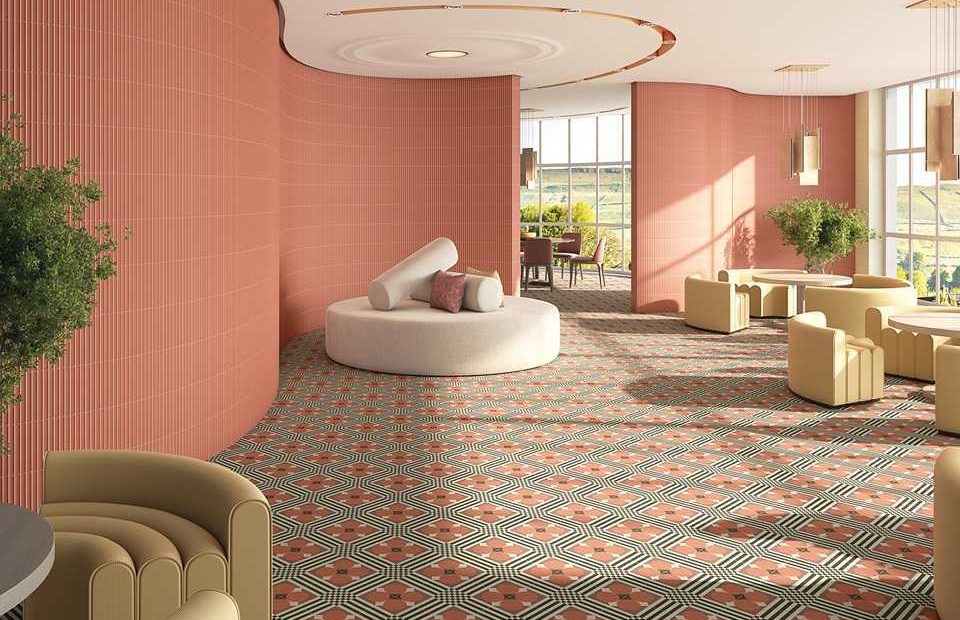
This more expressive approach reflects a broader change in luxury interiors. Rich textures, relief, and elaborate finishes are giving surfaces greater visual intensity, allowing them to respond differently as light moves through a room. Gloss can deepen a color, while raised details create shifting shadows. Fluid effects and intricate geometry give ceramic mosaics the depth and luminosity associated with precious materials. The result can feel jewel-like without slipping into decoration for its own sake.
Clara Vicedo, Architect at ASCER/Tile of Spain, said: “Luxury of this kind depends on restraint as much as impact. Instead of filling a room with competing statements, designers can concentrate detail in one carefully chosen area.”
An entrance wall or the lining of a pool becomes the focal point while the surrounding design remains composed. In Dubai, where high-end spaces are expected to feel individual, mosaics offer a clear route to customization through pattern, color combinations, scale, and layout.
Craftsmanship is central to the effect. The value of a mosaic comes from the rhythm created when each element is placed beside the next, as much as from the individual piece itself. While mosaics can be made from either glass or ceramic, Tile of Spain companies offer both types, with manufacturers specialising in glass mosaics as well as ceramic mosaics. Spanish ceramic design brings long-established skill and exacting quality to this process, while contemporary production technology expands what can be achieved through form and finish.
That relationship between heritage and innovation gives the revival substance. Mediterranean color, geometric repetition, glazed surfaces, and artisanal influences can be reworked without becoming nostalgic. Familiar patterns may be enlarged, interrupted, recolored, or paired with newer finishes, giving designers room to create surfaces that feel rooted in craft but entirely at home in a modern interior.
Mosaics also fit naturally into Dubai’s indoor-outdoor lifestyle. The same visual language can move from a bathroom or wellness suite into a courtyard, terrace, or pool area, creating a stronger connection between spaces. Ceramic stands up to moisture, temperature changes, stains, and frequent cleaning, while anti-slip options add reassurance in wet areas. Its hygienic and fire-resistant qualities also suit demanding residential and hospitality settings. These practical qualities allow intricate surfaces to withstand everyday use while retaining their refinement.
Their longevity adds another layer to the idea of luxury. Ceramic is made from natural raw materials, has a long service life, and can support more responsible design choices through durability and efficient manufacturing. A surface intended to endure carries greater value than one selected for a brief decorative cycle.
The renewed interest in mosaics reflects a wider change in how luxury is understood. The most memorable spaces are shaped by close attention and cultural depth, with surfaces that reward a second look. Spanish ceramic mosaics bring those qualities together, turning walls and floors across interior and outdoor settings into expressions of identity.