Dubai, UAE — June 2026 — The International Air Transport Association has slashed its global airline profit outlook for 2026, projecting combined industry net profit of $23 billion as the ongoing conflict in the Middle East and a surge in jet fuel prices reshape the financial landscape for carriers worldwide.
The revised figures, roughly half the $45 billion recorded in 2025, paint a stark picture: net profit margins are expected to compress to 2 percent from 4.2 percent last year, while profit per passenger falls to just $4.50, down from $9.10 in 2025.
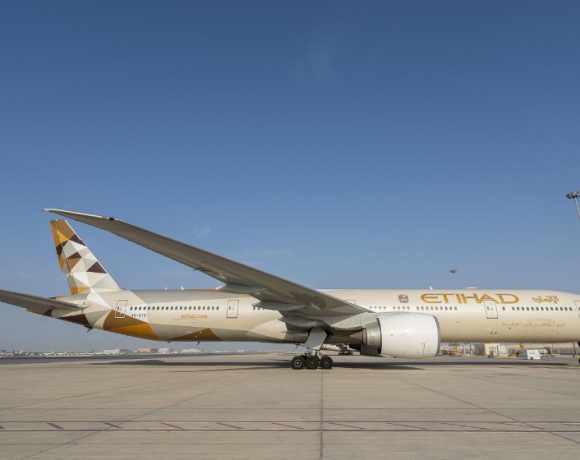
For the Middle East specifically, the situation is far more severe. The region’s carriers are expected to collectively post a net loss of $4.3 billion in 2026, swinging from a $7.2 billion profit the year before.
Demand, measured in revenue passenger kilometres, is forecast to contract by 11.4 percent, with capacity down 4.4 percent as airlines navigate near-complete airspace shutdowns and the collapse of transfer traffic through Gulf hubs.
“The Gulf carriers face operational uncertainty following a near complete shutdown of airspace at the outbreak of the war. These carriers are doing an amazing job maintaining connectivity, but major financial impacts are unavoidable,” said Willie Walsh, IATA’s director general.
Jet fuel is the single biggest driver of the pain. Prices are expected to average $152 per barrel in 2026, up nearly 70 percent on last year’s $90, pushing fuel’s share of total operating expenses to 31.4 percent from 25.4 percent in 2025. Global airlines have hedged around a third of their anticipated fuel consumption, offering only partial insulation against the sustained price surge.
Beyond the Middle East, all other regions remain in profit but at sharply reduced levels. European carriers are forecast to earn $9.6 billion, down from $13 billion in 2025, partly offset by rerouting gains on Europe–Asia routes that previously transited Gulf hubs. Asia Pacific airlines are projected to post $6.6 billion, down from $9.8 billion, with some carriers benefitting from the same traffic diversion dynamics.
Walsh noted the precarious nature of the margins involved. “Net profit per passenger is expected to fall to $4.50 — half of what it was last year. It won’t even buy you a hot dog at most of the FIFA World Cup venues and it does not leave much of a buffer should other costs or taxes start rising.”
Despite the gloom, total industry revenues are still expected to climb 9.4% to $1.165 trillion, driven by higher fares and record load factors of 84 percent, as passenger numbers approach 5.1 billion for the year.
For the Middle East’s major carriers, IATA points to structural advantages, a favourable tax environment, established infrastructure, and geographic positioning, as foundations for longer-term recovery, though the immediate path back to profitability is expected to be driven by pricing power rather than a swift return of volumes.