To expand naval defence solutions globally
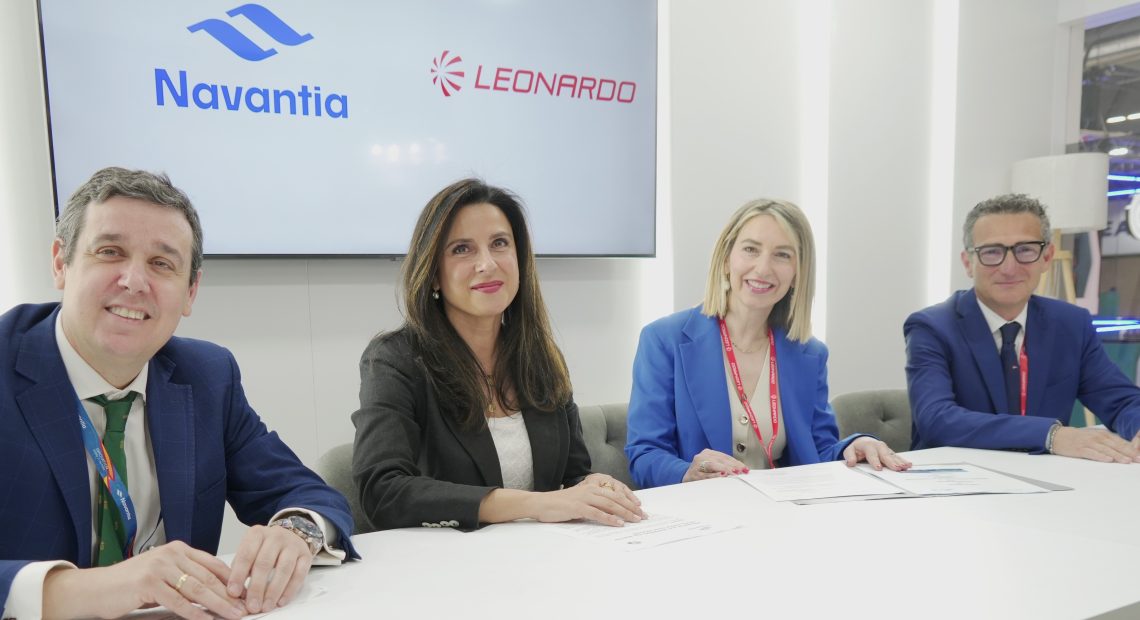
In a major step towards strengthening Europe’s naval defence capabilities, Spanish shipbuilding firm Navantia and Italian defence electronics leader Leonardo have signed a strategic collaboration agreement. The announcement was made at FEINDEF 2025, Spain’s leading defence and security trade show, held in Madrid from May 12 to 14, 2025.
The new partnership, formalised through a Memorandum of Understanding (MoU), was signed last week by Navantia CEO Gonzalo Mateo and Leonardo Electronics’ Marketing and Sales Director Davide Fazio. This agreement begins a closer commercial relationship between two long-standing collaborators in the naval defence sector.
Designed to open up new international market opportunities, the deal will allow both companies to combine their extensive shipbuilding and defence technology capabilities to deliver integrated, high-performance solutions for naval customers worldwide.
The Navantia-Leonardo partnership is not new. The two companies have worked together for decades, developing and delivering advanced systems for the Spanish Navy and beyond. Their joint efforts are already visible in key programmes such as the F110 frigates. Leonardo supplied crucial technologies, including the OTO 127/64 LW naval gun, advanced fire control radars, and the Automatic Ammunition Handling System (AAHS).
Leonardo’s systems are fully integrated into Navantia-built vessels, proving their reliability and operational effectiveness over years of deployment. From Spanish frigates to Offshore Patrol Vessels (BAM), pairing Navantia’s platforms with Leonardo’s advanced weaponry and sensor technologies has become a hallmark of trusted naval engineering.
With global naval modernisation accelerating, Navantia and Leonardo aim to jointly promote their combined offerings to new markets, offering turnkey naval solutions that meet evolving defence requirements.
Under the new agreement, Navantia will continue to provide its well-established ship design and construction capabilities, offering platforms such as corvettes, frigates, patrol vessels and aircraft carriers. Leonardo will complement these platforms with its full suite of naval defence electronics, including surveillance systems, integrated weapon control, and naval guns.
Both firms aim to boost their competitiveness in international tenders by aligning their commercial strategies. Countries seeking to modernise their naval forces increasingly demand flexible, scalable solutions that can be rapidly delivered and supported through their lifecycle. With Leonardo and Navantia working in unison, customers will benefit from seamless system integration and a unified approach to logistics, maintenance and upgrades.
The new MoU is particularly timely, as many countries in Europe, the Middle East, Asia and Latin America are exploring procurement options for advanced naval capabilities. Navantia and Leonardo position themselves as a single source of integrated naval solutions, reducing risk and improving value for international defence customers.
One of the standout features of this collaboration is its focus on operational agility. Both companies have agreed to enhance strategic and commercial decision-making coordination. This means they will be able to respond more quickly to customer needs and emerging opportunities, giving them a competitive edge in a rapidly shifting defence market.
In today’s security environment, procurement cycles are becoming shorter, and requirements more complex. Governments expect faster turnaround, lower risk, and higher interoperability. The partnership between Navantia and Leonardo is designed to deliver precisely that—rapid, responsive, and reliable naval solutions backed by decades of joint expertise.
Beyond sales and marketing cooperation, the agreement lays the groundwork for future research and development. Both firms have a strong track record in innovation, and this new alignment will foster collaborative R&D efforts focused on next-generation systems.
Areas of interest include advanced combat systems, multi-domain operations support, unmanned naval technologies and enhanced maritime surveillance. Navantia and Leonardo aim to ensure that new technologies are designed with full platform integration in mind, reducing costs and accelerating deployment by working together from the earliest stages of development.
This joint innovation model will also help companies adapt to changing defence priorities, particularly in cyber resilience, modularity and environmental sustainability.
FEINDEF 2025 served as a high-profile platform for the announcement, drawing the attention of defence officials, procurement leaders and industry analysts. The event in Madrid is a key meeting point for Europe’s defence community, showcasing the latest in military technology and industrial partnerships.
For Navantia and Leonardo, unveiling their strengthened alliance at such a venue underscores their intent to lead in the global naval defence space. With multiple international delegations attending FEINDEF, the timing offered a prime opportunity to engage with prospective clients and strategic partners.
As global maritime security challenges continue to evolve, the need for sophisticated naval capabilities is growing. Navantia and Leonardo respond to this demand by deepening their collaboration and presenting a unified front to the international defence community.
Their shared history, proven systems and common vision for the future place them in a strong position to shape the next generation of naval forces. This agreement is not just about business development — it represents a shared commitment to advancing maritime security through technological excellence and operational integration.
As the defence sector continues to globalise and modernise, alliances like that of Navantia and Leonardo set the standard for how industry leaders can collaborate to deliver comprehensive, mission-ready solutions for the world’s navies.
Image: Navantia and Leonardo signed their MoU at FEINDEF 2025, Spain’s leading defence and security trade show. Credit: Leonardo