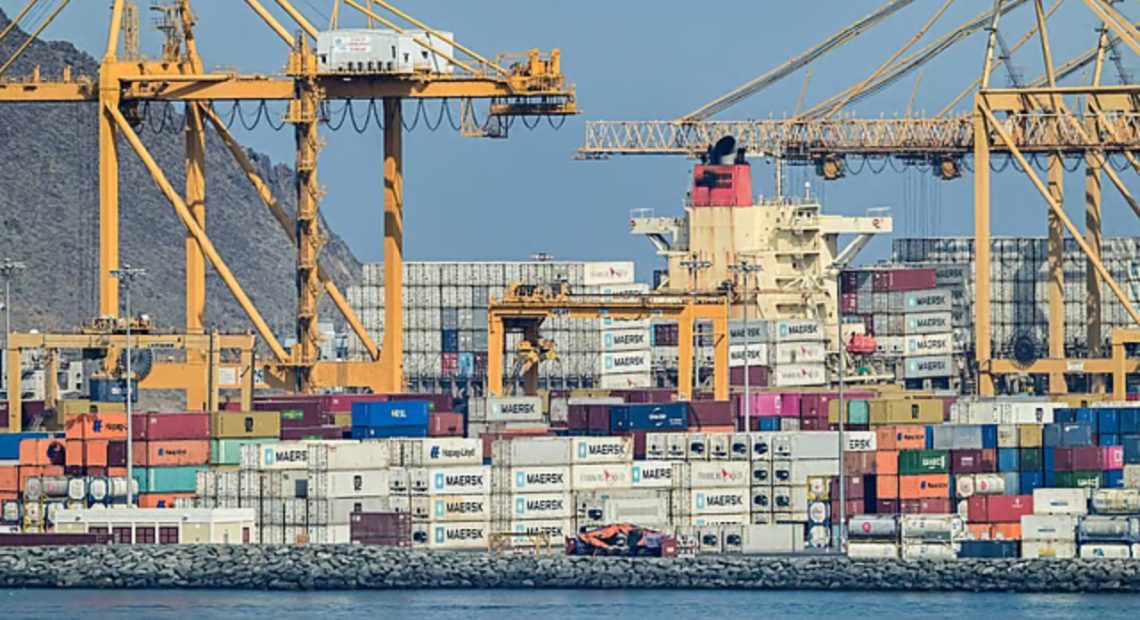
Photo Credit : AFP
Sharjah has unveiled a new integrated logistics corridor with Oman, cutting cargo transit times from nearly three months to just 35 days and offering toll-free access for approved trucks entering the emirate through designated border routes.
The move is expected to strengthen supply chains across the Gulf, reduce operational costs, and improve cargo flow for importers, exporters, manufacturers, and logistics operators.
According to Sharjah Chamber of Commerce and Industry, the corridor links Sharjah directly with Oman’s major ports, including Port of Sohar, Port of Duqm, and Port of Salalah, creating faster land-sea trade routes for regional cargo.
Abdul Aziz Al Shamsi, Assistant Director-General for Communication and Business Sector at the Sharjah Chamber, said the initiative is designed to reduce delays, simplify customs procedures and improve logistics efficiency between the UAE and Oman.
A key feature of the corridor is the toll exemption for cargo trucks entering Sharjah via the Khatmat Malaha and Al Madam border crossings, provided shipments are registered under the approved logistics network.
The new system also allows companies to defer customs clearance at border points and instead complete the process at inland container terminals within Sharjah, offering greater flexibility and reducing congestion.
Officials estimate businesses could save up to 15% in logistics costs, depending on cargo type and destination.
Live cargo operations through the corridor began on May 14, with the first shipments moving from Port Khalid to Sohar through the Khatmat Malaha crossing in Kalba.
Sharjah officials say the corridor will especially benefit the emirate’s industrial sector, which includes over 3,000 factories and contributes nearly 25% to the emirate’s GDP.
The corridor is also part of Sharjah’s broader strategy to position itself as a regional logistics hub connecting Gulf markets with India, East Africa and Asia, as global supply chains increasingly seek faster and more resilient trade routes.