
Ahead of 2026 flight trials
A solar-powered high-altitude drone designed to fly at the edge of space has passed a critical ground test, marking a key step in its development for environmental monitoring and communications.
The aircraft, named HAP-alpha, is being developed by the German Aerospace Centre (DLR) and is expected to begin low-altitude flight trials in 2026.
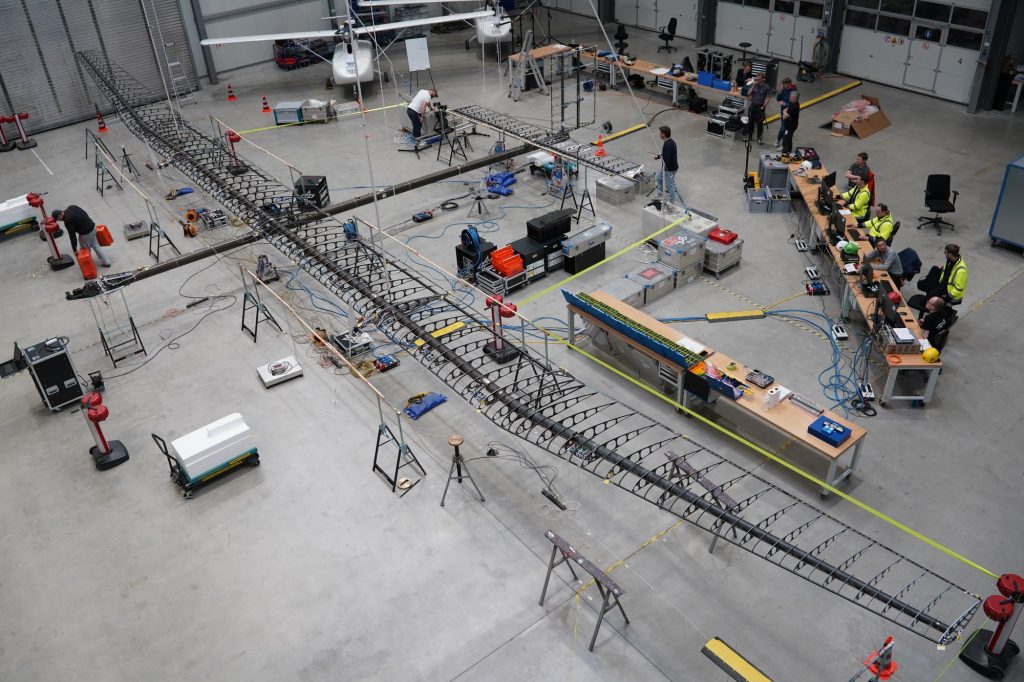
Engineers completed a ground vibration test (GVT) at DLR’s uncrewed aircraft test facility in Cochstedt, Germany. The test evaluated how the drone’s structure responds to various vibration forces. This is essential for ensuring the aircraft’s safety during takeoff, landing and flight, especially given its ultralight and highly flexible design.
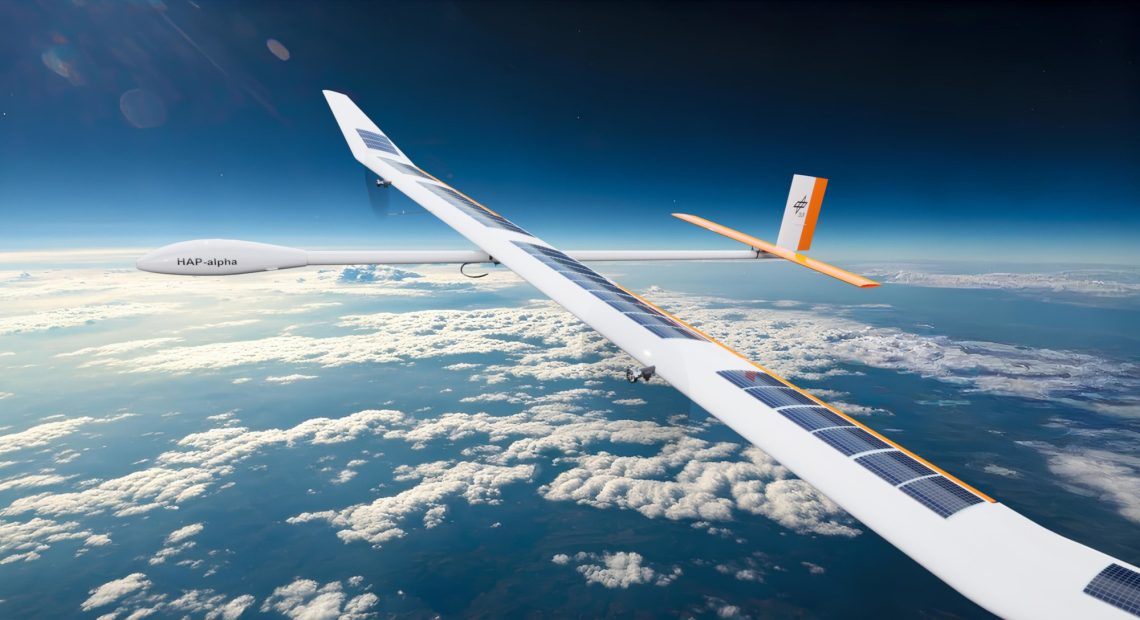
Built with a wingspan of 27 metres and weighing just 138 kilograms, HAP-alpha is designed to fly in the lower stratosphere, around 20 kilometres above the Earth. At this altitude, it will be capable of performing a range of operations over long periods, including Earth observation, disaster surveillance, maritime tracking and extending internet coverage in remote areas.
During the ground test, sensors and electromechanical vibrators were used to simulate flight conditions and measure the aircraft’s response. The data gathered will now be used to refine computer models and predict in-flight behaviour under various scenarios, such as turbulence and sharp manoeuvres. DLR officials say this will help them finalise system-level testing before flight operations begin.
Although Germany leads the programme, interest in high-altitude drone platforms is rising globally, including in the Middle East and Africa. These systems are increasingly being viewed as low-cost, energy-efficient alternatives to traditional satellite systems. Unlike conventional drones or aircraft, high-altitude platforms (HAPs) can hover or loiter in place for weeks or even months at a time, powered entirely by solar energy.
This endurance opens new possibilities for climate research, border surveillance, and emergency communications across vast areas of desert or coastline. In regions such as the Arabian Peninsula and North Africa, where infrastructure is often limited and harsh environmental conditions make traditional monitoring challenging, HAPs could prove particularly useful.
In the UAE and Saudi Arabia, ongoing investments in space and aviation technology may create opportunities to integrate stratospheric drones into national monitoring strategies. These platforms could complement satellite networks by providing high-resolution imagery or real-time communication links during emergencies, such as floods or wildfires.
DLR says HAP-alpha will also serve as a testbed for new sensor systems. These include a modular high-resolution camera and a synthetic aperture radar system. Both will be tested on the drone during future missions, allowing researchers to evaluate their performance at high altitudes over extended periods.
Once fully developed, the aircraft could help advance global efforts to monitor environmental changes and deliver communication services in underserved regions. The drone’s low weight and elastic structure are designed to allow safe and efficient operation in the thin air of the upper atmosphere. Still, these same features made the recent vibration tests technically complex.
Officials at DLR’s Institute of Aeroelasticity, which led the ground testing, say the results show the platform is structurally ready to proceed to the next stage. The first flights, scheduled for 2026, will take place at low altitude before progressing to stratospheric missions.
While operational deployment may still be years away, the successful ground test of HAP-alpha marks a step forward for high-altitude solar-powered aviation. As governments in the Gulf and across Africa seek sustainable ways to enhance surveillance, connectivity, and disaster preparedness, systems like HAP-alpha could offer a strategic solution shortly.
Hero image: Visualisation of the final HAP-alpha design. The high-altitude uncrewed platform, HAP-alpha, will be capable of ascending to approximately 20 kilometres in altitude in the lower stratosphere. Credit: DLR