Dubai, UAE — Sept. 2026 — Syria and Iraq have agreed to electronically link their customs systems and to open the Tanf border crossing to passenger traffic, as trade between the two countries grows.
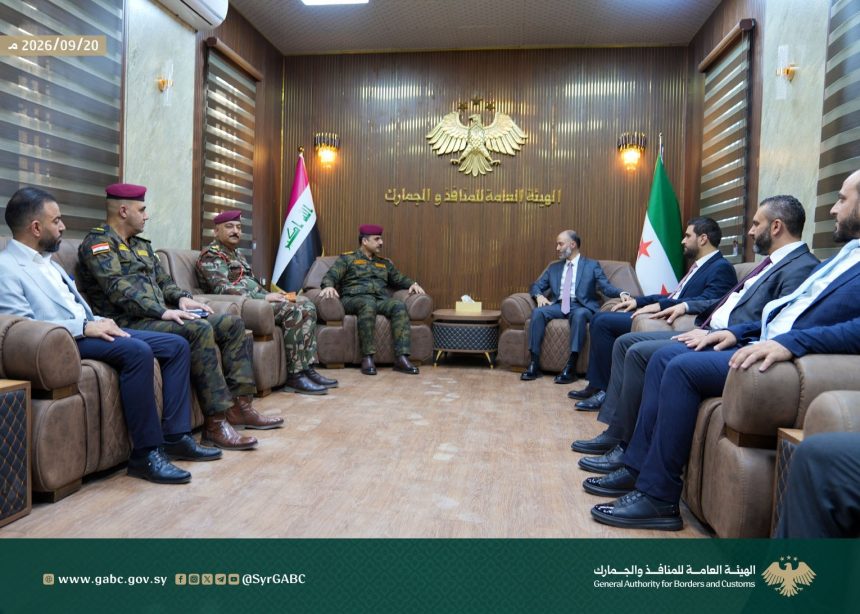
Qutaiba Badawi, head of Syria’s General Authority for Ports and Customs, met Omar Adnan al-Waeli, head of Iraq’s Border Ports Authority, at the Tanf crossing on Sunday, the Syrian authority said on its Telegram channel.
According to SANA, the two officials toured the crossing’s new halls and yards and reviewed expansion and rehabilitation work and the equipment needed to raise its capacity and improve services for travelers and freight carriers.
Talks focused on strengthening coordination between Syrian and Iraqi border crossings as trade in imports, exports and transit expands. The sides discussed upgrading infrastructure, simplifying procedures and speeding up truck movement.
The electronic link between the two customs administrations is intended to streamline procedures, improve data exchange and accelerate the processing of transactions, the authority said.
The two sides also agreed to open Tanf to travelers once road expansion is finished and infrastructure at both crossings is ready to receive passengers and provide services.
Badawi and al-Waeli reopened the Tanf–Walid crossing on April 2 to boost bilateral cooperation and revive commercial transit and goods movement.
Tanf sits in the far southeast of Syria in Homs governorate, opposite Iraq’s Walid crossing in Anbar governorate. Since reopening, it has played a key role in regional and international transit, facilitating the passage of trucks, tankers and goods between Syria, Iraq and the wider region.