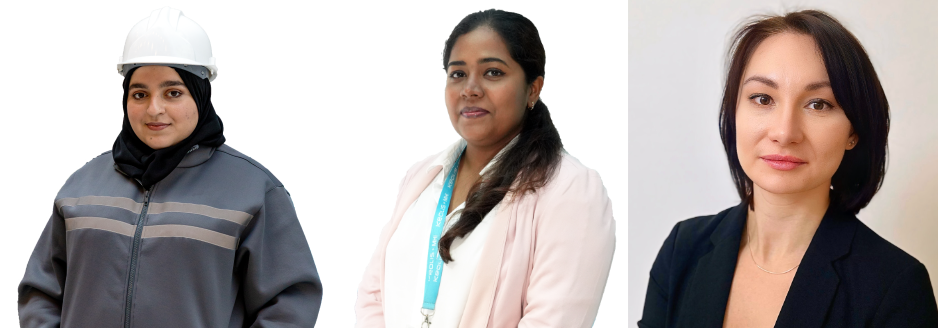
On International Women in Engineering Day 2025
Female engineers working in the UAE’s public transport sector have marked International Women in Engineering Day (June 23, 2025) by reflecting on the challenges and opportunities shaping their careers in a field still largely dominated by men.
This year’s theme, ‘Together We Engineer’, focuses on collaboration and shared progress, highlighting the collective nature of engineering and the need for inclusive work environments.
The International Women in Engineering Day was first launched in the UK and is now recognised in over 100 countries. It aims to highlight the contributions of women to engineering, promote diversity and encourage future generations to consider the profession.
Keolis MHI, the operator of some public transport networks in Dubai, joined the global observance of International Women in Engineering Day 2025 by sharing the experiences of several of its engineers.
The company’s participation comes amid broader efforts in the Arabian Gulf to increase female representation in science, technology, engineering and mathematics (STEM) professions, which remain underrepresented by women globally.
Mariam Almarzooqi, an Emirati asset engineer with Keolis MHI, said her role involves maintaining the reliability of power distribution systems. She leads investigations and technical assessments, manages system changes and works across departments to ensure performance targets are met.
Almarzooqi described engineering as a career of ongoing learning that demands critical thinking and adaptability. She noted that balancing high-pressure demands and managing complex stakeholder expectations can be difficult, but also contributes to professional growth. She emphasised the importance of collaboration in the engineering process and stressed the value of peer support, particularly for women navigating technical roles in male-dominated workplaces.
Aarthi Kumar, a data engineer at MHI Keolis, said her focus lies in designing systems that make transport operations more efficient and responsive. She works with multiple teams to collect and use data that informs decision-making. Her work reflects a shift within the engineering profession towards digitalisation and analytics. She noted that the field changes rapidly and requires constant upskilling. Despite the fast pace, she described the work as meaningful, particularly in how technology is utilised to enhance the passenger experience.
Kumar said engineering achievements rarely happen in isolation, and that shared learning and collective effort underpin the success of most infrastructure systems. She said she sees the workplace becoming more inclusive and collaborative, though progress remains uneven across the wider industry.
Flavia Giurca, a civil engineer at Keolis MHI, manages inspection and maintenance work on physical infrastructure, including tunnels and structures. Her team includes technicians, inspectors and apprentices. Her role spans safety oversight, planning and coordination with external contractors.
Giurca said the job is dynamic and often unpredictable, with issues arising that require immediate solutions. She said her interest in transport infrastructure stemmed from a desire to support sustainable mobility and urban development. Like her colleagues, she emphasised the importance of diversity in engineering, saying that innovation improves when teams are composed of people with different backgrounds and experiences.
She added that for many women in engineering, professional growth is shaped not only by technical skills but also by access to mentorship and inclusion within leadership structures.
Women in engineering across the Gulf region still reflect a broader gender gap. Initiatives like International Women in Engineering Day aim to address this divide by raising awareness and increasing visibility for female engineers whose work remains underrepresented.
According to industry reports, only a small proportion of engineering roles globally are held by women, despite rising interest in STEM education among female students in the Middle East. Keolis MHI’s Women in Rail Committee is one example of internal initiatives aimed at improving gender balance. Though the company did not release statistics, women currently hold roles across engineering, operations, and support functions within its Dubai operations.
For the UAE, where infrastructure expansion remains central to long-term economic plans, increasing women’s participation in technical fields is seen as part of a broader strategy to build a diversified, knowledge-based economy. The stories shared by engineers at Keolis MHI reflect both the potential of women in engineering and the structural support still required to ensure equal opportunities in the sector.
Images: (L-R) Mariam Almarzooqi, Aarthi Kumar, Flavia Giurca. Credit: Keolis MHI