Photo Credit : Gulf News
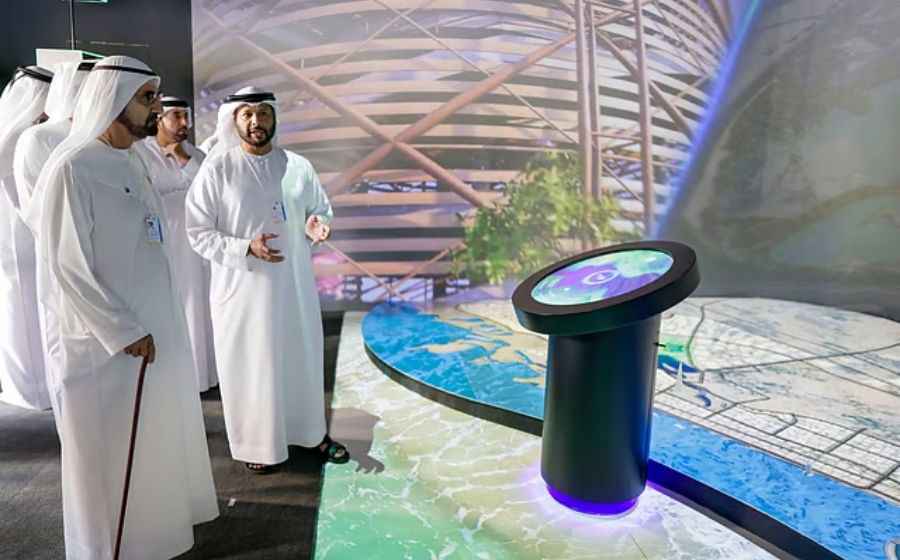
Dubai Municipality has launched the Blue and Green Spaces Roadmap 2030, a long-term strategy aimed at building a balanced and integrated urban ecosystem, during the World Governments Summit. The roadmap was reviewed by Sheikh Mohammed bin Rashid Al Maktoum, Vice President, Prime Minister and Ruler of Dubai, alongside senior UAE leaders.
Valued at more than Dh4 billion, the roadmap sets out a portfolio of projects designed to reinforce Dubai’s position as a global leader in sustainable urban development, placing nature at the heart of city life to enhance wellbeing, liveability and resilience.
The strategy marks a key step in Dubai’s future city-making agenda, strengthening its leadership in quality of life, urban sustainability and people-centred governance models. It is structured to meet the evolving needs of residents, visitors and tourists, while ensuring that natural assets play a central role in the emirate’s long-term growth.
Integrating sustainability into urban planning
Under the roadmap, sustainability is embedded as a core operational element of urban planning and design. The approach integrates public facilities, parks, beaches, waterfronts, afforestation initiatives, agriculture, biodiversity conservation, and advanced recycling and treatment systems to support public health and environmental balance.
Dubai Municipality said the roadmap reflects its focus on creating a cohesive urban system that transforms infrastructure corridors into drivers of quality of life, resilience and adaptability, with communities and families at its centre.
Nature as active infrastructure
By 2030, the roadmap aims to redefine daily life in Dubai by positioning nature as an active component of the city’s infrastructure. Plans include improved access to parks, sports facilities, coastlines and beaches across the emirate.
Key targets include planting around 1.5 million trees over five years, delivering more than 45 landscaping and beautification projects, and adding 120 new parks spanning nearly three million square metres. Around 200 sports and recreational spaces will be integrated into green networks, in alignment with the Public Parks and Greenery Strategy and the Dubai 2040 Urban Master Plan.
Beaches and waterfronts will be repositioned as active urban assets within Dubai’s social, recreational and ecological systems. More than 15 major development projects are planned to revitalise coastlines, with three new beach destinations to be introduced each year. The roadmap also includes a 400 per cent increase in beach facilities and services, a 150 per cent expansion in public beach capacity, and a 285 per cent extension of beachfront walking, jogging and cycling tracks.
Setting global benchmarks
Marwan Ahmed bin Ghalita, Director General of Dubai Municipality, said the roadmap strengthens Dubai’s role in shaping global standards for urban sustainability. He noted that the emirate is not only implementing advanced blue and green space concepts locally, but also sharing its integrated urban development model with cities worldwide.
“Through this roadmap, Dubai Municipality is advancing a flexible and inclusive urban model that treats beaches, parks and public spaces as essential infrastructure,” bin Ghalita said. “Our objective is a city built for people, growing in harmony with nature, and delivering the highest quality of life for present and future generations.”
The roadmap supports the Sustainable Development Goals, enhances climate resilience and encourages active lifestyles and social interaction, while positioning public spaces as an integral part of everyday life. It also advances Dubai’s vision to become one of the world’s best cities to live and work.