
You may be compromised too
A newly uncovered data breach has exposed more than 16 billion login credentials, making it one of the largest breaches in history. The records, believed to stem from a series of infostealer malware infections, include sensitive login data for platforms such as Facebook, Google, Apple, Telegram, and GitHub, among others.
Security researchers are warning that the unprecedented scale and freshness of the leaked data pose severe threats to both individuals and organisations worldwide.
The discovery was made by cybersecurity researchers at Cybernews, who revealed that the login credentials were found in 30 separate datasets. Each dataset ranged from tens of millions to over 3.5 billion records. Some were named after malware strains, while others were named after services such as Telegram or regions like the Russian Federation.
Experts said the information is recent and not recycled from previous breaches, suggesting that attackers are constantly harvesting fresh credentials. In many cases, the exposed data was stored in unsecured databases that were temporarily accessible through misconfigured Elasticsearch instances or open cloud storage systems.
Clear pattern
The data appears to be structured and consistent, with records typically containing a website URL, username or email address, and corresponding password.
Cybernews contributor and SecurityDiscovery.com owner Bob Diachenko, who was involved in uncovering the leak, clarified that there was no centralised breach at tech giants such as Google, Facebook, or Apple. However, the stolen credentials do include login details used to access those platforms, meaning attackers could potentially exploit them for unauthorised access.
Researchers said the danger lies not only in the sheer volume of the leaked data but in the inclusion of cookies, session tokens, and metadata. This additional information can be used to bypass two-factor authentication systems, posing a serious threat to users and enterprises that do not enforce strong credential hygiene.

Cybersecurity experts have urged organisations, especially in the Middle East and other high-growth digital economies, to adopt multi-layered, zero-trust strategies. These should include multi-factor authentication, encrypted data storage, real-time monitoring, endpoint protection, and regular employee awareness training.
Milestone perspective
Louise Bou Rached, Director for the Middle East, Turkey, and Africa at Milestone Systems, said that cybersecurity is no longer a back-end IT concern, but a fundamental pillar of business continuity and trust in the digital economy.
She warned that even the most advanced systems can be compromised with a single click, underscoring the importance of awareness in conjunction with technical safeguards.
The data was not leaked by a known hacker group or a single actor, making attribution difficult. Researchers believe threat actors or even well-intentioned researchers could have aggregated the datasets. However, with such a large volume of information circulating online, experts say that cybercriminals can scale attacks with minimal effort.
According to Cybernews, one of the smaller datasets had over 16 million records, while the largest held over 3.5 billion entries, possibly linked to Portuguese-speaking users. On average, each dataset contained about 550 million credentials. Many of the databases had vague names such as “logins” or “credentials”, while others appeared to be directly related to known services.
Cybersecurity researcher Aras Nazarov from Cybernews said the breach signals a shift in underground data markets. He believes cybercriminals are moving away from encrypted channels, such as Telegram groups, in favour of more traditional, centralised databases. The exposure of infostealer logs in this format could facilitate easier execution and automation of attacks.
Cloudera reckoning
Carolyn Duby, Cyber Security GTM Lead at Cloudera, said the breach demonstrates how data, while a strategic asset, remains a prime target for exploitation. She noted that according to Cybersecurity Ventures, global cybercrime is expected to cost $10.5 trillion by 2025.
With ransomware attacks occurring every 11 seconds and average breach expenses rising to $4.88 million, Duby said AI-driven protection, automated defences, and strict data governance are no longer optional.
In the Middle East, where digital transformation is continuing at a rapid pace, such breaches raise concerns about the security of regional government platforms, fintech services, and cloud-based applications.
As Gulf nations invest in innovative city initiatives and AI-driven public services, analysts warn that these projects must be built with security-by-design principles to prevent them from becoming targets for cyberattacks.
Users are advised to update all passwords and ensure they are unique for each service. Multi-factor authentication should be enabled wherever available, and users should regularly monitor their accounts for any suspicious activity. Given the scale of the breach, it is likely that a significant percentage of the global population has been affected.
This leak follows previous incidents, including the so-called “Mother of All Breaches” (MOAB) earlier in 2024, which exposed over 26 billion records, and last year’s RockYou2024 breach, which involved nearly 10 billion unique passwords. Both incidents underscore the growing sophistication of cybercriminals and the urgent need for comprehensive data protection policies.
Although the full extent of the damage remains unclear, the consensus among cybersecurity experts is that the information will fuel a wave of phishing scams, identity theft, ransomware attacks, and unauthorised access to personal and corporate accounts.
Authorities have yet to comment on the breach, and it is uncertain whether any affected organisations will face regulatory action. Meanwhile, users are left to safeguard their digital identities in an increasingly volatile online environment.
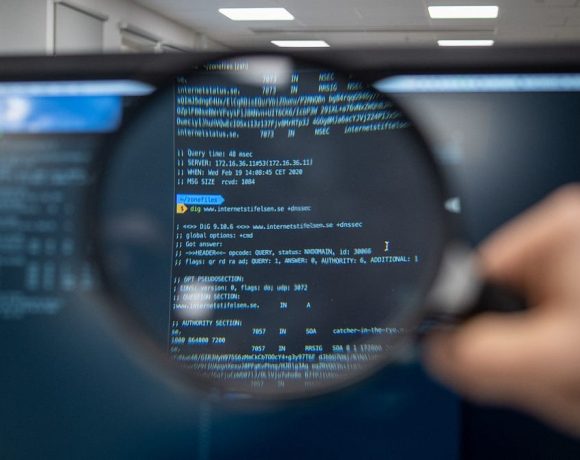
Hero image: The consensus among cybersecurity experts is that the information breach will fuel a wave of phishing scams, identity theft, ransomware attacks, and unauthorised access to personal and corporate accounts. Credit: Tima Miroshnichenko