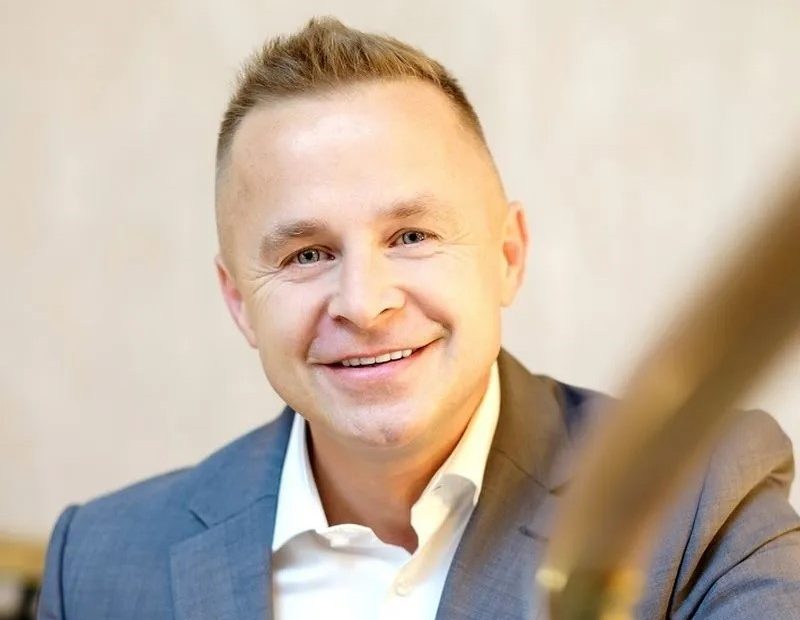
Global Entrepreneur Roman Ziemian argues that wellness must take centre stage — not just as a lifestyle trend, but as a strategic pillar of growth. He explores how investing in human vitality can reduce healthcare costs, supercharge productivity, and redefine the region’s global brand.
In boardrooms, ministries, and masterplans across the GCC, the conversation has shifted. Today, it’s no longer just about GDP or oil prices — it’s about wellbeing. As an entrepreneur deeply invested in the future of this region, I believe it’s time we elevate wellness from a personal pursuit to an economic pillar. Because if the GCC is serious about building resilient, diversified economies, it must invest not only in infrastructure, technology, and tourism — but in human vitality.
The good news? The foundation is already being laid. What’s needed now is vision and acceleration.
From Soft Trend to Strategic Imperative
Let’s be clear: wellness is not a passing trend. Globally, the wellness economy is valued at over $5 trillion — and it’s growing twice as fast as global GDP. From biohacking retreats in Dubai to longevity-focused hubs in Saudi Arabia, the GCC is uniquely positioned to lead this sector — and redefine what wellness means for modern economies.
In fact, it’s already happening. In Dubai, the Longevity Hub by Clinique La Prairie, located at One&Only One Za’abeel, is pioneering a new category of health: one that merges advanced science with curated lifestyle. With its cutting-edge protocols in cellular health, it represents a shift from reactive medicine to proactive vitality.
Meanwhile in Saudi Arabia, NEOM’s Trojena and The Line are being designed with health and wellness embedded into every layer — from air quality and walkability to AI-driven preventive care. This is the future of urban living, where cities become environments that heal, energise, and extend life.
Why Wellness Is Smart Economics
Beyond the inspiration, there’s a hard business case for wellness as a growth engine.
- Reducing Healthcare Costs:
Chronic diseases — largely preventable through lifestyle — are the single largest drain on healthcare systems in the GCC. Diabetes alone affects nearly 1 in 5 adults in the UAE. By investing in preventive wellness, we reduce the long-term economic burden on public health infrastructure. - Boosting Workforce Productivity:
A healthy workforce is a high-performing workforce. Stress, burnout, and metabolic disorders silently cost GCC companies billions in lost productivity every year. Wellness is not a luxury perk — it’s a strategic asset. Leaders who prioritise employee wellbeing see fewer sick days, stronger morale, and higher retention. - Fueling Tourism & Innovation:
Wellness travel is one of the fastest-growing sectors in global tourism. From desert detox retreats in AlUla to integrative wellness resorts in Oman, the GCC can capture a new kind of traveler — one seeking transformation, not just vacation. In parallel, wellness tech startups are emerging across the region, driven by AI, genomics, and personalisation. - Enhancing National Identity:
The region’s wellness renaissance can also draw from its cultural roots — from traditional hammams to herbal healing practices and spiritual wellbeing. This blend of heritage and high-tech gives the GCC a unique brand identity on the global wellness stage.
Wellness as a Driver of Vision 2030
Saudi Arabia’s Vision 2030 and the UAE’s forward-thinking strategies are already placing quality of life at the heart of development. But wellness must go deeper than sports events or fitness challenges.
We need a whole-system shift — where urban planning prioritises mental health, where food policies support metabolic health, where schools teach mindfulness and resilience, and where companies measure success not just by profit, but by people flourishing.
A Personal Note on Purpose and Performance
As someone who has spent decades in performance-driven environments — from corporate leadership to elite sport sponsorships — I’ve seen firsthand how wellness is the ultimate multiplier. It’s what allows high-performers to go further, stay sharper, and lead with heart.
But wellness is not reserved for the elite. It must be democratised. That’s where the GCC has a golden opportunity: to make wellness accessible, scalable, and interwoven into daily life.
Imagine if the next unicorn startup from the region was a wellness tech platform that reversed prediabetes at scale. Or if every new smart city came with a built-in longevity strategy. That’s the kind of growth story the world needs now.
Building an Economy That Heals
The GCC has already proven it can build the tallest towers, the fastest trains, the smartest cities. Now, it’s time to build something even more powerful: an economy that heals.
An economy that uplifts not only GDP, but HRV (heart rate variability). One that tracks not just quarterly earnings, but quality of life. One that sees wellness not as a cost — but as the catalyst for everything else.
The future belongs to regions that invest in the full spectrum of human potential. The GCC can — and should — lead the way.