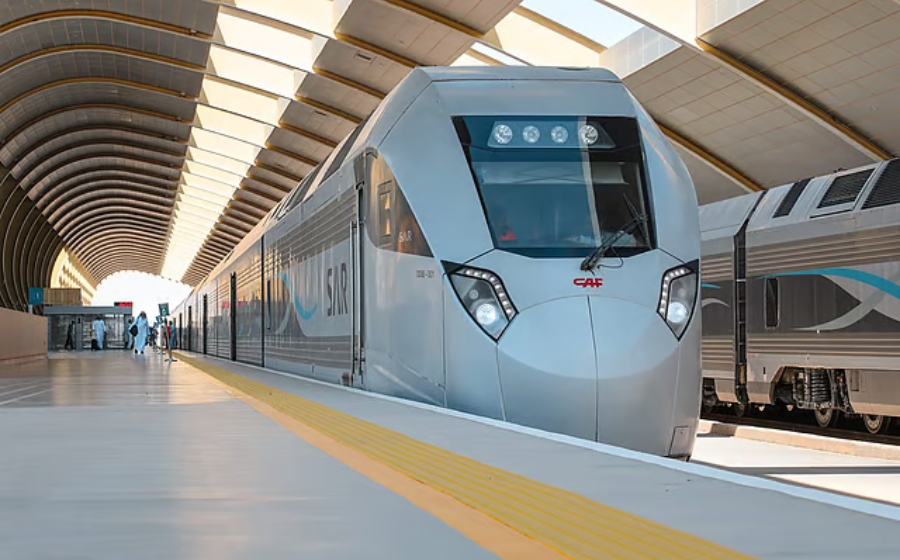
Image Credit: @SaudiProject/X
Saudi Arabia and Qatar have signed a landmark agreement to build a new high-speed electric rail line connecting Riyadh and Doha, a move expected to accelerate regional integration and reshape mobility across the Gulf.
Announced by Al Ekhbariya TV, the project is one of the most ambitious infrastructure collaborations between the two countries. The 785-kilometre line will be completed within six years and will cut travel time between the two capitals to just two hours. Trains are planned to run at speeds exceeding 300 kilometres per hour.
Designed to carry more than 10 million passengers a year, the network is set to become a major driver of tourism, trade, and commuter movement. The route will pass through Riyadh, Hofuf, and Dammam, improving domestic connectivity while strengthening cross-border links.
A key feature of the project is its integration with two major regional aviation hubs: King Salman International Airport in Riyadh and Hamad International Airport in Doha. This connection is expected to provide travellers and investors with faster, more convenient access to global routes.
Five modern passenger stations will be built along the corridor, each equipped with smart-transport technologies to ensure a smoother, more efficient travel experience.
Officials say the rail line represents a new era in transport cooperation between Saudi Arabia and Qatar. It aims to ease movement for residents and visitors, support major events, and enhance overall quality of life on both sides of the border.
The project is also expected to generate around 30,000 direct and indirect jobs during construction and operation, making it a significant contributor to the region’s labour market.
Beyond passenger travel, the rail line will boost the movement of light and medium goods, strengthen supply-chain logistics, and reduce transport costs, ultimately increasing bilateral trade.
In a joint statement, both governments reaffirmed their commitment to expanding cooperation in supply chains and energy, and to diversifying trade priorities closely aligned with the goals of the new high-speed rail initiative.