
New research, released by Cisco in partnership with Foundry, reveals that organizations in the UAE have approximately three years before AI-driven network traffic increases significantly across key AI workloads, network capacity reaches its limit, and attack surfaces expand beyond what current defenses can manage.
The study, based on a survey of 200 IT leaders in the UAE (and 3,472 across the world), confirms that the rapid rise of large language models (LLMs) and the emerging wave of agentic AI are placing unprecedented strain on enterprise campus and branch networks. Alongside compute, the network is now a major factor in whether enterprise AI deployments succeed or fail.
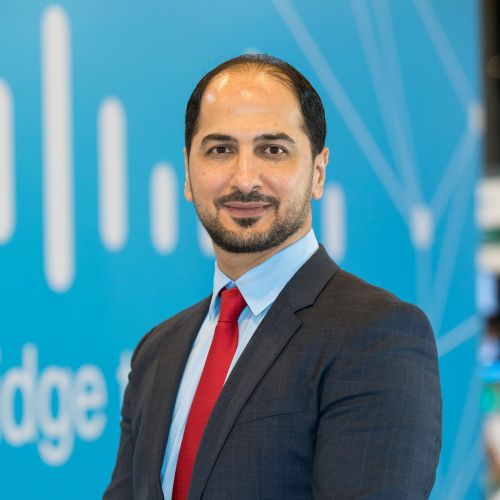
Mohannad Abuissa, MD & CTO, Solutions Engineering, Cisco MEA–TRC, said: “Our study shows that while UAE enterprises display remarkable ambition to adopt AI, particularly agentic AI, and the networks to support it, the underlying network infrastructure must continue to evolve at the same pace. As AI workloads increase traffic, latency sensitivity and security complexity, ongoing network modernization is becoming essential to help organizations unlock the transformative power of AI and ensure investments in this space continue to deliver measurable business value.”
Agentic AI Use Continues To Expand
More than a third (34%) of the organizations surveyed already have broad enterprise-wide AI agent deployments, and 99% expect an increase in agentic AI use within 24 months. Unlike human users, AI agents trigger dozens of API calls, database lookups, and model inferences in seconds, generating dense east-west traffic that legacy workplace networks were never designed to handle.
Those surveyed report that AI workloads are also more acutely vulnerable to networking issues than traditional applications. These include challenges related to reliability and uptime (78%), bandwidth availability (64%), latency (73%), and packet loss (62%).
Networks Under Growing Capacity Pressure as AI Traffic Expected To Triple
Only 32% of UAE respondents say their networks are fully prepared for projected AI growth (though they are ahead of the global average of 23%). Overall, 68% of respondents – compared to 76% worldwide – admit they need upgrades, 81% anticipate they will hit campus and branch capacity limits within three years, and 9% are already experiencing capacity constraints due to AI workloads.
Networking and AI experts in the UAE expect AI’s overall traffic impact to more than triple within the next three years, with the highest individual workload increase, around 126%, attributed to agentic AI. Wi-Fi is emerging as a major bottleneck for AI workloads, with half of the respondents listing it as the area driving the greatest increase in capacity requirements.
The findings also point to a disconnect between AI ambition and network readiness: 76% of IT leaders are more confident in their organization’s AI strategy than in the network’s ability to deliver on it. While AI adoption has accelerated plans to modernize network infrastructure for 94% of respondents, budget remains a barrier. In the UAE, 42% say budget constraints limit their ability to modernize to a great extent, higher than the global average of 31%, while 51% say they are limited to some extent.
Attack surfaces are already expanding while observability is a challenge
AI has also created a challenging security environment, with 91% of respondents struggling to keep up and 89% saying AI is already causing damage. Two-thirds (66%) also believe that AI-related threats are evolving faster than their ability to adapt. Meanwhile, the observability gap is widening as 54% of UAE respondents say they lack adequate visibility into AI-related traffic flows across their network.
The findings make it clear that networking resilience, observability, and adaptive security are not supporting acts in the AI era, they are essential for functioning AI. Organizations that treat continued network modernization as a prerequisite to their AI strategy, rather than a parallel workstream, will define the next decade of enterprise AI.