
Photo Credit :
Qatar is rapidly advancing its digital healthcare strategy, with medical laboratories across the country now performing more than 20 million diagnostic tests every year, including around 153,000 genetic tests, as the nation strengthens precision medicine and smart laboratory services.
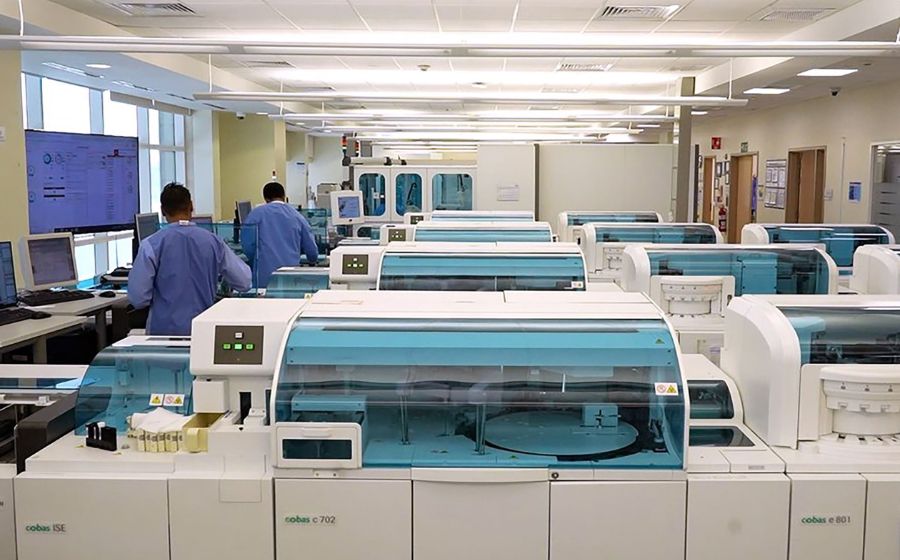
According to Dr. Einas Al Kuwari, Chair of Laboratory Medicine and Pathology at Hamad Medical Corporation (HMC), the country’s laboratory network has undergone a major digital transformation, integrating advanced laboratory systems with electronic medical records to deliver faster, more accurate and secure diagnostic results.
The transformation supports Qatar National Vision 2030, which aims to build a digitally connected healthcare system powered by innovation, artificial intelligence and data-driven decision making to improve patient care and operational efficiency.
Dr. Al Kuwari said HMC’s Genetic Diagnostics Laboratory conducts thousands of specialised tests each year, including screening for inherited disorders, blood cancer-related genetic mutations, premarital screening and newborn testing.
As part of its precision medicine programme, HMC has also introduced Clinical Whole Exome Sequencing (WES) for the first time within the organisation, alongside new pharmacogenomics and thrombophilia testing services. These additions are expected to enhance personalised diagnosis and treatment options for patients.
In transfusion medicine, Qatar has achieved self-sufficiency in blood and blood components through strong donor participation. HMC has secured international accreditation for 11 laboratory sites and introduced Low Titer O Whole Blood for trauma patients, helping improve survival rates by enabling faster treatment during severe bleeding.
The corporation has also implemented cryopreservation technology, allowing rare blood group red blood cells to be safely stored for up to 30 years, strengthening preparedness for complex medical cases.
Qatar’s only histocompatibility laboratory continues to support kidney and bone marrow transplant programmes using advanced technologies that reduce the risk of organ rejection. New diagnostic tools, including cell-free DNA testing and immune cell function analysis, are further improving post-transplant patient monitoring.
The Cell Therapy Laboratory has also reported a 19 percent increase in stem cell-based bone marrow transplants for adult cancer patients compared with the previous year.
Meanwhile, HMC continues expanding clinical biochemistry services with therapeutic drug monitoring, lipoprotein(a) testing for early cardiovascular disease detection, enhanced zinc and preeclampsia screening, and advanced PCR testing for respiratory viruses.
The anatomical pathology laboratory processes more than 60,000 tissue samples annually, with cancer-related cases accounting for approximately 13 percent of the workload, highlighting the growing demand for early cancer diagnosis and precision pathology services.
HMC is also strengthening national efforts to combat antimicrobial resistance through expanded microbiology surveillance, infection prevention programmes and the One Health approach.
Dr. Al Kuwari said these developments reflect Qatar’s commitment to building a smart, innovation-driven laboratory system that enhances healthcare quality, patient safety and clinical outcomes across the country.