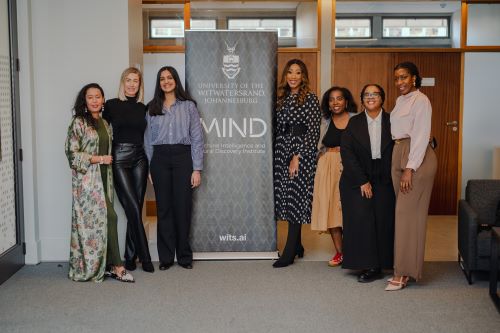
Leading women experts in artificial intelligence (AI), ethics, governance, research and innovation led a conversation at the University of the Witwatersrand (Wits) on the inclusive and ethical use of artificial intelligence during an exclusive roundtable exploring how AI is reshaping education across Africa and the wider Middle East and Africa (MEA) region.
The event brought together women and men educators, researchers, industry leaders and technology practitioners operating across Africa and the Middle East to examine the opportunities, challenges and responsibilities accompanying the growing adoption of AI in learning environments. While hosted in South Africa, the discussion reflected the realities, priorities and policy considerations facing educational institutions and organisations throughout the MEA region.
Hosted by Aashna Jain, Founder and CEO of AITHOS, in collaboration with Wits MIND, the discussion centred on the theme “AI in Education: Shaping the Future of Learning.” The roundtable of a series across MEA created a platform for meaningful dialogue between experts from academia, industry and research, with a focus on ensuring that technological innovation supports more inclusive, ethical and impactful educational outcomes.
As governments, educators and businesses across Africa and the Middle East accelerate AI adoption, participants agreed that ethical governance, transparency and accountability must remain central to implementation strategies. The roundtable reflected AITHOS’ broader mission to champion responsible and human-centred AI development, fostering ethical innovation not only across Africa, but also throughout the Middle East and globally.
Held ahead of South Africa’s National Women’s Day celebrations, the event also highlighted the significant role women are playing in shaping the future of artificial intelligence. The discussion underscored the importance of diverse leadership and inclusive participation in designing, governing and deploying AI technologies that will influence future generations of learners and workers across the MEA region.
Over the course of the session, participants explored four critical themes. Discussions around AI in Classrooms and Future Skills examined how AI is changing teaching and learning practices and the competencies students will require to thrive in an increasingly digital world. Conversations on Access vs Inequality focused on the potential for AI to expand educational opportunities while acknowledging the risk of deepening existing inequalities if digital access gaps and infrastructure challenges are not adequately addressed.
The discussion on Student Readiness and Employability considered whether current education systems are adequately preparing learners for AI-driven workplaces and how institutions can equip students with both technical and human-centred skills. Under Ethics and Governance, participants examined the safeguards, accountability measures and governance frameworks needed to ensure responsible AI adoption within educational settings, while addressing concerns around bias, transparency, privacy, trust and equitable access.
Speaker Perspectives
As AI continues to transform education and the future of work, participants agreed that collaboration between educators, policymakers, researchers and industry leaders will be critical to ensuring that AI contributes positively to learning outcomes and workforce readiness across Africa and the Middle East.
Participants noted that many of the opportunities and challenges being debated across Africa mirror conversations taking place in the UAE and wider Middle East, particularly around future skills, workforce readiness, equitable access to technology and the need for trusted AI frameworks. As AI adoption accelerates across the MEA region, cross-border dialogue between educators, policymakers, researchers and industry leaders will be essential to ensuring innovation is guided by transparency, accountability and human-centred values.
The discussion also resonated strongly with the direction being taken by the United Arab Emirates, which has emerged as a global leader in advancing artificial intelligence through national strategies focused on innovation, skills development and responsible governance. Through initiatives such as the UAE National Strategy for Artificial Intelligence 2031, the country has prioritised the integration of AI across key sectors, including education, while emphasising the importance of governance, talent development and ethical deployment.