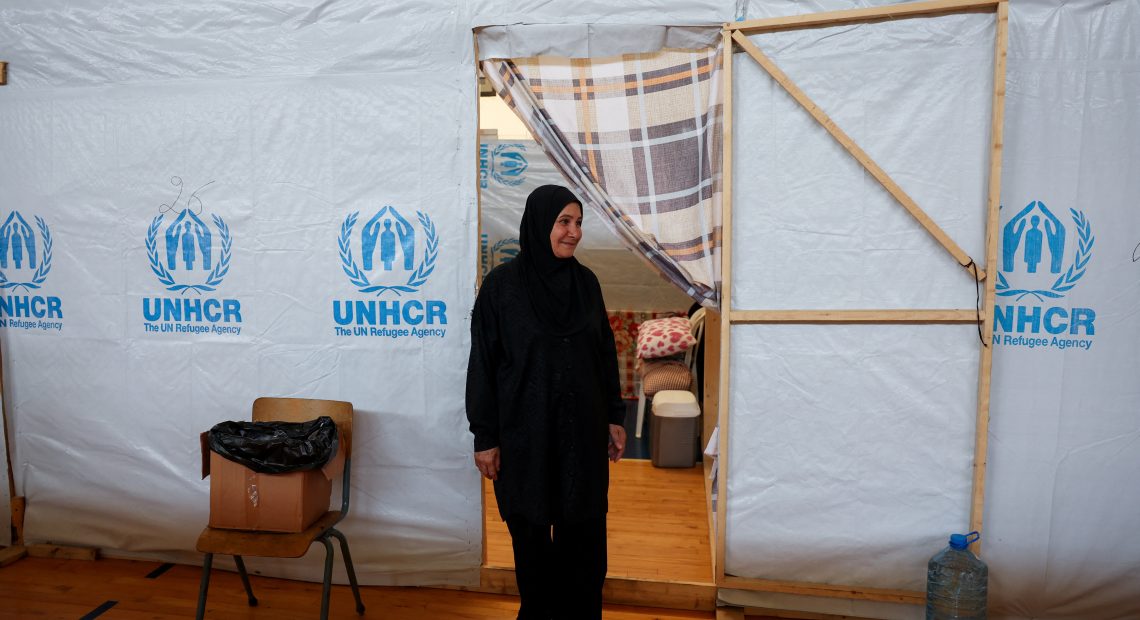
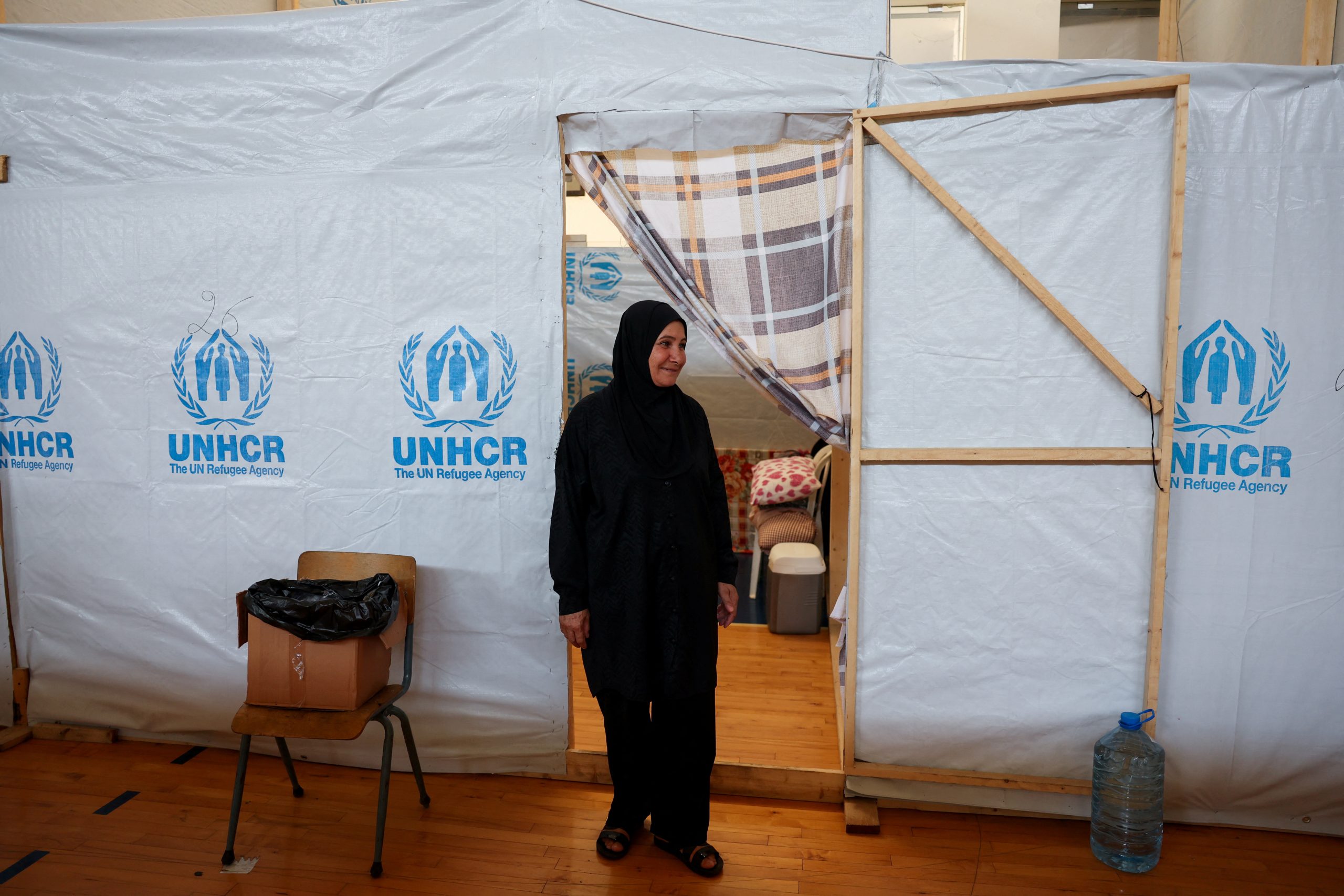
Zeinab Moussa, 56, a displaced mother from southern Lebanon, stands outside her tent in a school turned into a shelter for displaced families in Tyre, southern Lebanon, August 27, 2026. REUTERS/Mohamad Azakir
Dubai, UAE – Sept. 2026 – A new humanitarian survey found that 85 percent of displaced Lebanese households provided or received help from people around them during the war.
The finding comes from a study released by Ground Truth Solutions and InflueAnswers, working with the Lebanon Humanitarian and Development Forum, based on interviews with more than 1,000 displaced households conducted between February and July.
The scale of displacement behind these findings has been staggering. The International Organization for Migration said more than one million people were forced from their homes after hostilities escalated on March 2, with over 130,000 crossing into Syria at the peak of the crisis.
By late July, IOM’s Displacement Tracking Matrix recorded roughly 375,000 people still displaced, with more than 753,000 having begun returning home.
In March, the World Bank’s Rapid Damage and Needs Assessment estimated that the fighting deepened an economic contraction already exceeding 40 percent since 2019, compounding a crisis that has left many families with few resources to fall back on. The same assessment put the total economic cost of the war at $14 billion, with reconstruction and recovery needs at $11 billion.
It is against that backdrop that the new survey highlighted a striking pattern of solidarity: of the households that gave or received support, nearly half shared food or water, and sizable shares reported sharing first aid, medicine, financial help, or information about how to access formal assistance.
The report also pushed back on narratives of social fracture. Despite media coverage emphasizing rising social tension since the war, 65 percent of displaced households said their relationships with host communities had not been negatively affected.
The authors noted that Lebanon’s media landscape, historically fragmented along sectarian and political lines, has often amplified narratives of division rather than reflecting the more complex reality on the ground, a pattern documented in prior research on Lebanon’s media sector, including Reporters Without Borders’ 2018 study describing Lebanese media as largely divided along partisan and confessional ownership lines, and more recent research on the spread of misinformation during the crisis.
The study found gaps in formal aid delivery: only 36 percent of the most vulnerable households said assistance reached them, and just 8 percent felt they could plan for their family’s needs beyond the immediate term.
The authors argued that mutual aid among neighbors has been the more decisive force shaping how displaced families have coped, and they call on humanitarian actors and local authorities to better align formal aid with these existing community networks rather than working around them.