Dubai, UAE — Sept. 2026 — Apple kicked off a new era on September 9, 2026, with its “Surprise and Shine” event at the Steve Jobs Theater in Cupertino — the first keynote headlined by new CEO John Ternus, who officially took over from Tim Cook on September 1.
Cook made a brief cameo to hand things off before Ternus walked the audience through a wave of new hardware, saving the biggest reveal — Apple’s first-ever foldable iPhone — for the very end.
Apple’s first foldable
The headline act of the event was the long-rumored iPhone Duo, Apple’s first foldable phone. Unlike book-style foldables that Apple executives described as feeling like “two phones stuck together,” the Duo was pitched as designed from the ground up to feel like a single, cohesive device.
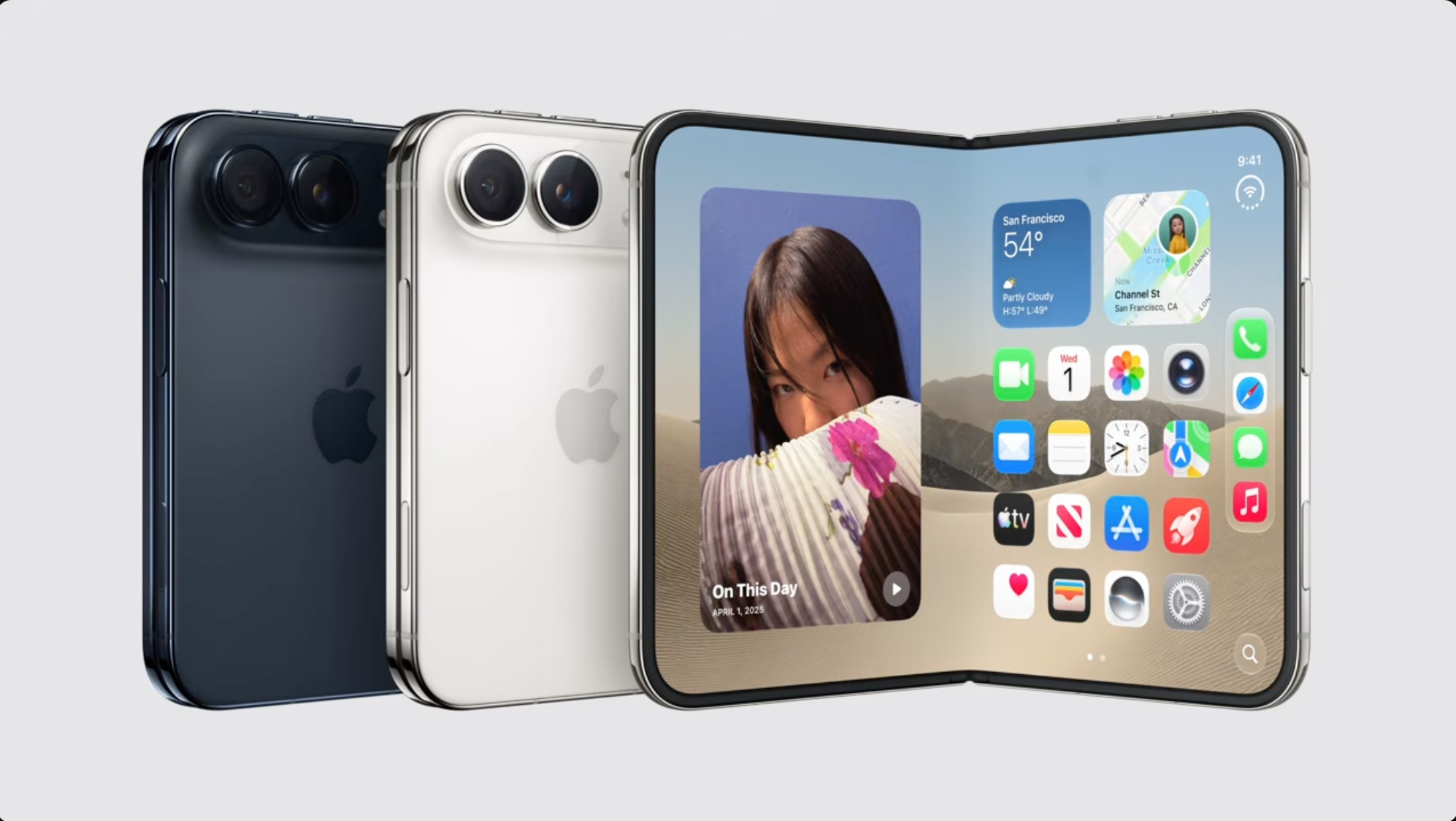
Key specs and features revealed on stage:
-
A 7.6-inch internal Super Retina display plus a 5.4-inch external display, both compatible with Apple Pencil.
- An asymmetric shape with rounded corners, a titanium frame, carbon-fiber hinge support plates, and a custom variable-torque hinge with a magnetic closure.
- A multi-layer laminated display structure with a nano-texture coating designed to resist creasing and scratches; ceramic shield front and back and an IP68 rating for dust and water resistance.
- Apple’s new A20 Pro chip with an added display engine for dual-screen support, a vapor chamber, and a new Apple C2 cellular modem supporting mmWave 5G. The Duo is eSIM-only worldwide, which Apple says freed up internal space for a bigger battery.
- Battery life rated up to 44 hours of video playback using just the outer screen, or up to 24 hours with both screens in regular use; five minutes of charging is said to add five hours of external-screen video playback.
- Touch ID built into the side button rather than Face ID, plus support for unlocking via Apple Watch.
- A camera system built around a 48MP main Fusion camera, a 12MP ultrawide, and a 12MP 2x telephoto, along with a 12MP outer selfie camera and an under-display FaceTime camera on the inner screen. The outer screen doubles as a viewfinder so subjects can see themselves while being photographed.
-
Software built on iOS 26’s Liquid Glass design, adapted specifically for the fold: interface elements shift to the edges on the outer screen, apps can run side-by-side or in multi-panel layouts, and the interface reflows automatically around the crease when the phone is partially folded.
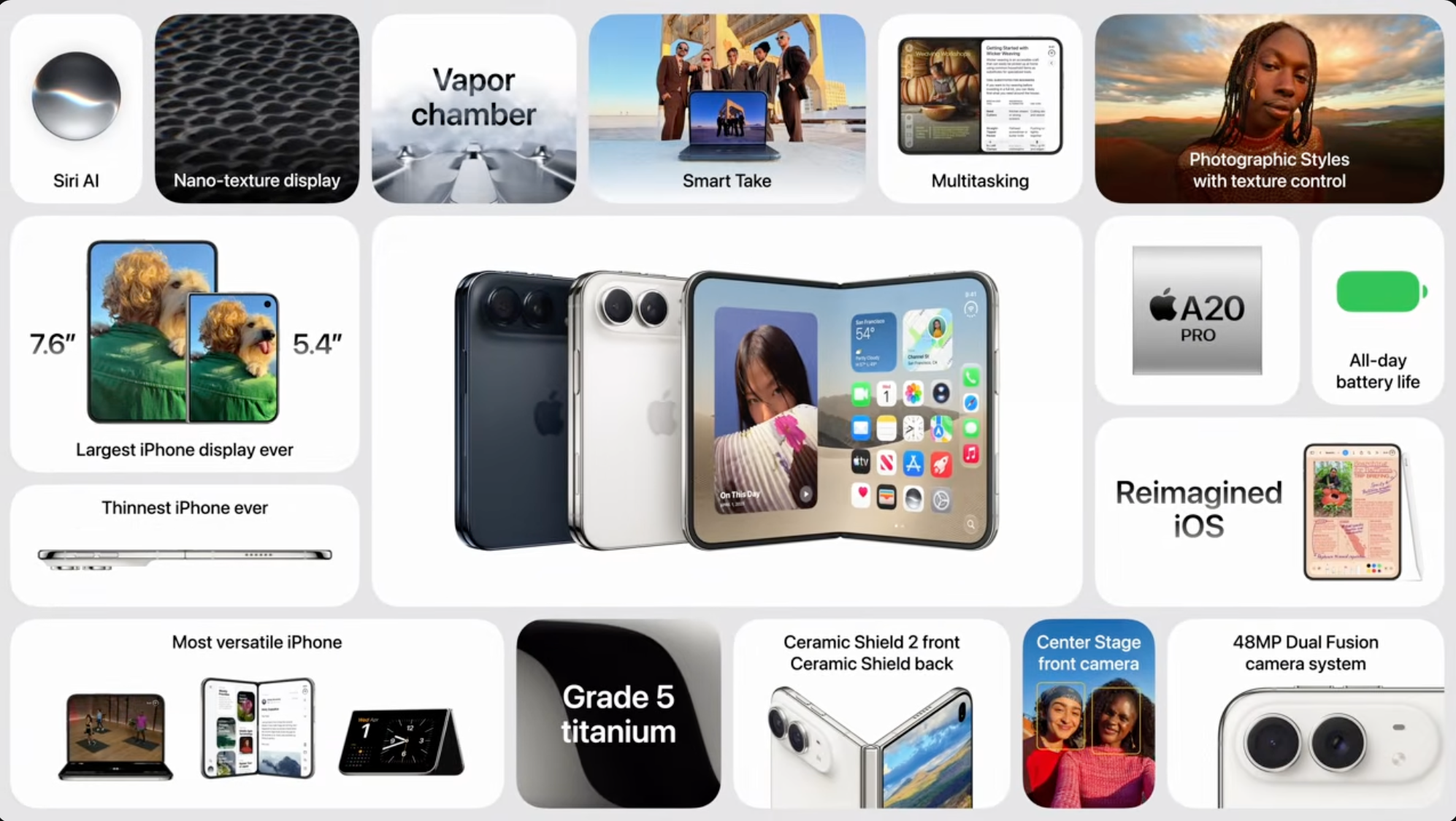
The iPhone Duo comes in two colors — Star White and Night Sky — with storage from 256GB up to 2TB. Pricing starts at $1,999, with pre-orders beginning October 16 and availability starting October 23.
iPhone 18 Pro and Pro Max
Earlier in the keynote, Ternus had introduced the standard-bearers of the lineup, the iPhone 18 Pro and iPhone 18 Pro Max, framing the iPhone as the “intelligent personal hub” at the center of a person’s Apple devices.
Both phones get Apple’s new A20 Pro chip, built on a 2nm process with a 6-core CPU and a 7-core GPU delivering up to 40% faster graphics. Six neural accelerators are on board to speed up on-device AI processing.
#LIVE | That’s the all-new #iPhone18Pro with its cases! #AppleEvent pic.twitter.com/lgcO9m4h7V
— Miguêl Hadchity (@miguelhadchityy) September 9, 2026
A redesigned thermal system — a vapor chamber with three times the surface area of the iPhone 17 Pro’s, paired with more thermally conductive graphite — is meant to sustain performance during heavy workloads like gaming.
Battery life gets a boost too: Apple says the 18 Pro can run up to 36 hours and the Pro Max up to 45 hours, which it’s calling the longest battery life ever on an iPhone, and wired charging now hits 50% in 15 minutes.
The camera system got some of the biggest updates. The new 48-megapixel Fusion main camera introduces a variable aperture — using six laser-cut polymer composite blades and a custom rotor mechanism — letting photographers shift from a wide aperture for shallow depth-of-field portraits to a narrower one for more detail and sharper night shots.
New “Pro Controls” add a histogram, four selectable aperture settings, and manual controls for both photos and video, including smarter AI-driven subject tracking. Cinematic effects can now be applied after the fact, and time-lapse video jumps to 4K.
Apple also introduced an authenticity feature for photos called Apple Reference Image, which signs image data at the pixel level at the moment of capture — akin to a digital negative that can later verify a photo was genuinely shot on an iPhone 18 Pro. The feature supports the SynthID standard but won’t be available in the EU or China.
Elsewhere, the Dynamic Island is physically smaller but now tracks three live activities simultaneously, and the phones come in new “Glacier” and “Burgundy” finishes alongside returning colors.
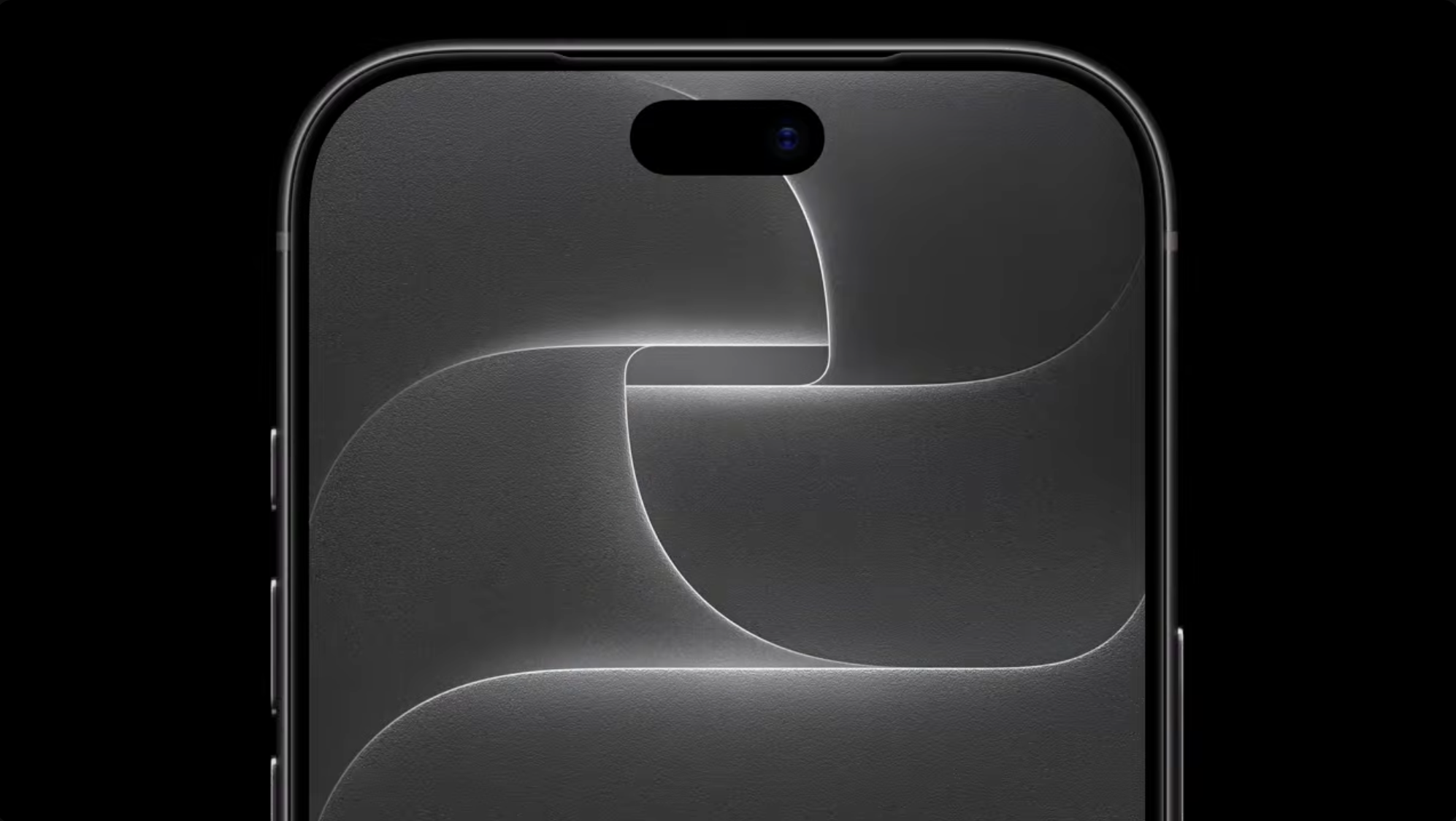
Pricing starts at $1,199 for the iPhone 18 Pro, with pre-orders opening this Saturday and devices shipping September 18.
Apple Watch Series 12 and Ultra 4
Ternus handed off coverage of the wearables lineup to Deirdre Caldbeck, who introduced the Apple Watch Series 12 and Apple Watch Ultra 4. Both get the new S11 chip with an always-on processor, a dedicated audio-holding secure enclave, and an upgraded GPU and CPU.
The health sensing system saw a meaningful upgrade: background heart rate is now sampled every five seconds (60 times more often than before), and heart rate variability is captured roughly every five minutes — about 24 times more frequently. Larger, more efficient green LEDs and a bigger ECG electrode surface area are meant to improve accuracy.
Design-wise, aluminum Apple Watch cases now use Ceramic Shield, which Apple says makes them 60% tougher than the previous glass. A new ceramic case option arrives in pearl white and night blue, alongside titanium and aluminum options in colors including space gray, black, light gold, and dark bronze.
The Ultra 4 carries over the sensing upgrades and adds a larger battery for more than two days of battery life, available in black and natural titanium with new bands. Both watches keep their prior starting prices — $399 for the Series 12 and $799 for the Ultra 4 — and are available for pre-order now.
AirPods 5
Dave Pakula introduced the AirPods 5, which bring next-generation adaptive EQ, personalized spatial audio, and Active Noise Cancellation that Apple says reduces noise 50% more effectively than the prior generation. Adaptive Audio switches more seamlessly between noise cancellation and transparency based on surroundings, and Live Translation — introduced last year — carries over as well.
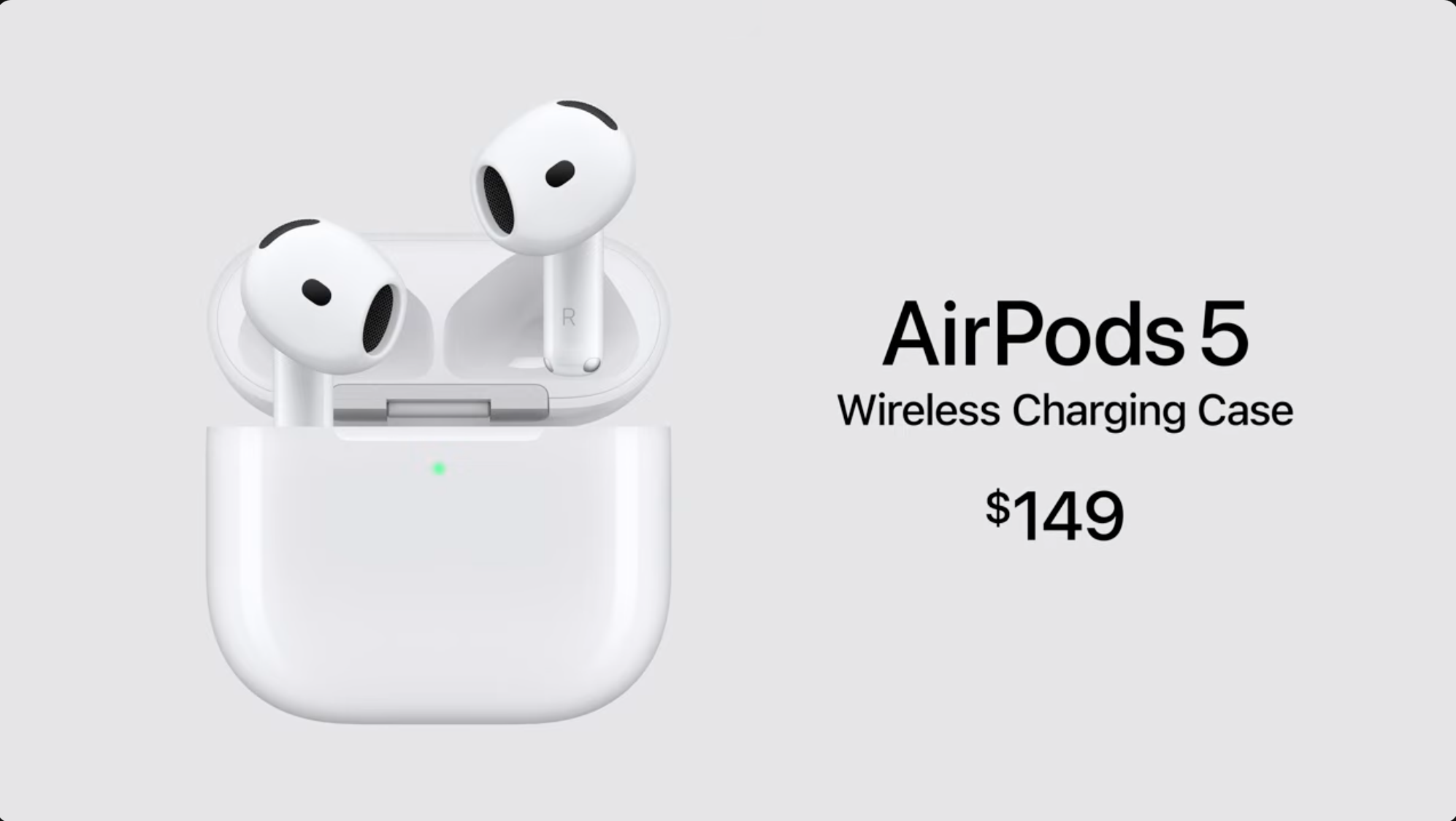
The base AirPods 5 stay at $129 with up to four hours of ANC listening and 20 hours total with the charging case. A higher-end version adds features like on-stem volume controls, a wireless charging case, and longer battery life for $149. Both are available for pre-order now and ship September 17.
Software and other notes
Apple also touched on iOS 27, highlighting an improved child-safety feature, customizable Liquid Glass, and general performance gains like faster AirDrop transfers. A new “iPhone handoff” feature will let users move their phone number between devices, though at launch it’s supported by only four carriers.
On the AI side, Apple detailed further Apple Intelligence integration, an updated Siri experience with more expressive on-device voices, and continued rollout of features shown earlier this year at WWDC, including Image Playground and Photos editing tools.