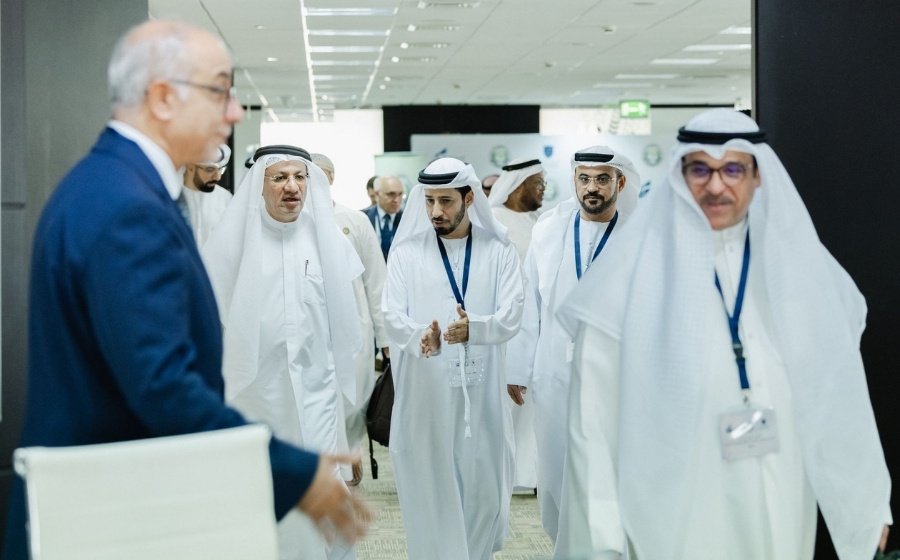
Photo Cedit: WAM
The Mohammed Bin Rashid School of Government (MBRSG), in partnership with the Arab Planning Institute in Kuwait and The Gulf Consultant for Consultations, Training and Research in Dubai, has organised a scientific conference examining the future of finance and international trade amid growing global protectionism.
The Finance and International Trade in the New Era of Protectionism conference was held on 28 and 29 September in a hybrid format, bringing together government officials, academics, experts and researchers to discuss major changes affecting global trade and financial systems.
The conference focuses on ways to strengthen the resilience of Arab economies and improve their ability to respond to geopolitical, economic and technological shifts shaping international markets.
Dr. Ali bin Sebaa Al Marri, Executive President of MBRSG, said the conference provides an important platform for connecting applied research with public policymaking while helping decision-makers anticipate global economic transformations.
He added that the event also marks the first step in strategic cooperation between MBRSG and the Arab Planning Institute.
Prof. Adel A. Al-Wugayan, Director-General of the Arab Planning Institute, highlighted the importance of developing more resilient institutions and introducing economic tools capable of addressing geopolitical pressures and emerging forms of protectionism.
Rehan Mubarak Fayez, Founder and President of The Gulf Consultant, stressed the need to advance economic diversification, strengthen supply-chain resilience and improve the competitiveness of Arab exports in international markets.
The conference covers several strategic themes, including geopolitical transformations, traditional and green protectionism, trade finance, export diversification and economic resilience.
Participants are also examining the growing role of artificial intelligence, regional economic integration and trade diplomacy in shaping future economic policies.
The discussions aim to support the development of proactive policy frameworks that can help Arab economies respond effectively to changing global trade conditions and emerging financial challenges.