
With 70% of the region’s food trade passing through the UAE, valued at more than AED 100 billion annually, the country’s role in regional food security increasingly depends not only on where food is sourced, but on the resilience and sophistication of the supply chains that move it.
Against this backdrop, NRTC Group, one of the region’s established fresh-food supply-chain businesses, will bring its perspective on the future of food distribution to Global Food Week from 6-8 October at ADNEC in Abu Dhabi.
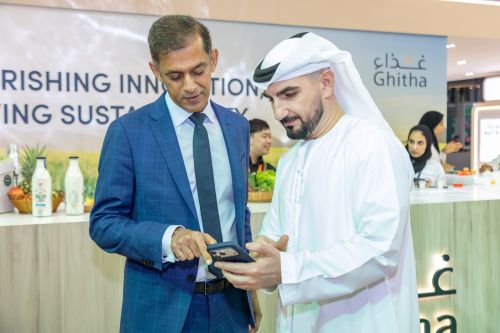
Mohammed Alrifai, CEO of NRTC Group, will spotlight how diversified global sourcing, cold-chain infrastructure, technology and end-to-end operational visibility can help build a more resilient fresh-food ecosystem for the UAE and the wider region.
The issue is particularly relevant for the UAE, which has less than 5% arable land and therefore relies heavily on international food supply networks. The UAE’s National Food Security Strategy places diversification of food-import sources, international partnerships and technology-enabled food production and supply chains at the heart of its long-term approach to food security.
For NRTC, food security starts well before products reach the supermarket shelf, restaurant or food-service operator. Established in 1973, the Group sources fresh produce across six continents, giving it a geographically diversified sourcing base. Its operating infrastructure includes approximately 100,000 sq ft of facilities, more than 35 temperature-controlled cold rooms and a fleet of 300+ chilled vehicles serving multiple customer channels across the region.
Together, this network has the capacity to handle approximately 1 million tonnes annually, with two additional facilities scheduled to open before the end of 2026.
“Food security ultimately depends on supply-chain security and the ability to source, move, store and deliver food reliably even when conditions change,” said Mohammed Alrifai, CEO, NRTC Group. “For fresh food, resilience is also about speed, temperature control, visibility and the ability to make decisions based on real-time information. The next generation of food supply chains will bring these capabilities together much more closely.”
As food supply chains become more complex, NRTC sees technology and data playing a growing role in how fresh food is forecast, sourced, handled and distributed. The Group is focused on strengthening digital capabilities, data-led forecasting, automation, traceability and operational visibility to improve availability and efficiency while helping reduce food loss.
This aligns with the UAE’s wider policy focus. The National Food Security Strategy calls for technology-enabled food systems and measures to reduce food loss and waste across the supply chain. The UAE is also targeting a 50% reduction in food waste and loss by 2030, in line with SDG 12.3.
NRTC’s model is increasingly centred on connecting global sourcing with regional distribution, supported by long-term relationships with growers and suppliers and a growing focus on regional and international partnerships.
Looking ahead, the Group plans to deepen supply-chain integration, expand its digital capabilities and partnerships, and improve resource utilisation across its operations.
As the UAE continues to strengthen its position as a global logistics and food-trade hub, the focus is shifting from simply ensuring that food can enter the country to building supply chains capable of absorbing disruption, protecting freshness and keeping products moving efficiently from farm to customer.