Photo Credit: WAM
The UAE Government and the World Bank Group have launched the first cohort of the Government Experience Exchange Programme for Zero Government Bureaucracy, aimed at strengthening government capabilities and improving public-sector efficiency in several African countries, including Benin, Djibouti and Rwanda.
The initiative introduces participating governments to the UAE’s experience in government modernisation, service development and administrative reform, with a focus on turning these practices into practical measures that simplify procedures and improve the quality of government services.
The programme forms part of the broader partnership between the UAE Government and the World Bank Group to strengthen public administration, improve government efficiency and reduce administrative burdens affecting individuals, businesses and government employees.
Mohammad Abdullah Al Gergawi, Minister of Cabinet Affairs, said the UAE has developed a government model that places people at the centre of public-sector development.
He said the UAE’s approach focuses on anticipating community needs, improving wellbeing, enhancing service quality, accelerating delivery and transforming challenges into opportunities for development and innovation.
Al Gergawi said the partnership with the World Bank Group provides a strategic platform for sharing knowledge with partner governments while helping national teams develop practical initiatives supported by measurable key performance indicators and clear implementation roadmaps.
He added that the objective is not simply to transfer the UAE’s experience to other countries, but to create long-term partnerships capable of producing sustainable improvements in government performance and community wellbeing.
Ousmane Dione, World Bank Group Vice President for the Middle East, North Africa, Afghanistan and Pakistan region, said the initiative reflects a shared commitment to bringing the UAE’s Zero Government Bureaucracy experience to African partner countries.
He said the programme will help participating governments simplify administrative procedures, improve service delivery and place people and businesses at the centre of public administration, supporting job creation and more tangible development outcomes.
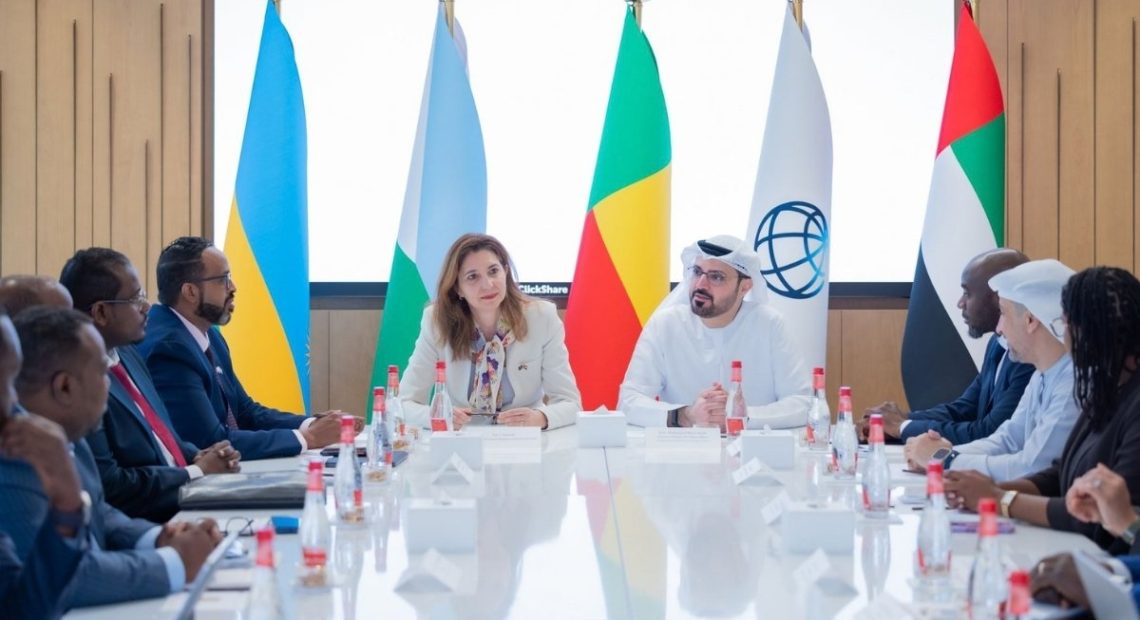
The first cohort brought together ministers and senior government officials from Benin, Djibouti and Rwanda representing areas including digital transformation, innovation, finance, public services, development financing, urban affairs, healthcare and government information systems.
Benin’s delegation included Mahuna Akplogan, Minister of Digital Transformation and Innovation; Irina Gbaguidi, Advisor to the President; Arcadius Tchokpodo, Director at the Ministry of Digital Transformation and Innovation; and Anzir Adimi Junior, Head of E-Services and Platforms at the National Agency for Information Systems and Digital Technology.
Djibouti was represented by Abdulkerim Hassen, Secretary-General of the Ministry of Urban Affairs; Mohamed Ali Mohamed, Secretary-General of the Ministry of Health; Abdallah Ibrahim Omar, Secretary-General of the Ministry Delegate in Charge of Digital Economy and Innovation; and Moustapha Mohamed Ismail, Director-General of the National Agency for State Information Systems.
The Rwandan delegation included Eraste Rurangwa, Permanent Secretary at the Ministry of ICT and Innovation, and Innocent Asiimwe, Chief Operations and Strategy Officer at the Rwanda Information Society Authority.
The programme included 15 meetings, workshops, sessions and engagements with UAE experts, giving participants an opportunity to study the country’s Zero Government Bureaucracy model and government service improvement practices.
Discussions covered seamless government services, community participation in service development, financial efficiency, government performance and international best practices in administrative reform.
Participating countries were also supported in identifying priority reform challenges and developing 90-day national action plans, including implementation responsibilities, key performance indicators and follow-up milestones.
The programme also featured a virtual knowledge-sharing session with the Government of Uzbekistan, allowing participating delegations to examine another country’s practical experience with Zero Government Bureaucracy initiatives and learn from its implementation challenges and lessons.
The UAE’s Government Experience Exchange Office is responsible for sharing national methodologies and expertise related to government service development and bureaucracy reduction. It also coordinates UAE experts and government entities, supports participating countries in selecting reform priorities and provides strategic guidance during implementation.
The World Bank Group coordinates with beneficiary countries, provides access to international specialists and best practices, and helps align reform initiatives with national priorities. It also supports regional follow-up, technical cooperation and the measurement of programme outcomes.
Each participating country has established a national taskforce responsible for identifying priority government challenges, providing relevant data, preparing action plans and defining the government entities and officials responsible for implementation.
The national teams will also establish performance indicators and timelines and monitor implementation in coordination with the UAE Government Experience Exchange Office and the World Bank Group.
The latest initiative builds on a partnership launched by the UAE Government and the World Bank Group in Washington, DC, in April 2026.
The partnership focuses on strengthening public administration, simplifying government procedures, building institutional capabilities, supporting public-sector digitalisation, developing enabling regulatory frameworks and introducing performance-based governance models.
It also aims to use international platforms to promote government knowledge exchange while involving governments, communities and the private sector in public-sector reform efforts.