The UAE leads the Gulf Cooperation Council (GCC) in early childhood education participation, with preprimary enrollment reaching approximately 82%, according to new analysis from Arthur D. Little (ADL).
The findings are published in ADL’s new Viewpoint, From Cradle to Classroom: Why early childhood education is a high-return opportunity & how GCC countries can seize it, which argues that early childhood should increasingly be treated as economic infrastructure rather than primarily as a social expenditure.
The UAE’s position places it closest among GCC markets to near-universal preprimary enrollment. With kindergarten participation already comparatively advanced, ADL’s analysis indicates that much of the UAE’s remaining early childhood expansion opportunity lies further upstream, particularly in the nursery years.
Across the wider GCC, the scale of the opportunity remains significant. The region has approximately 2.6 million children aged three to five, and ADL estimates that reaching its near-universal enrollment benchmark by 2035 would require approximately 11,600 new kindergartens and 116,000 additional kindergarten educators.
Significantly, ADL finds that roughly 94% of the kindergarten build required under this scenario stems from existing access and quality requirements rather than future growth in the number of young children.
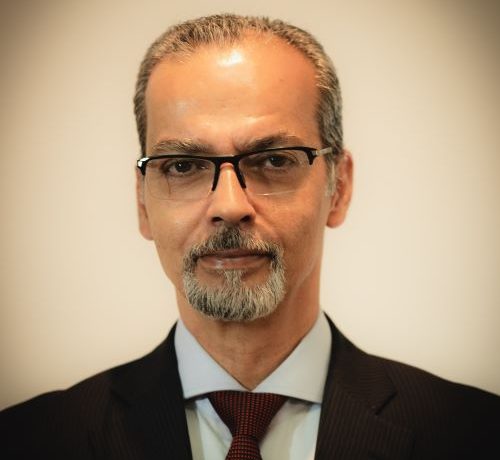
Amr Kazimi, Principal at Arthur D. Little, said: “The UAE has established a strong position in early childhood participation, leading the GCC at approximately 82%. The next opportunity is to build on that foundation by continuing to strengthen quality and extending provision further into the earliest years. Across the GCC more broadly, our analysis shows that the scale of the opportunity is significant and immediate, with most of the infrastructure requirement reflecting needs that exist today rather than future demographic growth.”
The requirements vary significantly across individual GCC markets, reflecting different starting points and priorities. In some markets, the emphasis is on accelerating capacity creation and workforce development; in others, it is on extending access or expanding provision further upstream into the nursery years.
The UAE leads the region at approximately 82% pre-primary enrollment, with much of its remaining expansion opportunity concentrated in the nursery years. Saudi Arabia is set to account for around three-quarters of the kindergarten expansion required under ADL’s near-universal enrollment scenario, creating a major opportunity for capacity and workforce development. Qatar and Kuwait have comparatively favorable educator ratios but further scope to broaden access.
ADL’s analysis finds that broadening the ambition beyond kindergarten could increase the scale of the opportunity substantially. Extending meaningful formal provision to the currently underserved nursery segment, based on a 40% enrollment scenario, would bring the requirement to approximately 40,000 early childhood institutions — kindergartens and nurseries — and 224,000 educators across the GCC.
The economic case for doing so extends beyond education outcomes. High-quality early childhood programs can generate what ADL describes as a “double return”: strengthening the human capital of tomorrow while enabling more parents, particularly women, to participate in the workforce today.
That relationship is especially relevant to the GCC’s economic diversification and nationalization agendas. In Saudi Arabia, for example, female labor-force participation increased from 17% in 2016 to 36% in 2025, exceeding the Kingdom’s Vision 2030 target of 30%.
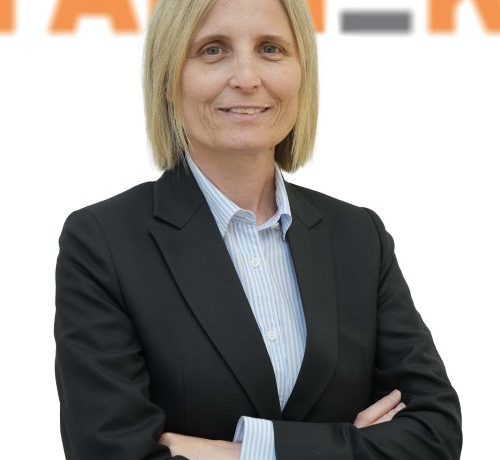
Yigit Saf, Partner at Arthur D. Little, said: “Early childhood education should no longer be viewed simply as a social cost. For GCC economies, it has the characteristics of economic infrastructure and offers a rare double return. Investment today strengthens the capabilities of the generation that will drive the region’s future diversification, while accessible, high-quality childcare can enable more parents to enter and remain in the workforce. That makes ECE directly relevant to the region’s human-capital, nationalization and female-participation ambitions.”
The long-term economics reinforce the case for investment. Research cited in the Viewpoint finds that high-quality, comprehensive programs from birth to age five can generate returns of approximately 13% per child per year, equivalent to around US$6 in benefits for every US$1 invested. This compares with estimated returns of 7%-10% for preschool alone.
Yet early childhood remains structurally underfunded globally. Around 175 million children are not enrolled in preprimary education, while only 6.6% of education budgets are directed to the subsector on average. UNICEF recommends allocating at least 10% of education spending to preprimary education.
ADL argues that GCC policymakers should therefore look beyond simply adding places. Quality will determine whether expansion generates its intended economic and developmental returns. The Viewpoint identifies three constraints that need to be addressed alongside capacity: workforce shortages, quality and regulation, and parental engagement.
The firm also calls for a more integrated approach spanning the full early childhood value chain — from the first 1,000 days, through preprimary education at ages three to five, to the transition into primary school. This includes stronger coordination across education, healthcare and labor policy; investment in educator quality; appropriate child-to-staff ratios; greater parental involvement; and carefully governed use of AI-enabled learning and educator-support tools.
Kazimi concluded: “The opportunity now is to translate strong participation into deeper, high-quality provision across the full early childhood journey. By continuing to invest in the earliest years, the UAE can reinforce its regional leadership while strengthening the human-capital foundations that will support its economy for decades to come.”