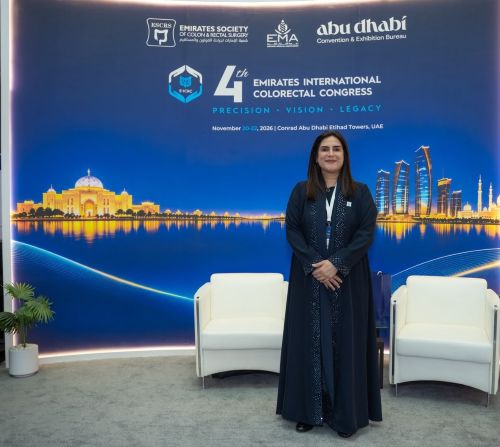
The 4th Emirates International Colorectal Congress successfully concluded its main scientific programme today in Abu Dhabi, following three days of specialised scientific sessions and expert-led discussions that brought together leading international surgeons, medical experts and healthcare professionals to explore the latest advances in robotic-assisted surgery, colorectal cancer treatment, inflammatory bowel diseases and complex surgical procedures.
Organised by the Emirates Society of Colon and Rectal Surgery (ESCRS) at Conrad Abu Dhabi Etihad Towers, the congress formed part of an expanded five-day scientific and educational programme running from 19 to 23 November 2026, combining scientific knowledge exchange with advanced hands-on surgical training to strengthen medical expertise and enhance the quality of patient care.
The congress brought together international experts and specialists for scientific discussions addressing key challenges in colorectal surgery, showcasing emerging surgical technologies and treatment approaches, and strengthening multidisciplinary collaboration in managing complex medical conditions.
Dr Sara Al Bastaki, President and Founder of the Emirates Society of Colon and Rectal Surgery and Congress Chair, said the success of the fourth edition reflects the UAE’s growing prominence on the global medical conference landscape and its continued advancement in specialised surgical care and medical innovation.
“We are proud of the success achieved by the fourth edition of the congress, which provided an exceptional scientific platform for leading international surgeons and experts to exchange knowledge, share experiences and explore the latest scientific developments and advanced surgical technologies, ultimately contributing to improved clinical practices and patient care,” said Dr Al Bastaki.
“The success of this congress extends beyond showcasing medical innovations. It is about building stronger scientific partnerships between healthcare institutions and international experts, transferring knowledge to the next generation of surgeons and encouraging greater collaboration across medical specialties to shape the future of colorectal surgery in the UAE and the wider region,” she added.
Robotic surgery and the future of colorectal cancer treatment
Robotic-assisted surgery emerged as one of the key highlights of the congress, with international experts examining the latest developments in robotic surgical systems and their role in enhancing surgical precision and supporting technically demanding procedures.
Scientific sessions also explored emerging global approaches to colorectal cancer treatment, highlighting the potential of advanced surgical technologies to reduce complications, improve clinical outcomes and support faster patient recovery where clinically appropriate.
Experts emphasised the importance of continuous medical education and specialist training in supporting the effective and safe integration of advanced technologies into clinical practice.
Strengthening multidisciplinary collaboration
The congress also addressed recent developments in the management of inflammatory bowel diseases, particularly Crohn’s disease and ulcerative colitis.
A dedicated scientific debate brought together gastroenterologists and colorectal surgeons to examine one of the most significant challenges in inflammatory bowel disease management: determining the appropriate timing for transitioning from medical treatment to surgical intervention.
Additional sessions focused on advanced approaches to emergency and complex colorectal surgery, including the management of complications associated with diverticular disease.
Discussions highlighted the importance of multidisciplinary clinical decision-making and personalised treatment strategies that prioritise patient safety, long-term outcomes and quality of life.
Advancing surgical expertise and women’s healthcare
A distinguishing feature of the fourth edition was its expanded educational and surgical training programme.
On 19 November, Khalifa University hosted an advanced hands-on workshop for young surgeons, led by experienced specialists from the United States and Saudi Arabia, focusing on practical surgical skills, advanced techniques and international knowledge transfer.
The congress’s accompanying educational activities will continue tomorrow, 23 November, with a specialised workshop organised in collaboration with the Emirates Obstetrics and Gynecology Society.
The workshop will focus on the diagnosis and surgical repair of obstetric anal sphincter injuries associated with vaginal childbirth, aiming to strengthen physicians’ expertise, enhance postnatal care and reduce the risk of long-term complications affecting women’s health and quality of life.
Dr Al Bastaki reaffirmed the Emirates Society of Colon and Rectal Surgery’s commitment to advancing continuous medical education, supporting specialised surgical training and strengthening international scientific partnerships in line with the rapidly evolving field of colorectal surgery.
The successful conclusion of the 4th Emirates International Colorectal Congress further reinforces Abu Dhabi’s position as a leading destination for international medical conferences and underscores the UAE’s commitment to advancing medical innovation, surgical excellence and scientific collaboration across the region and beyond.